


Mosses as extraordinary reservoir of microbial diversity: a comparative analysing of co-occurring 'plant-moss twins' in natural alpine ecosystem
- PMID: 40468449
- PMCID: PMC12139377
- DOI: 10.1186/s40793-025-00728-z
Mosses as extraordinary reservoir of microbial diversity: a comparative analysing of co-occurring 'plant-moss twins' in natural alpine ecosystem
Abstract
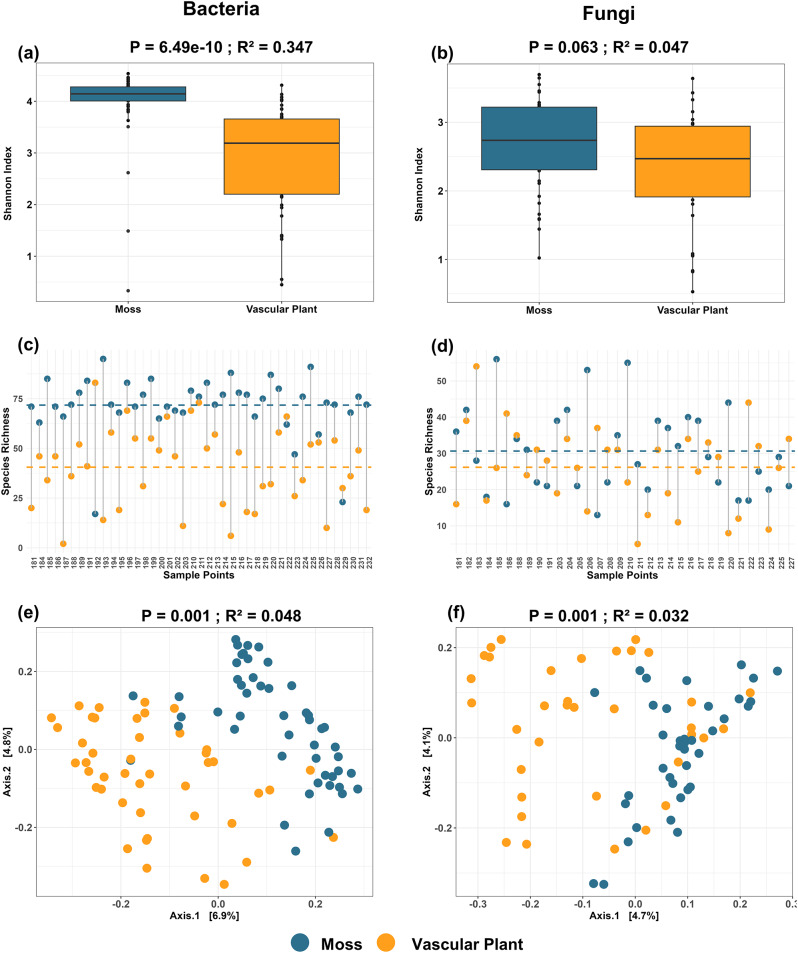
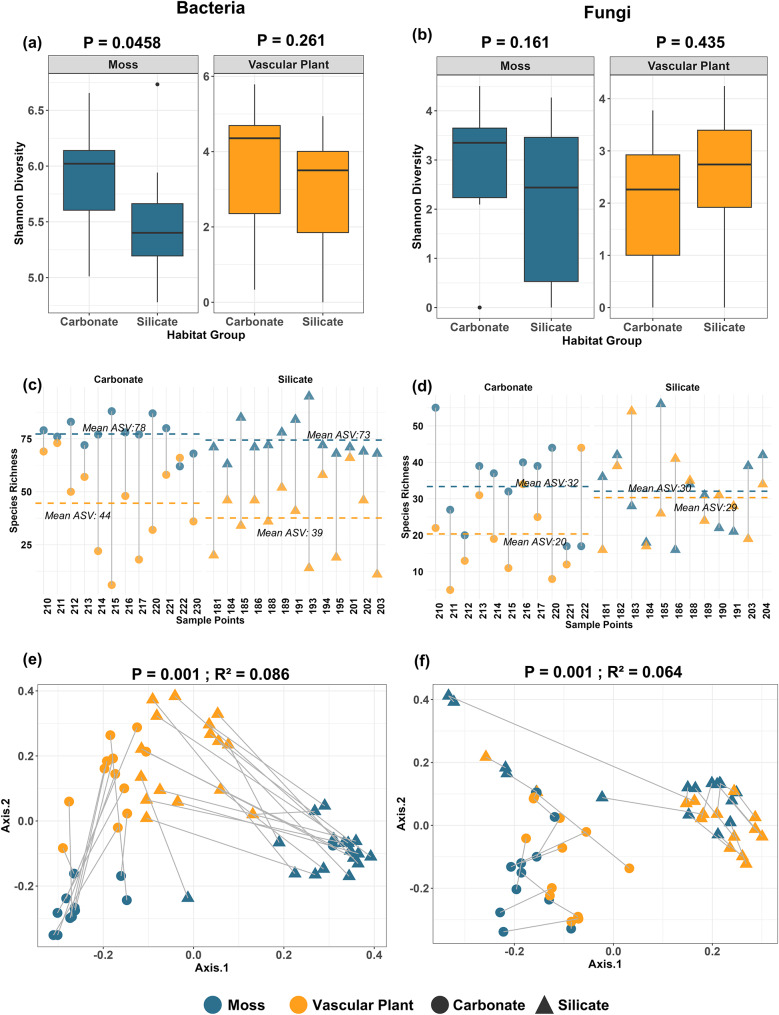
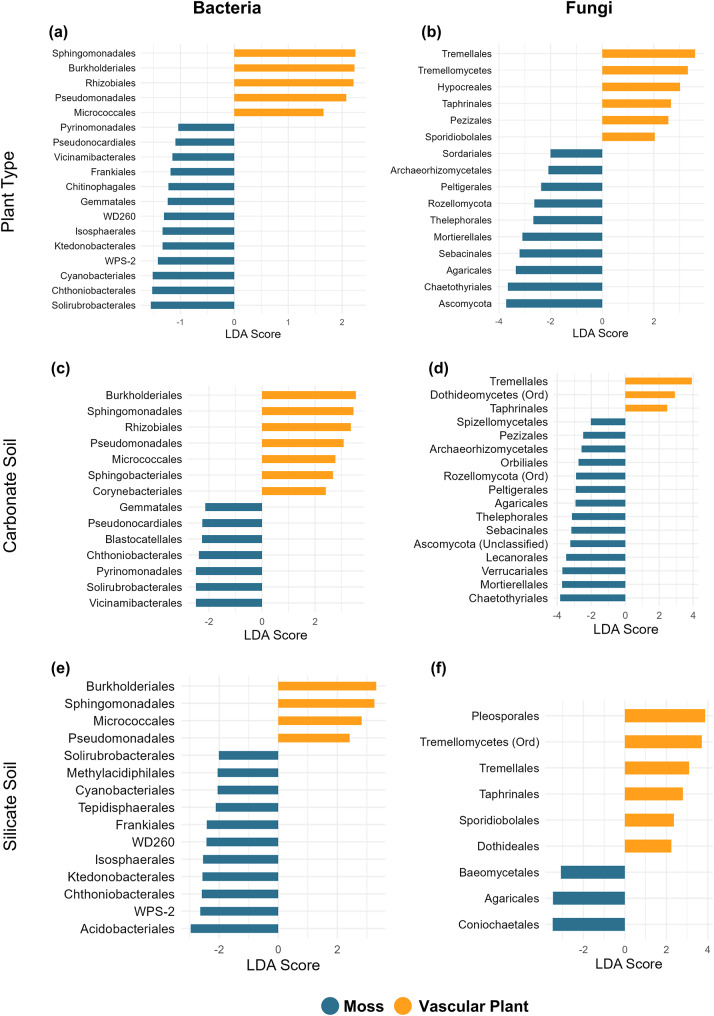
The decline in plant biodiversity is evident at global scale, but little is known about the loss of microbial diversity associated with diverse plant phyla and their influencing factors. This study investigates the microbial diversity associated with mosses and co-occurring vascular plants in the Alpine ecosystem, focusing on 52 plant "twins" growing on contrasting soil types (carbonate and silicate). Despite co-occurring in the same soil, mosses harbored significantly higher microbial richness and diversity than vascular plants. Across all samples, mosses supporting a total of 3,435 bacterial ASVs and 1,174 fungal ASVs. In contrast, vascular plants hosted a total of 1,760 bacterial ASVs and 911 fungal ASVs. Plant phyla strongly influenced microbial community composition, with vascular plants exhibiting a selective microbial assembly strategy, while mosses showed greater environmental influence. Soil type significantly influenced microbial composition in both plant types, with carbonate soils supporting greater bacterial richness, particularly in mosses. Linear discriminant analysis effect size (LEfSe) analysis highlighted consistent enrichments of Proteobacteria, i.e., Sphingomonadales, Rhizobiales, Burkholderiales and, Pseudomonadales, in vascular plants across soil types, whereas mosses displayed distinct microbial enrichment patterns between carbonate and silicate soils, suggesting a higher environmental connectedness. Our findings demonstrated that plant phyla are a major determinant of the phyllosphere microbiota, and that mosses represent a currently untapped source of microbial biodiversity. This study highlights the importance of considering both host traits and environmental factors for protecting microbial biodiversity and implementing them in global strategies for restoring biodiversity.
Keywords: Alpine ecosystem; Moss and vascular plant microbiomes; Phyllosphere; Soil type and microbial diversity.
© 2025. The Author(s).
Conflict of interest statement
Declarations. Ethics approval and consent to participate: Not applicable. Consent for publication: Not applicable. Competing interests: The authors declare no competing interests.
Figures
References
-
- Steffen W, Richardson K, Rockström J, Cornell SE, Fetzer I, Bennett EM, et al. Planetary boundaries: guiding human development on a changing planet. Science. 2015;347:1259855. - PubMed
-
- Humphreys AM, Govaerts R, Ficinski SZ, Nic Lughadha E, Vorontsova MS. Global dataset shows geography and life form predict modern plant extinction and rediscovery. Nat Ecol Evol. 2019;3:1043–7. - PubMed
-
- Berg G, Köberl M, Rybakova D, Müller H, Grosch R, Smalla K. Plant microbial diversity is suggested as the key to future biocontrol and health trends. FEMS Microbiol Ecol. 2017;93:fix050. - PubMed
-
- Blaser MJ. The theory of disappearing microbiota and the epidemics of chronic diseases. Nat Rev Immunol. 2017;17:461–3. - PubMed
LinkOut - more resources
Full Text Sources