


Preliminary results of one-stage repair of residual aortic dissection using dense mesh stent combined with release and post-processing techniques
- PMID: 40468862
- PMCID: PMC12144350
- DOI: 10.1177/00368504251340800
Preliminary results of one-stage repair of residual aortic dissection using dense mesh stent combined with release and post-processing techniques
Abstract
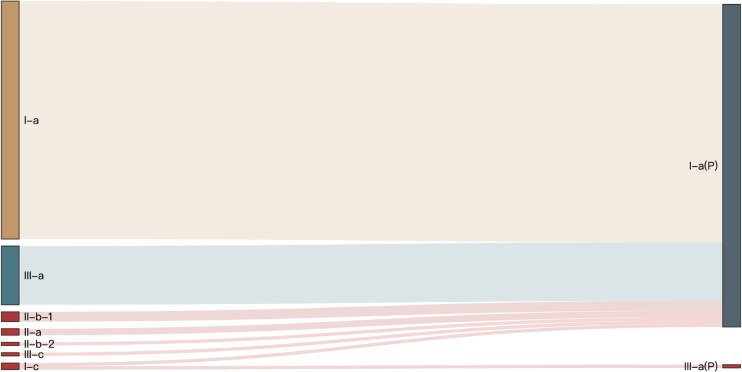
ObjectiveThis study aims to preliminarily evaluate the early safety and efficacy of one-stage repair of residual aortic dissection using dense metal mesh stents combined with improved release and post-processing techniques.MethodsA prospective, single-center, single-arm clinical trial was designed and implemented, enrolling patients with residual aortic dissection to undergo metal mesh stent implantation under guidance of stent release and post-processing techniques. Patients received aortic CTA follow-up at 30 days post-surgery to assess early safety and efficacy.ResultsA total of 25 patients were enrolled, 14 in the (sub)acute phase and 11 in the chronic phase. No postoperative deaths, reinterventions, or aortic-related adverse events like malperfusion or ischemia were reported. The immediate technical success rate was 100%. For (sub)acute cases, the true lumen volume increased by 176.10%, while the false lumen decreased by 83.95%. False lumen thrombosis was grade II in two patients (14.29%), grade III in seven (50.00%), and grade IV in five (35.71%). For chronic cases, the true lumen volume increased by 96.92%, while the false lumen decreased by 73.43%. Thrombosis was grade II in three patients (27.27%), grade III in five (45.45%), and grade IV in three (27.27%). Postoperative aortic CTA showed that all visceral artery branches remained patent, and high-risk ischemic branches were converted to non-high-risk.ConclusionsPreliminary results suggest that dense mesh stents combined with release and post-processing techniques have acceptable early safety and efficacy. For acute and chronic residual aortic dissection patients with visceral artery branch involvement, this method may offer an alternative treatment option. Registration no. ChiCTR2200055277.
Keywords: Residual aortic dissection; aortic remodeling; dense mesh stent; endovascular repair; release and post-processing technique.
Conflict of interest statement
Declaration of conflicting interestsThe author(s) declared no potential conflicts of interest with respect to the research, authorship, and/or publication of this article.
Figures
References
-
- Yamaguchi T, Nakai M, Yano T, et al. Population-based incidence and outcomes of acute aortic dissection in Japan. Eur Heart J Acute Cardiovasc Care 2021; 10: 701–709. - PubMed
-
- Kohl LP, Isselbacher EM, Majahalme N, et al. Comparison of outcomes in DeBakey type AI versus AII aortic dissection. Am J Cardiol 2018; 122: 689–695. 20180630. - PubMed
-
- Xie E, Yang F, Liu Y, et al. Timing and outcome of endovascular repair for uncomplicated type B aortic dissection. Eur J Vasc Endovasc Surg: Official J Eur Soc Vasc Surg 2021; 61: 788–797. 20210410. - PubMed
-
- Zhu Y, Lingala B, Baiocchi M, et al. Type A aortic dissection-experience over 5 decades: JACC historical breakthroughs in perspective. J Am Coll Cardiol 2020; 76: 1703–1713. - PubMed
-
- Roselli EE, Loor G, He J, et al. Distal aortic interventions after repair of ascending dissection: the argument for a more aggressive approach. J Thorac Cardiovasc Surg 2015; 149: S117–124. e113. 20141120. - PubMed
Publication types
MeSH terms
LinkOut - more resources
Full Text Sources
