


Antimicrobial Resistance and Genomic Characterization of Salmonella Serovars Typhimurium and 4,[5],12:i:- in Huzhou, China
- PMID: 40469478
- PMCID: PMC12135956
- DOI: 10.2147/IDR.S521802
Antimicrobial Resistance and Genomic Characterization of Salmonella Serovars Typhimurium and 4,[5],12:i:- in Huzhou, China
Abstract
Objective: Salmonella serovar Typhimurium (S. Typhimurium) and its monophasic variant, Salmonella 4,[5],12:i:-, have become two of the most frequently isolated serovars worldwide, in both humans and animals. This study investigated the antimicrobial resistance and genomic characteristics of these two serovar Salmonella.
Methods: Between 2021 and 2023, a total of 90 S. Typhimurium and Salmonella 4,[5],12:i:-were collected from clinical and food samples in Huzhou. Their antimicrobial resistance phenotype and genes, virulence genes, and phylogenetic relationship were analyzed.
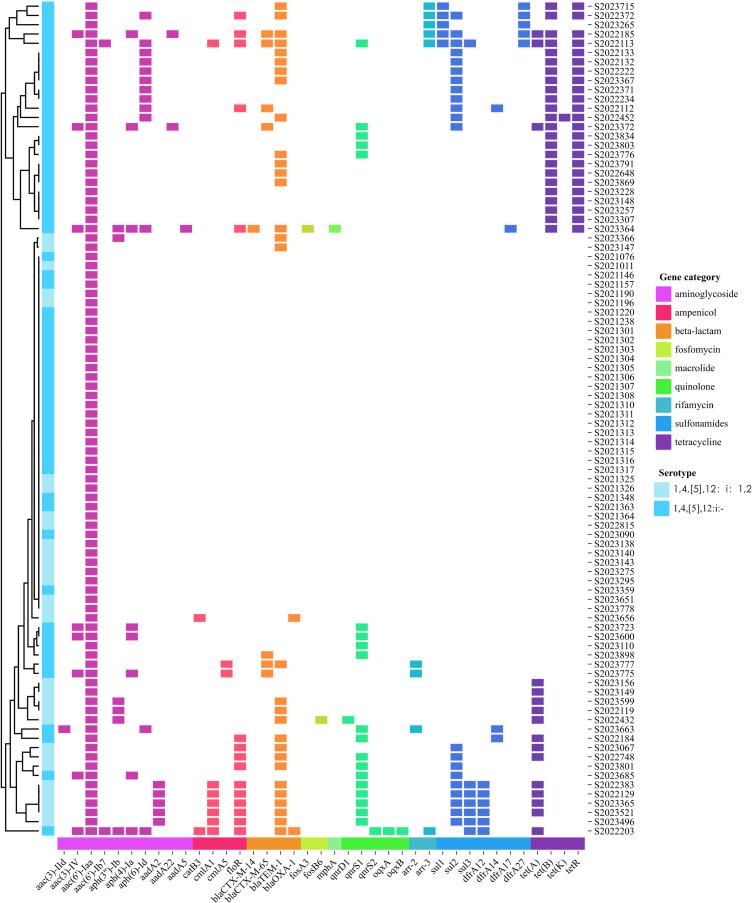
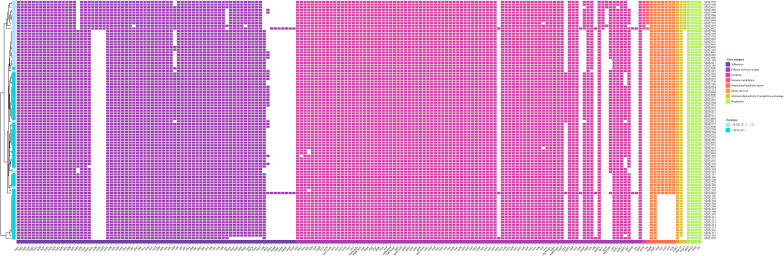
Results: Salmonella 4,[5],12:i:-, which all belong to ST34, has become the main serotype of Salmonella isolated in Huzhou instead of S. Typhimurium. Notably, we observed a higher incidence of infections among the young population (<5 years old). The 90 Salmonella isolates were mainly resistant to tetracycline (94.4%), ampicillin (72.2%), and trimethoprim/sulfamethoxazole (70.0%), with multidrug resistance (MDR) rates as high as 93.3%. Genome sequencing indicated that these isolates possessed 39 antimicrobial resistance genes and 184 virulence genes.
Conclusion: This research enhances our understanding of S. Typhimurium and Salmonella 4,[5],12:i:- infections, which is helpful to guide clinical responses.
Keywords: Salmonella typhimurium; antimicrobial resistance; monophasic variant; multidrug resistance; whole genome sequencing.
© 2025 Yan et al.
Conflict of interest statement
The authors declare no competing interests in this work.
Figures


References
LinkOut - more resources
Full Text Sources
