This is a preprint.
Temporal and Context-Dependent Requirements for the Transcription Factor Foxp3 Expression in Regulatory T Cells
- PMID: 40470210
- PMCID: PMC12136213
- DOI: 10.21203/rs.3.rs-6596747/v1
Temporal and Context-Dependent Requirements for the Transcription Factor Foxp3 Expression in Regulatory T Cells
Update in
-
Temporal and context-dependent requirements for the transcription factor Foxp3 expression in regulatory T cells.Nat Immunol. 2025 Nov;26(11):2059-2073. doi: 10.1038/s41590-025-02295-4. Epub 2025 Oct 8. Nat Immunol. 2025. PMID: 41062655 Free PMC article.
Abstract
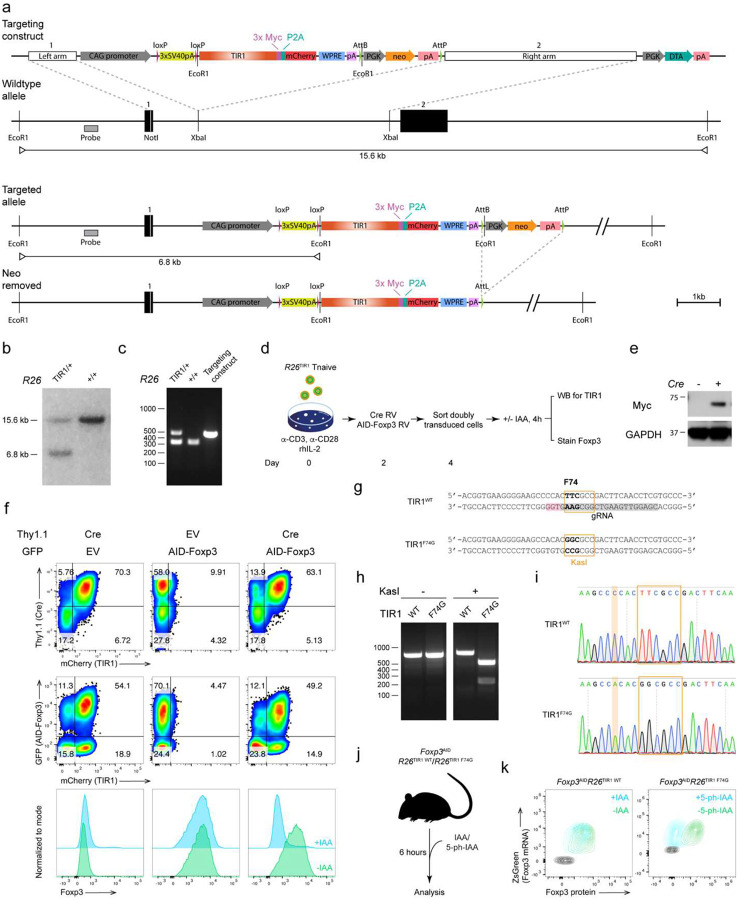
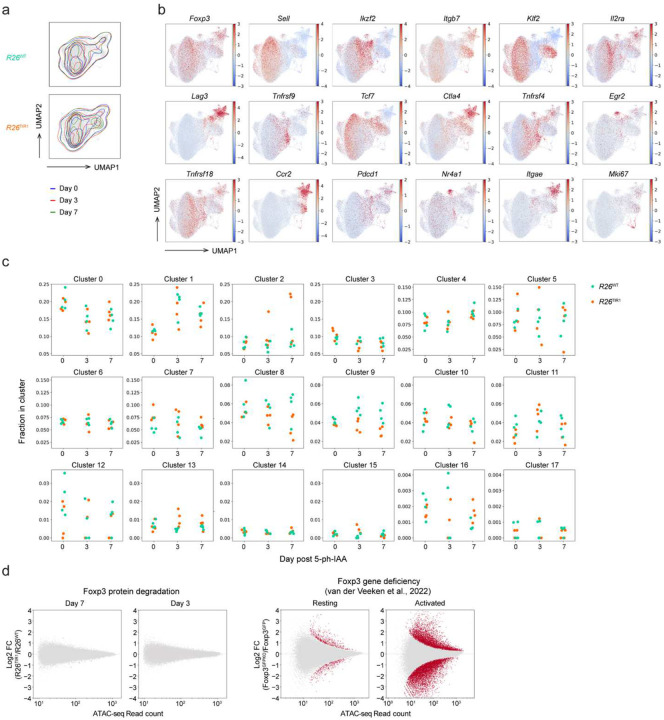
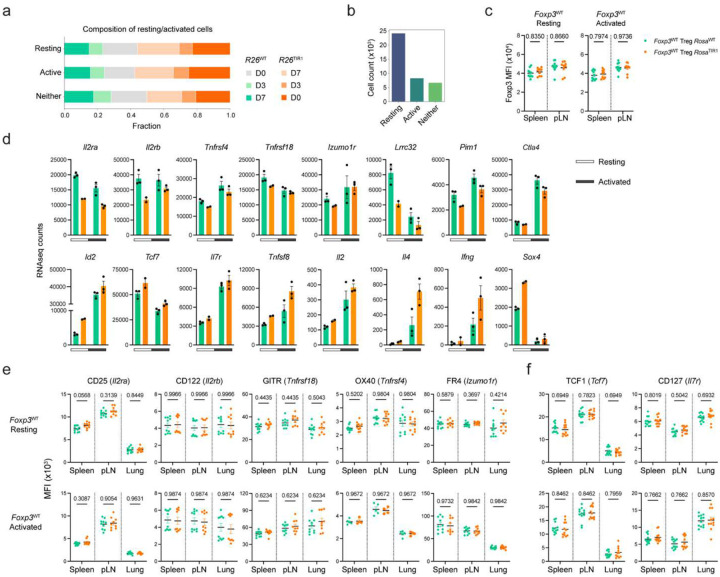
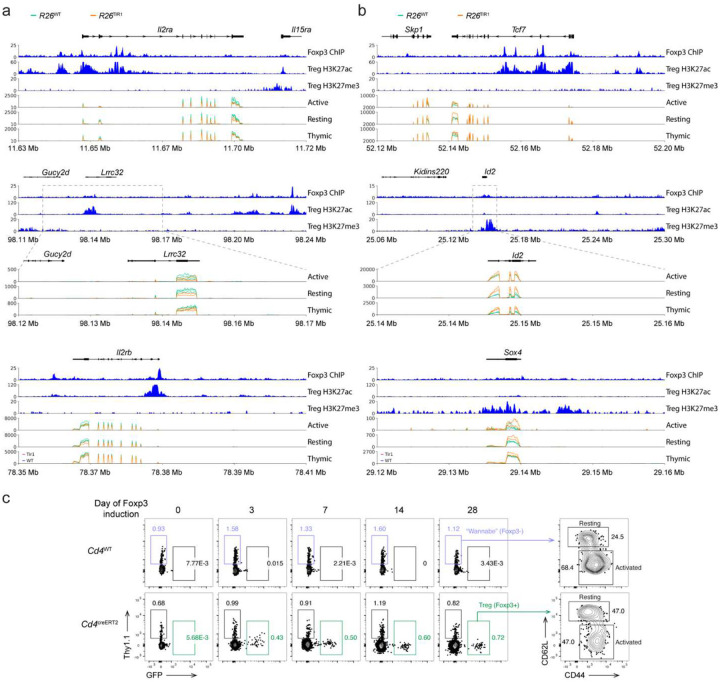
Regulatory T (Treg) cells, expressing the transcription factor Foxp3, are obligatory gatekeepers of the immune responsiveness. While Foxp3 essential role in Treg l differentiation is well established, the mechanisms by which Foxp3 governs the Treg-specific transcriptional network remain incompletely understood. Here, we employed a novel chemogenetic system of inducible, time-controlled degradation of Foxp3 protein in vivo to dissect its Treg stage stage-specific functions. While Foxp3 was indispensable for the establishment of the Treg transcriptional program and suppressive function during thymic Treg progenitors and newly generated peripheral Treg cells, degradation of Foxp3 in mature Treg cells resulted in unexpectedly minimal transcriptional changes largely limited to direct Foxp3 targets and largely preserved suppressive capacity. However, tumoral Treg cells were uniquely sensitive to Foxp3 degradation, which led to impaired suppressive function and tumor growth restraint absent pronounced adverse effects. These studies demonstrate context-dependent differential requirement for Foxp3 for Treg transcriptional and functional programs.
Conflict of interest statement
Conflict of interest A.Y.R. is an SAB member and has equity in Sonoma Biotherapeutics, RAPT Therapeutics, Coherus BioSciences, Santa Ana Bio, Odyssey Therapeutics, Nilo Therapeutics, and Vedanta Biosciences; he is also an SAB member of BioInvent and Amgen and a co-inventor of a CCR8+ Treg cell depletion IP licensed to Takeda, which is unrelated to the content of this publication. The remaining authors declare no competing interests. Z.-M. W. is an employee of Genentech Inc., which is unrelated to the content of this publication.
Figures





References
-
- Fontenot J.D., Gavin M.A. & Rudensky A.Y. Foxp3 programs the development and function of CD4+CD25+ regulatory T cells. Nat Immunol 4, 330–336 (2003). - PubMed
-
- Hori S., Nomura T. & Sakaguchi S. Control of regulatory T cell development by the transcription factor Foxp3. Science 299, 1057–1061 (2003). - PubMed
-
- Khattri R., Cox T., Yasayko S.A. & Ramsdell F. An essential role for Scurfin in CD4+CD25+ T regulatory cells. Nat Immunol 4, 337–342 (2003). - PubMed
-
- Gavin M.A. et al. Foxp3-dependent programme of regulatory T-cell differentiation. Nature 445, 771–775 (2007). - PubMed
-
- Lin W. et al. Regulatory T cell development in the absence of functional Foxp3. Nat Immunol 8, 359–368 (2007). - PubMed
Publication types
Grants and funding
LinkOut - more resources
Full Text Sources