


TERT translocation as a Novel condition in Intrauterine Growth Restriction rats with early catch-up growth
- PMID: 40472052
- PMCID: PMC12140425
- DOI: 10.1371/journal.pone.0312221
TERT translocation as a Novel condition in Intrauterine Growth Restriction rats with early catch-up growth
Abstract
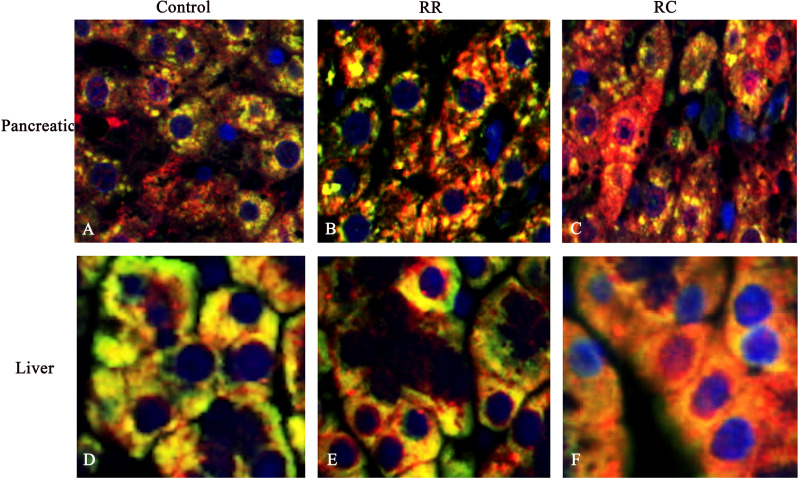
Infants born with intrauterine growth restriction (IUGR) followed by postnatal rapid catch-up growth are prone to develop metabolic diseases later in life. However, its effects and underlying molecular mechanisms remain unclear. Male offspring from mothers fed a low-protein diet (maternal diet, 8% protein) were randomly assigned to one of the following groups: normal diet (RC group) and low-protein diet (RR group). Offspring were fed a normal-protein diet (maternal diet, 20% protein, control group). In our study, at birth, approximately 93.33% of the offspring fats from mothers fed a low-protein diet were born with IUGR. Following weaning, all IUGR groups showed catch-up growth. The RC groups showed accelerated and early postnatal catch-up growth and regained the same weight as the controls from 3 to 9 months. At 9 months of age, the RC group animals had shorter telomere length (TL) than the Control and RR groups and also showed higher oxidative stress levels and lipid levels. Furthermore, compared to the control group, there was increased mitochondrial translocation of telomerase reverse transcriptase (TERT) under conditions of elevated oxidative stress in the RC group. There was no significant difference in mtDNA content between the RC and control groups. Moreover, at 9 months of age, only in the RC group were liver and pancreas Sirt3 expression levels higher than in the Control and RR groups. These data indicate that IUGR with early and rapid catch-up growth is exposed to chronic oxidative stress and subsequently affects TL and TERT translocations. Chronic oxidative stress may promote the translocation of TERT from the nucleus to mitochondria and protect tissues from oxidative stress damage.
Copyright: © 2025 He et al. This is an open access article distributed under the terms of the Creative Commons Attribution License, which permits unrestricted use, distribution, and reproduction in any medium, provided the original author and source are credited.
Conflict of interest statement
The authors have declared that no competing interests exist.
Figures



References
-
- Naemi M, Farahani Z, Norooznezhad AH, Khodarahmi R, Hantoushzadeh S, Ahangari R, et al. Possible potentials of curcumin for pregnancies complicated by intra-uterine growth restriction: role of inflammation, angiogenesis, and oxidative stress. Heliyon. 2021;7(9):e08034. doi: 10.1016/j.heliyon.2021.e08034 - DOI - PMC - PubMed
-
- Jansson N, Pettersson J, Haafiz A, Ericsson A, Palmberg I, Tranberg M, et al. Down-regulation of placental transport of amino acids precedes the development of intrauterine growth restriction in rats fed a low protein diet. J Physiol. 2006;576(Pt 3):935–46. doi: 10.1113/jphysiol.2006.116509 - DOI - PMC - PubMed
MeSH terms
Substances
LinkOut - more resources
Full Text Sources
