


Mathematical modeling of sorption isotherms and the thermodynamic properties of vacuum-dried and freeze-dried Barhi dates
- PMID: 40473686
- PMCID: PMC12141683
- DOI: 10.1038/s41598-025-01935-x
Mathematical modeling of sorption isotherms and the thermodynamic properties of vacuum-dried and freeze-dried Barhi dates
Abstract
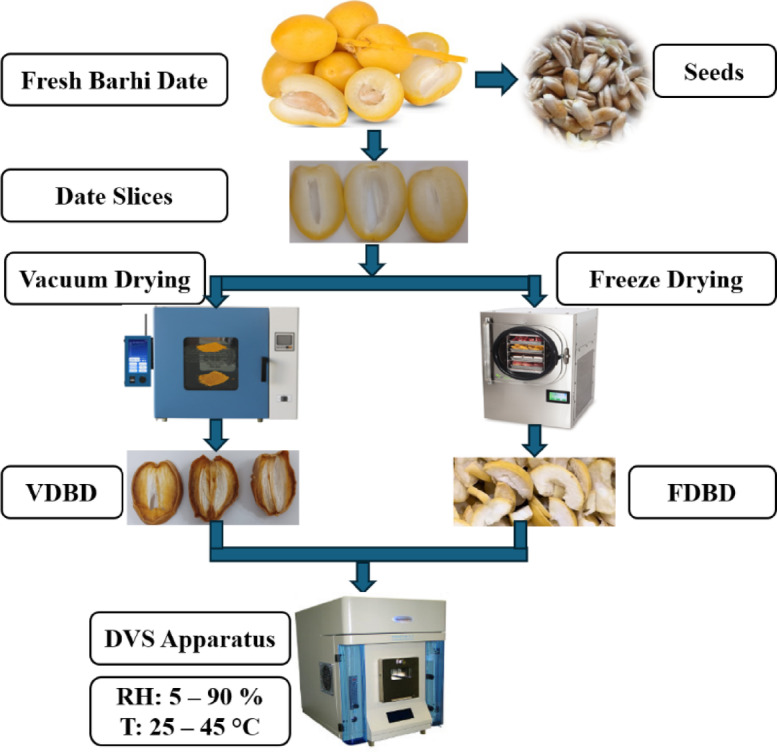
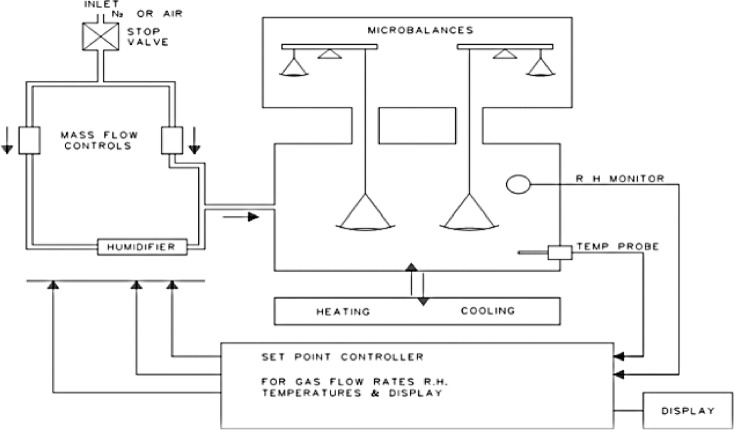
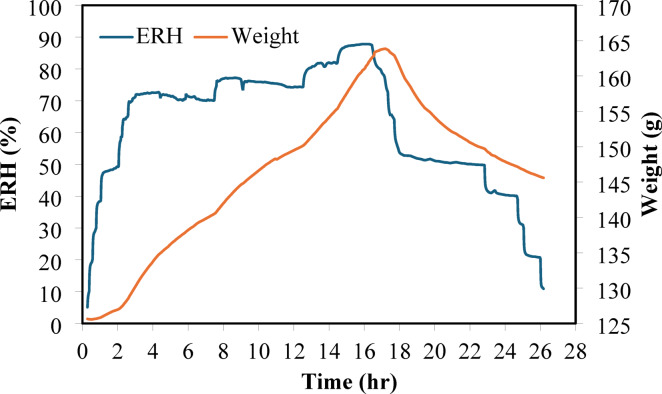
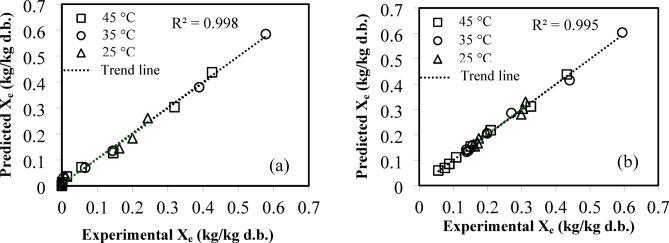
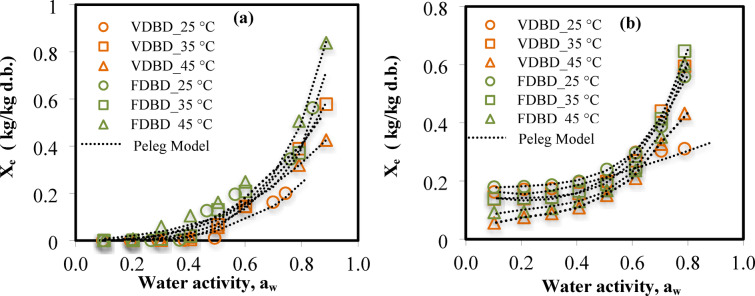
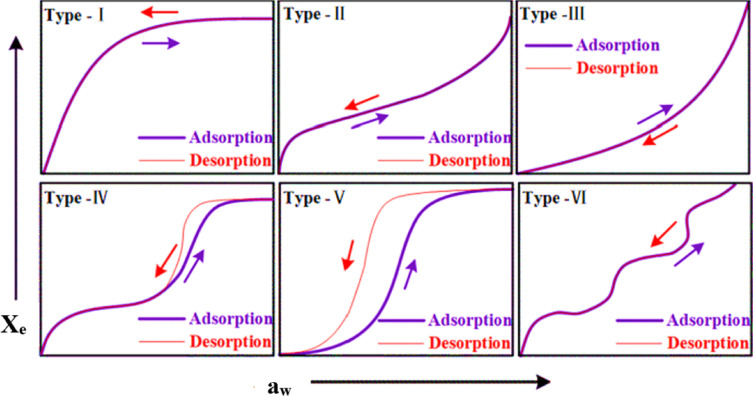
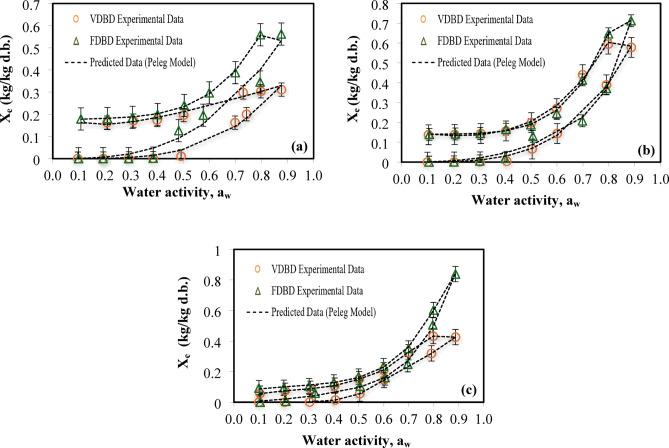
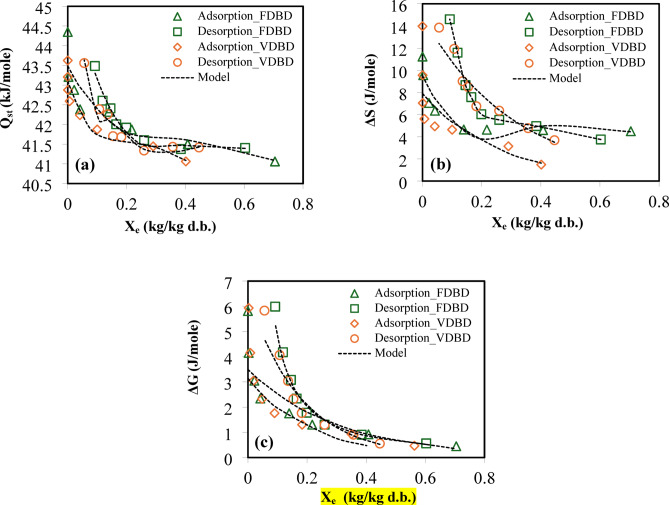
Studying the moisture sorption behavior of Barhi dates is key to enhancing their drying efficiency, packaging strategies, and storage conditions to ensure long-term stability and shelf-life. This research analyzed the sorption isotherms of vacuum-dried (VDBD) and freeze-dried Barhi dates (FDBD) via a dynamic vapor sorption apparatus across different temperatures and a wide range of water activity levels. Various mathematical models were evaluated to determine their accuracy in predicting sorption behavior, and the thermodynamic properties of sorption were examined in relation to the equilibrium moisture content (Xe). The results demonstrated that VDBD and FDBD followed Type III adsorption and Type V desorption isotherms. Adsorption increased with increasing water activity, whereas desorption displayed the opposite trend, with significant hysteresis between the two processes. The Peleg model provided a precise fit for both the adsorption and desorption isotherms across all the tested conditions. To maintain safe storage at the studied temperatures and 50% relative humidity, the recommended moisture content was 5% for VDBD and 9%. for FDBD. Additionally, the net isosteric heat of sorption (Qst), differential entropy (ΔS), and Gibbs free energy (ΔG) exhibited inverse correlations with Xe, increasing as the moisture content decreased during sorption. These thermodynamic parameters were effectively modeled as functions of Xe, indicating that both adsorption and desorption were nonspontaneous processes. This study provides critical insights for food processors to refine drying protocols and establish optimal storage conditions for VDBD and FDBD, ultimately preserving quality and preventing microbial contamination.
Keywords: Barhi date; Drying; Dynamic vapor sorption isotherms; Mathematical modeling; Thermodynamic properties.
© 2025. The Author(s).
Conflict of interest statement
Declarations. Competing interests: The authors declare no competing interests.
Figures
References
-
- Abu-Shama, H. S., Abou-Zaid, F. O. F. & El-Sayed, E. Z. Effect of using edible coatings on fruit quality of Barhi date cultivar. Sci. Hort.265, 109262. 10.1016/j.scienta.2020.109262 (2020). - DOI
-
- Morsy, M. K. Effect of enzymatic extraction method on quality parameters and sensory acceptability of date dibs produced from second grade dates. Annals Agricultural Sci. Moshtohor. 60, 53–62. 10.21608/assjm.2022.227246 (2022). - DOI
-
- Mehyar, G. F., Assi, E., Alsmairat, N. M., Holley, R. A. & N. G. & Effect of edible coatings on fruit maturity and fungal growth on B Erhi dates. Int. J. Food Sci. Technol.49, 2409–2417. 10.1111/ijfs.12562 (2014). - DOI
-
- Alsawmahi, O. N. et al. Phenolic, tannin, antioxidant, color, and sensory attributes of Barhi date (Phoenix dactylifera) fruit stored in modified atmosphere packages. J. Food Biochem.42, e12576. 10.1111/jfbc.12576 (2018). - DOI
-
- Alhamdan, A. M., Elkhair, D. O. & Ehmed, K. A. Modeling of respiration rate of fresh date fruits (Barhi cultivar) under aerobic conditions. J. Adv. Agricultural Technol.210.12720/joaat.2.2.120-124 (2015).
LinkOut - more resources
Full Text Sources
