


The relationship between resting EEG features and physical exercise among university students with depressive symptoms
- PMID: 40473702
- PMCID: PMC12141633
- DOI: 10.1038/s41598-025-04430-5
The relationship between resting EEG features and physical exercise among university students with depressive symptoms
Abstract
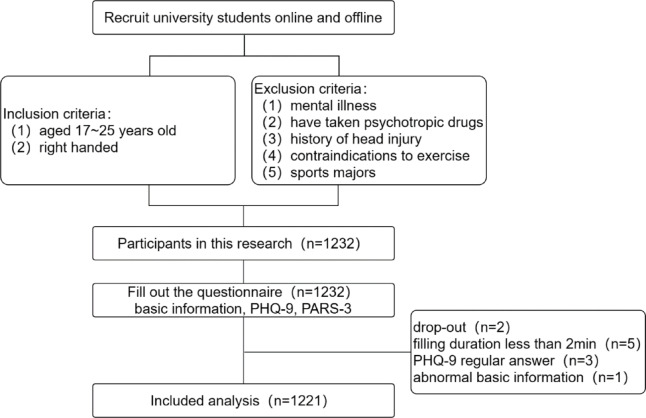
To explore the relationship between resting EEG features and physical exercise among university students with depressive symptoms. A total of 1221 university students were recruited to complete a basic information form, the Patient Health Questionnaire-9 (PHQ-9), and the Physical Activity Rating Scale-3 (PARS-3). Resting EEG signals were collected from a subsample of 132 students. Latent Class Analysis was used to classify depressive symptoms, and the relationship between different resting EEG features and physical exercise was analyzed. Depressive symptoms among university students were classified into three latent classes, with Class 3 exhibiting the most severe symptoms. Significant differences were observed among the three groups in delta lateralization in the central region, alpha1 and alpha2 power in the parietal region, theta and alpha1 lateralization in the lateral frontal region, and alpha1 lateralization in the posterior temporal region (all p < 0.05). Alpha1 lateralization in the dorsolateral frontal cortex (F3, F4) was positively correlated with PARS-3 scores (r = 0.183, p = 0.036) and physical exercise intensity (r = 0.225, p = 0.010). Theta and alpha1 lateralization in the lateral frontal region (F7, F8) were positively correlated with exercise frequency (r = 0.229, p = 0.008; r = 0.214, p = 0.014, respectively). EEG lateralization features in the dorsolateral prefrontal and lateral frontal regions may serve as shared neurophysiological markers reflecting both depressive symptom severity and engagement in physical exercise among university students.
Keywords: Depressive symptoms; Latent class analysis; Physical exercise; Resting EEG; University students.
© 2025. The Author(s).
Conflict of interest statement
Declarations. Competing interest: The authors declare no competing interests.
Figures



References
MeSH terms
LinkOut - more resources
Full Text Sources
Medical
Miscellaneous
