


Maternal Nutritional Environment and the Development of the Melanocortin System
- PMID: 40474775
- PMCID: PMC12142304
- DOI: 10.1002/cph4.70020
Maternal Nutritional Environment and the Development of the Melanocortin System
Abstract
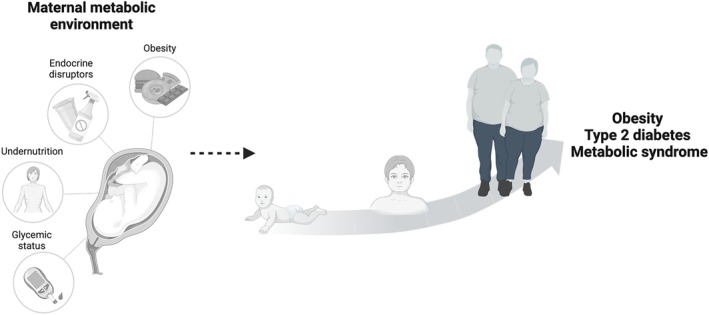
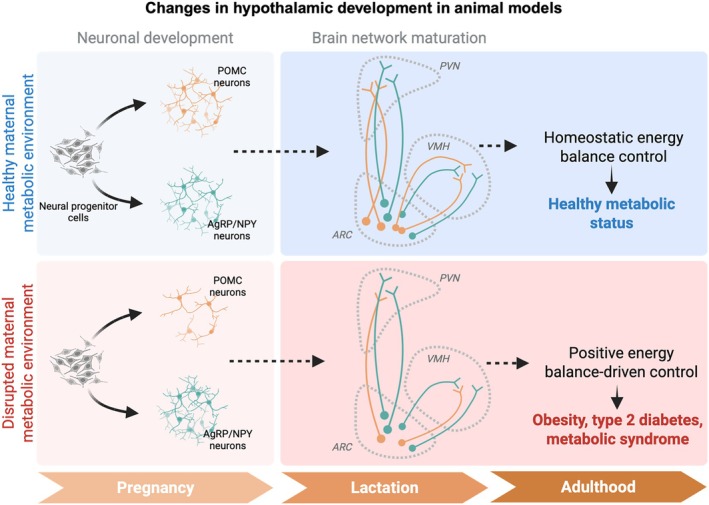
The maternal nutritional and/or metabolic environment is crucial for future offspring health outcomes, and impairments during critical periods of development can alter the development of brain circuits that regulate energy balance, predisposing individuals to metabolic disorders throughout life. Epigenetic changes, changes in cell number and/or organ structure, and cellular metabolic differentiation could be some of the fetal adaptations leading to the development of metabolic disorders later in life. Here, we review animal models showing that the nutritional environment to which the offspring are exposed during their perinatal life can influence the development of the hypothalamic melanocortin system, promoting increased feeding and fat deposition. Following maternal undernutrition, the development of obesity in the offspring may be related to decreased POMC neuronal function since birth. Similarly, maternal diabetes and obesity also induce hypothalamic changes that result in an imbalance in AgRP/NPY and POMC expression during adulthood. Widespread impairments in brain development may also induce a global downregulation of the melanocortin system. Furthermore, animal models highlight that the time and type of exposure are key to the offspring outcomes, as are their sex and age. Possible sex-specific differences remain unclear, as most studies have evaluated only the male offspring, despite females having an increased risk of developing obesity and gestational diabetes during their pregnancy, which imposes a transgenerational effect of metabolic disorders. Studies aiming at evaluating the long-term effects of the maternal nutritional environment in both males and females could help delineate how the susceptibility to metabolic disorders development worsens over time.
Keywords: diabetes; energy balance; hypothalamus; obesity; offspring.
© 2025 The Author(s). Comprehensive Physiology published by Wiley Periodicals LLC on behalf of American Physiological Society.
Conflict of interest statement
The authors declare no conflicts of interest.
Figures
References
-
- Ahima, R. S. , Kelly J., Elmquist J. K., and Flier J. S.. 1999. “Distinct Physiologic and Neuronal Responses to Decreased Leptin and Mild Hyperleptinemia.” Endocrinology 140: 4923–4931. - PubMed
Publication types
MeSH terms
Substances
Grants and funding
LinkOut - more resources
Full Text Sources
Medical
Miscellaneous
