


TcMAC21 mouse model recapitulates abnormal vascular physiology observed in humans with Down syndrome
- PMID: 40474784
- PMCID: PMC12141928
- DOI: 10.14814/phy2.70384
TcMAC21 mouse model recapitulates abnormal vascular physiology observed in humans with Down syndrome
Abstract
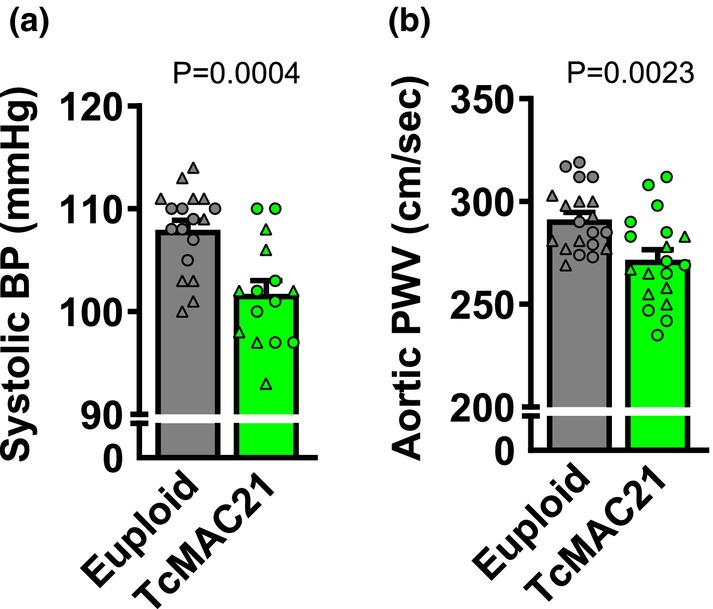
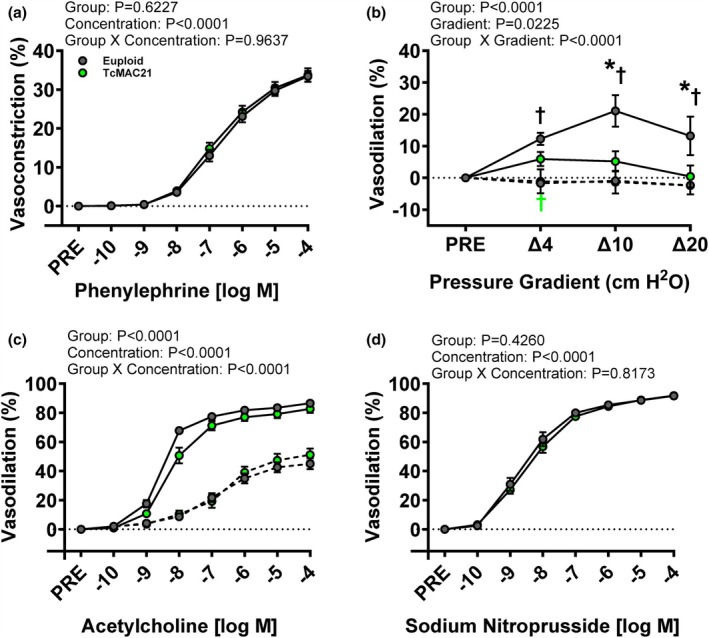
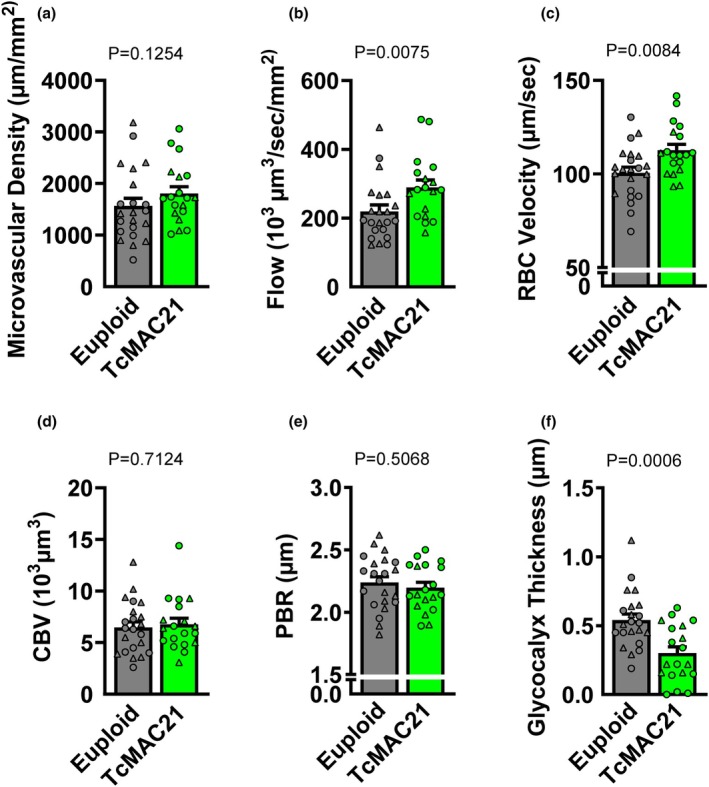
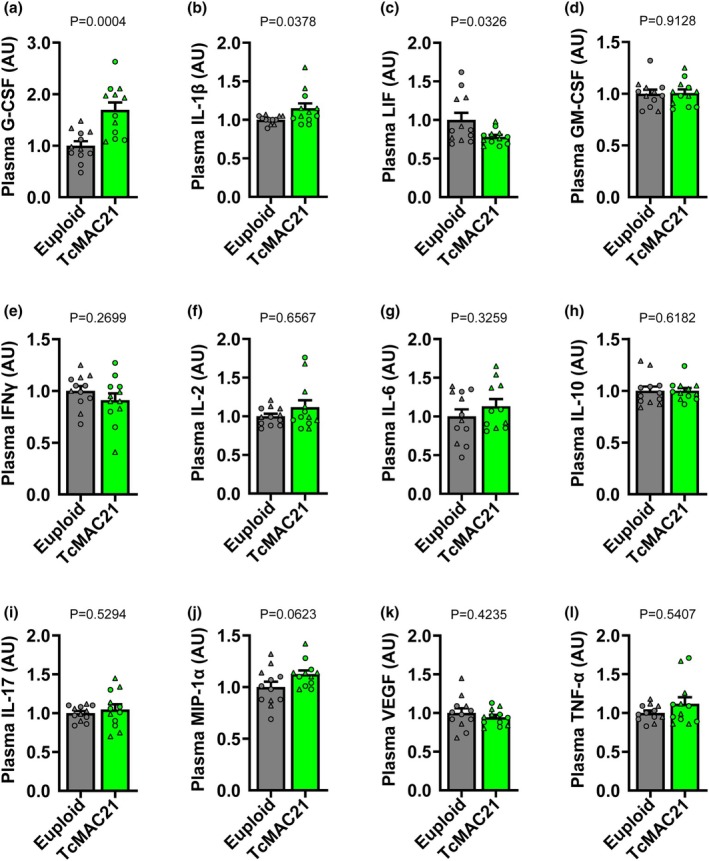
People with Down syndrome (DS) have abnormal vascular physiology, demonstrated by low systolic blood pressure (BP) and low aortic stiffness that are accompanied by endothelial dysfunction. The TcMAC21 mouse model of DS has many features observed in people with DS, although vascular physiology has not been studied. At 4 months old, male and female TcMAC21 mice exhibited lower systolic BP and aortic stiffness, as determined by aortic pulse wave velocity, which are accompanied by blunted carotid artery flow-mediated vasodilation, indicating endothelial dysfunction, compared to euploid (i.e., control) mice. To determine a potential mechanism for blunted flow-mediated vasodilation, we assessed endothelial glycocalyx properties, which mechanotransduces fluid shear stress to the endothelial cells, stimulating flow-mediated vasodilation. We observed a lower glycocalyx thickness in the mesenteric microcirculation of TcMAC21 mice. Vascular abnormalities in TcMAC21 mice were accompanied by systemic inflammation. This is the first study to examine vascular physiology in the TcMAC21 mouse model of DS and investigate glycocalyx properties in any model of DS, including humans. Taken together, these findings support the use of the TcMAC21 mouse model to study the vascular physiology in people with DS and may provide translational insight into the role of glycocalyx in vascular abnormalities in DS.
Keywords: aortic stiffness; blood pressure; endothelium; glycocalyx; trisomy 21.
© 2025 The Author(s). Physiological Reports published by Wiley Periodicals LLC on behalf of The Physiological Society and the American Physiological Society.
Conflict of interest statement
No conflicts of interest, financial or otherwise, are declared by the authors.
Figures
References
-
- Agbaje, A. O. (2022). Arterial stiffness precedes hypertension and metabolic risks in youth: A review. Journal of Hypertension, 40, 1887–1896. - PubMed
-
- Bastianini, S. , Silvani, A. , Berteotti, C. , Lo Martire, V. , & Zoccoli, G. (2012). Mice show circadian rhythms of blood pressure during each wake‐sleep state. Chronobiology International, 29, 82–86. - PubMed
-
- Broers, C. J. , Gemke, R. J. , Weijerman, M. E. , van der Sluijs, K. F. , & van Furth, A. M. (2012). Increased pro‐inflammatory cytokine production in down syndrome children upon stimulation with live influenza a virus. Journal of Clinical Immunology, 32(2), 323–329. 10.1007/s10875-011-9625-4 - DOI - PubMed
MeSH terms
Grants and funding
LinkOut - more resources
Full Text Sources
Medical
