Review
. 2025 May 12:51:150-176.
doi: 10.1016/j.bioactmat.2025.05.002. eCollection 2025 Sep.

Antibacterial MXenes: An emerging non-antibiotic paradigm for surface engineering of orthopedic and dental implants

Affiliations
Review

Antibacterial MXenes: An emerging non-antibiotic paradigm for surface engineering of orthopedic and dental implants

Sathishkumar Gnanasekar et al. Bioact Mater. .

Abstract

The colonization of planktonic bacteria onto implant surfaces is a serious concern in the medical field due to increasing infection-related mortality and fiscal difficulties worldwide. Various static, dynamic, and active coating techniques were established to tackle implant-associated infections (IAIs). However, the existing implant coating methods often confront issues with poor universality for different substrates, adaptability, stability, and the emergence of multi-drug resistance (MDR). The miraculous two-dimensional (2D) MXenes with outstanding multimodal bactericidal effects have been spotted as promising non-antibiotic implant surface coating additives for superior antibiofilm and osseointegration properties. This review systematically assesses the recent progress of antibacterial MXenes and their revolutionary usage to prevent peri-implantitis. We specifically sought to disclose the various forms of MXenes, such as composites, heterojunctions (HJs), and functional biomaterials used in combatting MDR and non-MDR bacterial pathogens by adopting therapeutic ventures such as photothermal therapy (PTT), photodynamic therapy (PDT), chemodynamic therapy (CDT), and sonodynamic therapy (SDT). In addition, we outlined the extension of MXene antibacterial systems for orthopedic and dental implant surface engineering to improve their longevity and safety. A thorough understanding of antibacterial MXenes synthesis, surface modification strategies, and biocompatible functional properties was deliberated to facilitate the construction of innovative coatings. Lastly, some viewpoints on the current limitations and key considerations for the future concept design of MXenes-coated implants were contemplated constructively to promote clinical outcomes.

Keywords: Antibacterial; Coatings; MXenes; Osseointegration; Peri-implantitis; Surface modification.


Conflict of interest statement

The authors declare that they have no conflict of interest.

Figures
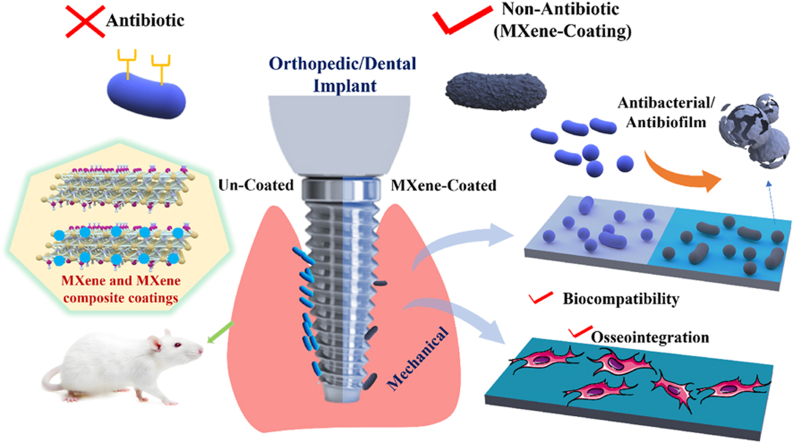
Image 1
Graphical abstract
Scheme 1
Scheme 1
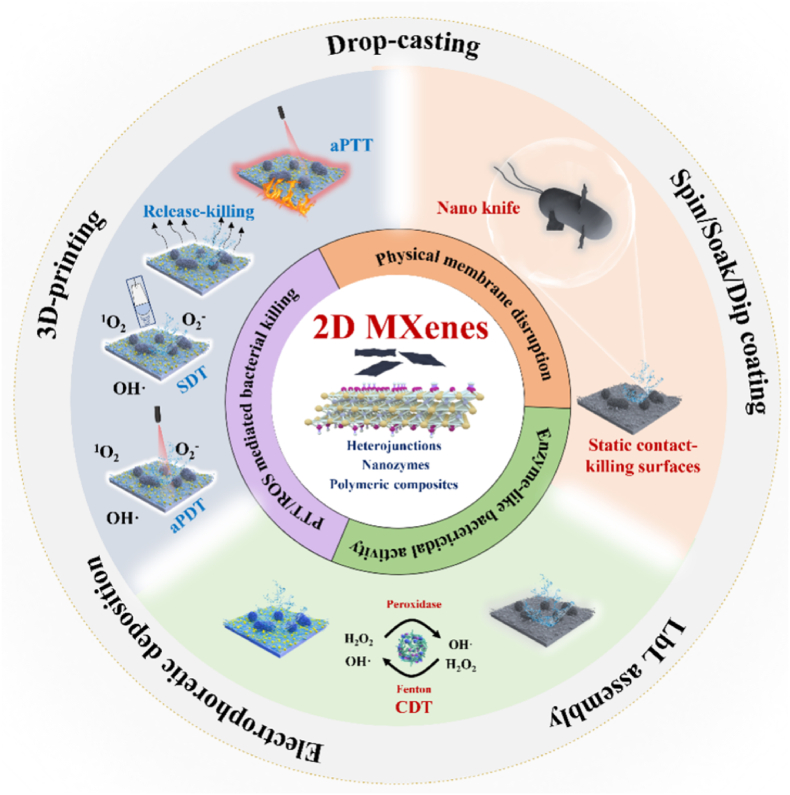
Overview of the MXenes-based antibacterial coatings in orthopedic and dental implant surface engineering.
Fig. 1
Fig. 1
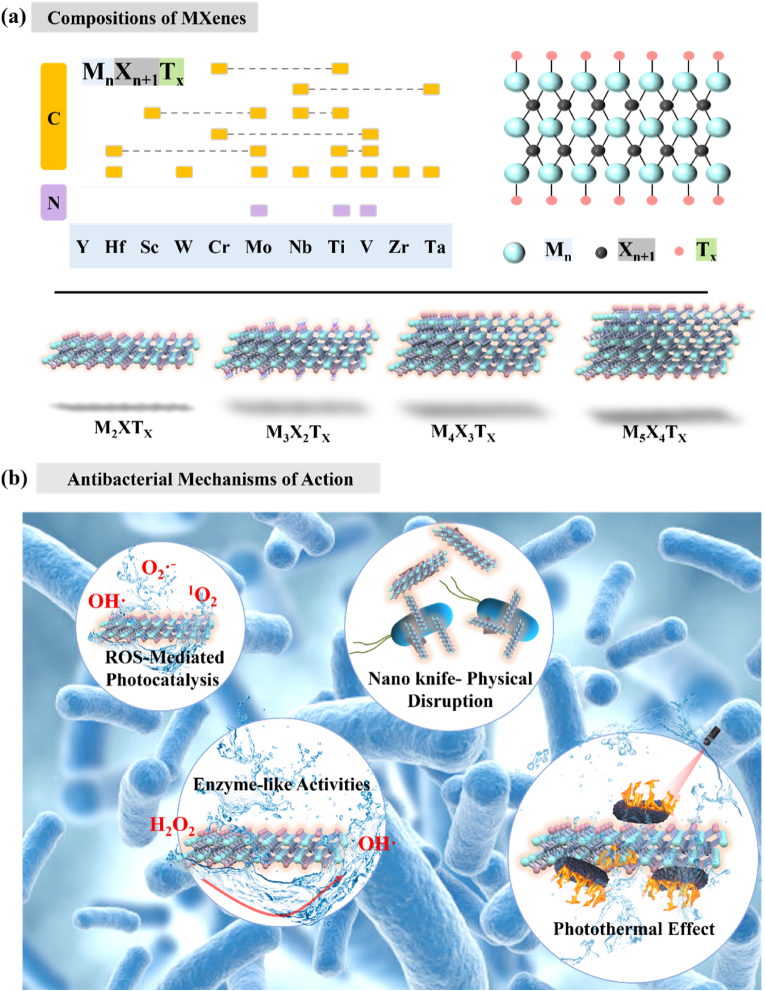
General chemical and antibacterial characteristics of MXenes. (a) Elemental compositions used to build MXenes and its four typical structures (bottom). (b) Schematic of MXenes-induced antibacterial mechanisms of action representing the bacterial-killing strategies.
Fig. 2
Fig. 2
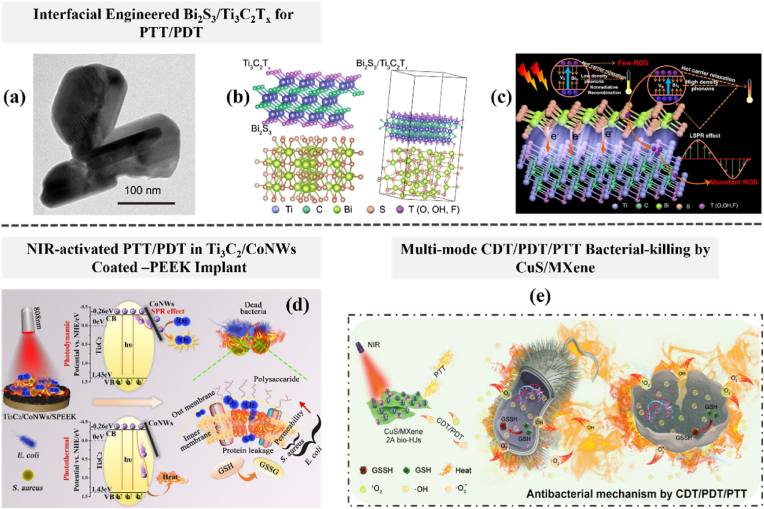
Interfacialy engineered bactericidal MXene heterostructure with multimodal action. (a) TEM micrograph of interfacially-engineered Ti3C2Tx/Bi2S3. (b) Optimized Ti3C2Tx/Bi2S3 crystal structure formation. (c) Schematic of Ti3C2Tx/Bi2S3 Schottky heterostructure triggered photodynamic and photothermal mechanisms. Reproduced with permission [132]. Copyright 2021, The authors Springer Nature. (d) Schematic of Ti3C2/CoNWs deposited SPEEK surface and its bacterial killing efficiency via PTT/PDT mechanism. Reproduced with permission [46]. Copyright 2020, Elsevier. (e) Schematic of CuS/MXene induced CDT/PDT/PTT antibacterial mechanism. Reproduced with permission [91]. Copyright 2023, Wiley-VCH GmbH.
Fig. 3
Fig. 3
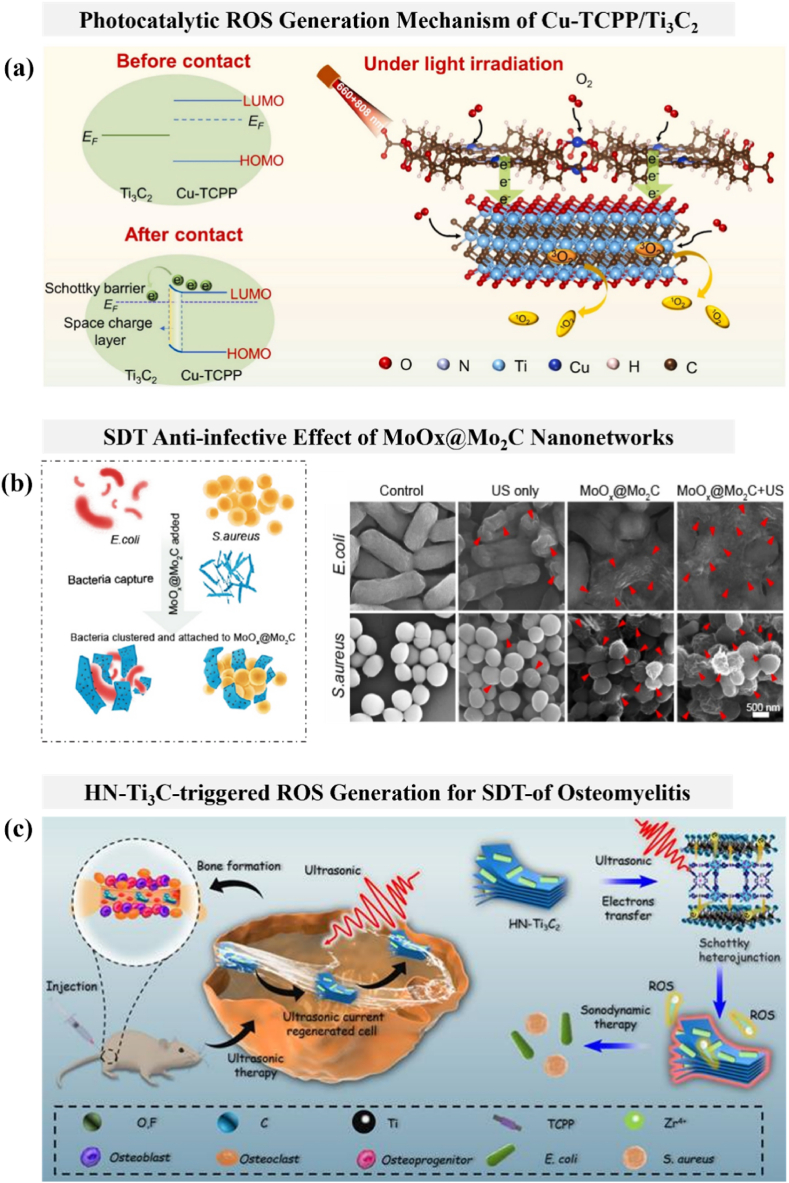
Photocatalytic and US-triggered bactericidal ROS generation by MXene interfaces (a) The mechanism scheme of enhanced ROS generation by Cu-TCPP/Ti3C2 interface. Reproduced with permission [96]. Copyright 2023, Elsevier. (b) Schematic of bacterial capturing and scanning electron microscopic (SEM) images of morphological alterations after MoOx@Mo2C treatments with US irradiation. Reproduced with permission [92]. Copyright, 2023 Elsevier. (c) Schematic of SDT-mechanism of HN-Ti3C2 in osteomyelitis treatment and bone formation. Reproduced with permission [93]. Copyright, 2023 Ivyspring International Publisher (CC BY 4.0).
Fig. 4
Fig. 4
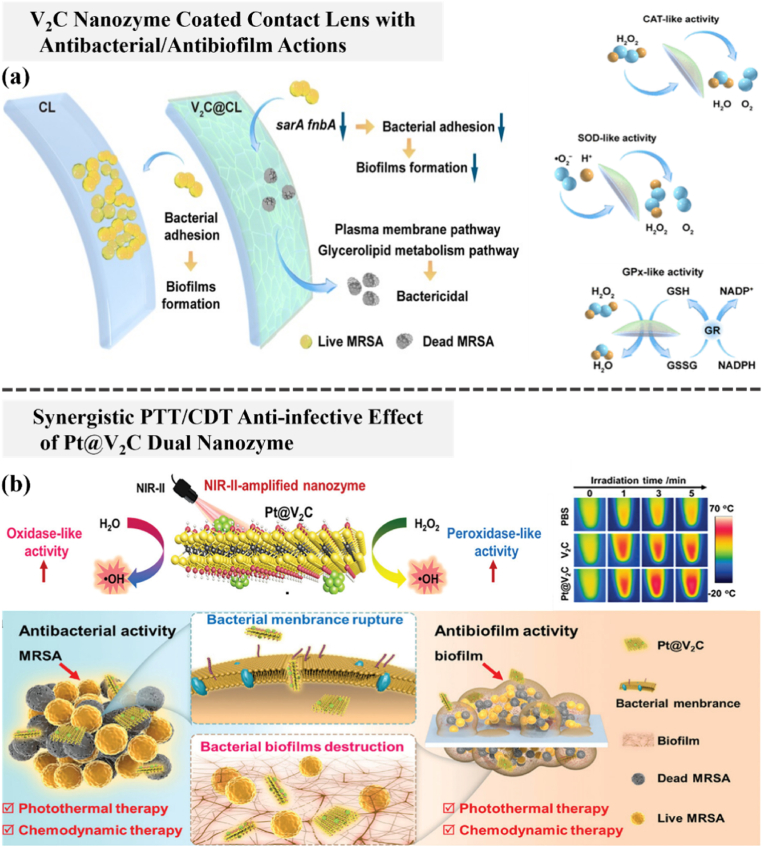
Nanozymatic MXenes in ROS generation and synergistic antibacterial actions. (a) Schematic of different enzyme-like actions by V2C@CL enabled multifunctional (anti-adhesion and bactericidal) performances in preventing infectious keratitis. Reproduced with permission [81]. Copyright 2024, The authors (CC BY-NC). (b) Schematic of NIR-II–amplified dual PTT/enzyme-like activities and antibacterial/antibiofilm mechanism of Pt@V2C. Reproduced with permission [78]. Copyright 2024, Wiley-VCH.
Fig. 5
Fig. 5
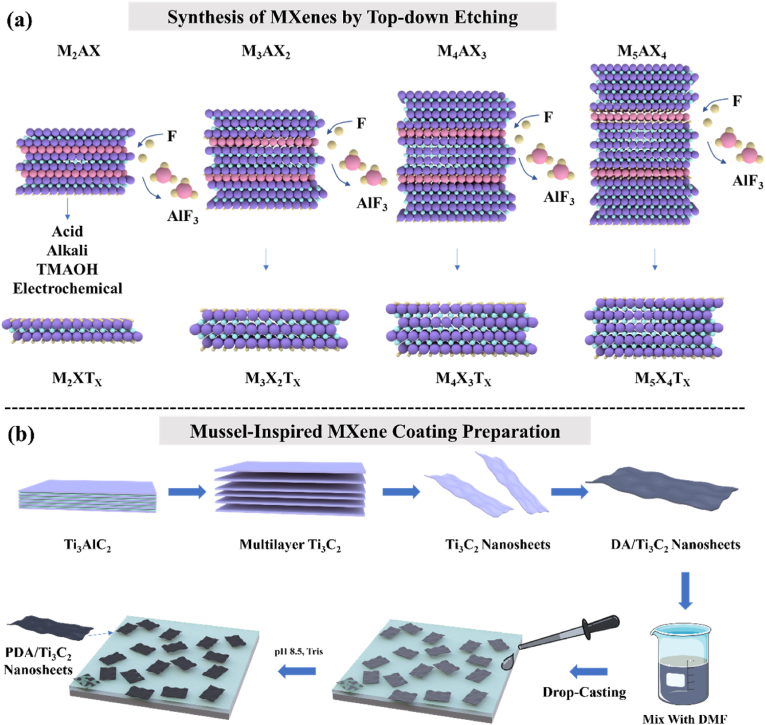
Synthesis of MXene (top-down) and mussel-inspired coating preparation. (a) Selective etching of the A-atom layer from MAX phase (n = 1–4) by various top-down approaches to fabricate different MXenes of various structural compositions. (b) Mussel-inspired MXene nanocoating preparation on Ti substrates by drop-casting followed by alkaline buffer soaking.
Fig. 6
Fig. 6
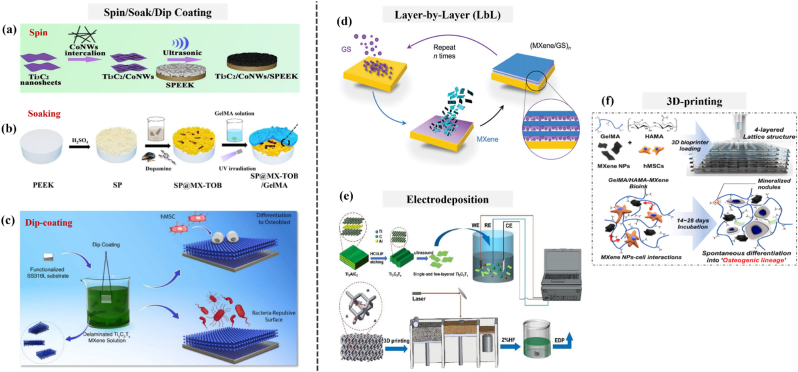
Construction of MXene-modified biomedical implants. (a) Spin-assisted assisted deposition of Ti3C2/CoNWs HJs. Reproduced with permission [46]. Copyright, 2020 Elsevier. (b) SP@MX-TOB/GelMA coating formation by soaking method. Reproduced with permission [168]. Copyright, 2020 American Chemical Society. (c) Ti3C2Tx immobilization on 316 L SS surfaces by dip-coating method. Reproduced with permission [170]. Copyright, 2024 The Authors Elsevier. (d) Schematic of LbL nanofabrication of (MXene/GS)n multilayers on biaxially-oriented PS films. Reproduced with permission [171]. Copyright 2024 The Authors Wiley-VCH. (e) Schematic of Ti3C2Tx/HAp composite coatings fabrication on 3D printed Ti-6Al-4V porous scaffold surface using electrodeposition method. Reproduced with permission [176]. Copyright, 2023 Elsevier. (f) Preparation of GelMA/HA methacryloyl (HAMA)-MXene bio-inks for 3D-bioprinting. Reproduced with permission [178]. Copyright, 2023 The Authors Elsevier.
Fig. 7
Fig. 7
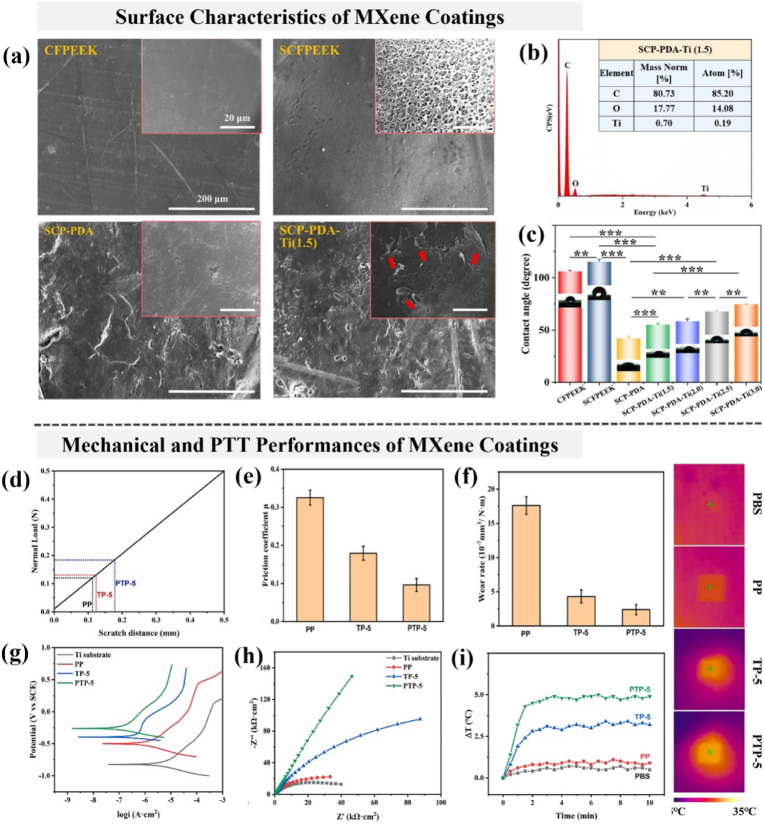
Surface and mechanical performances of MXene-modified implant substrates. (a) SEM images of uniform PDA/Ti3C2Tx coating. (b) EDS spectrum showing the elemental signals of PDA/Ti3C2Tx. (c) WCA values of PDA/Ti3C2Tx-coated carbon fiber-reinforced PEEK (CFPEEK) and SCFPEEK. Reproduced with permission [157]. Copyright, 2022 American Chemical Society. (d) The linear relation between scratch distance and normal load during nano-scratch test of PTP-5. (e) Friction coefficient. (f) wear rate. (g) tafel plots. (h) Nyquist plots. (i) Temperature change curves of PTP-5 coatings under 100 mW/cm2 NIR irradiation and respective infrared thermal images. Reproduced with permission [156]. Copyright 2024 Elsevier.
Fig. 8
Fig. 8
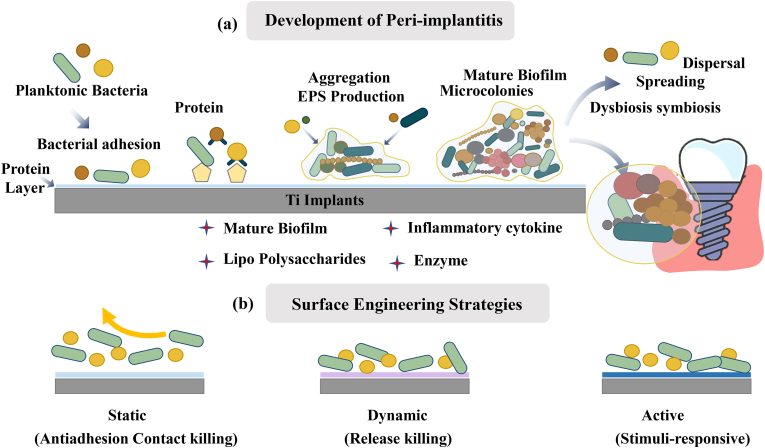
(a) Schematic of peri-implantitis developmental progress. (b) Existing bactericidal surface engineering strategies to combat peri-implantitis.
Fig. 9
Fig. 9
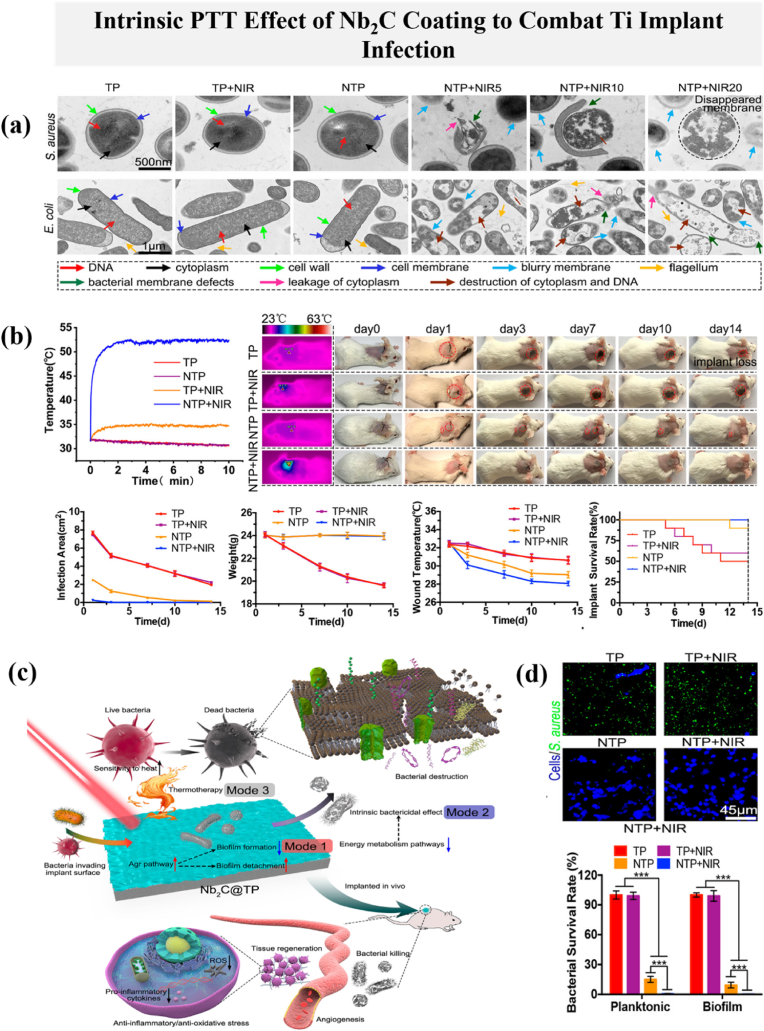
PTT effect of Nb2C MXene coating in bacterial clearance. (a) TEM images of planktonic bacteria showing the cell membrane damaged by the PTT effect of Nb2C. (b)In vivo temperature curves with thermal images in 10 min and representative photographs of the mouse subcutaneous implant infection model (red circles indicate infection area); Infection area, body weight, wound temperature, and implant survival rate of the mouse model. (c) Schematic of tri-modal bacterial killing and tissue regeneration properties of Nb2C@TP. (d) Fluorescent images of S. aureus collected from injected mouse infection model and its survival rate. Reproduced with permission [51]. Copyright 2021 American Chemical Society.
Fig. 10
Fig. 10
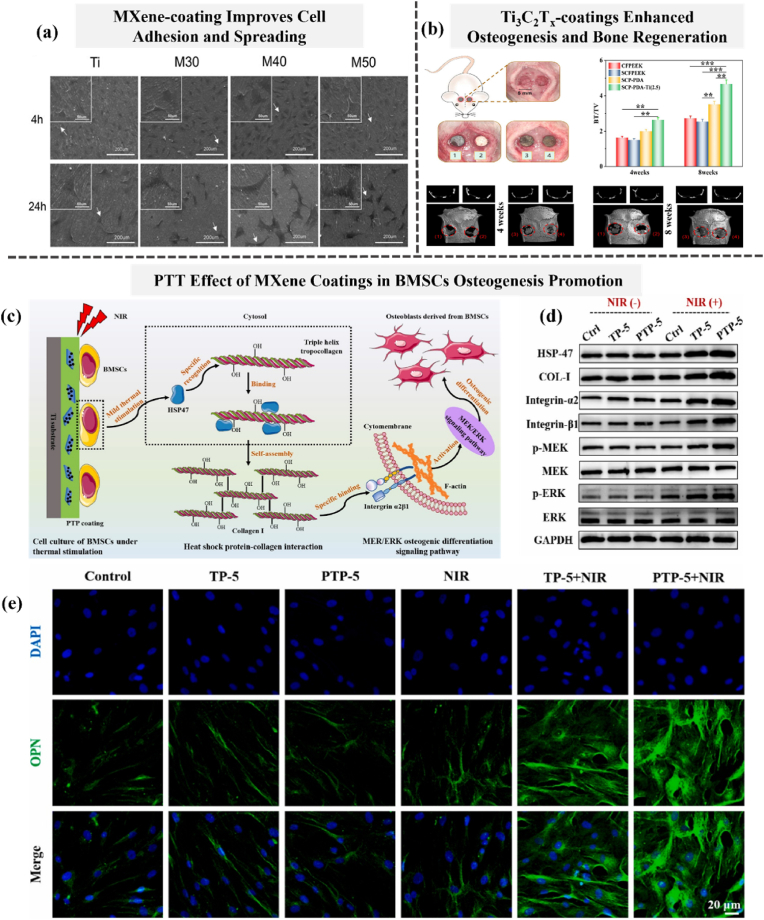
Biocompatibility and osteogenic properties MXene coated implants. (a) SEM micrographs display MXene-coated samples at different voltages and thicknesses, showing enhanced cell adhesion and spreading compared to control Ti. Reproduced under the terms of the CC-BY license [175]. Copyright 2022, Huang, Fu and Mo, Frontiers. (b) Ti3C2Tx MXene coatings significantly promoted bone healing and regeneration, a finding supported by experiments on repairing bone defects in rat skull models. Reproduced with permission [157]. Copyright 2022, American Chemical Society. (c) Schematic of the photothermal effect driven osteogenic differentiation mechanism. (d) Relative expression level of osteogenic genes for different treatment groups. (e) The representative immunofluorescent stained images of the BMSCs denote the rapid pro-osteogenesis of PTP-modified Ti substrates under thermal stimulus (Blue: cell nuclei; Green: OPN). Reproduced with permission [156]. Copyright 2024, The Authors Elsevier.
Fig. 11
Fig. 11
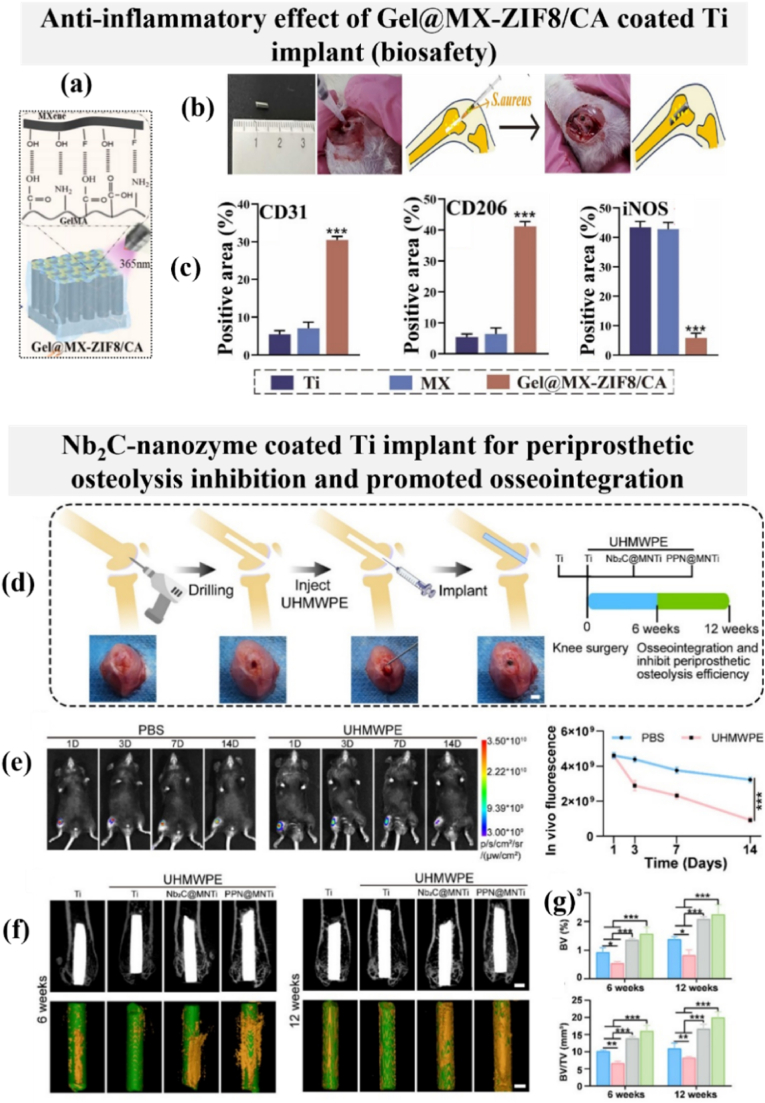
Preclinical validation and biosafety of MXene-modified implants. (a)In vivo anti-inflammatory effects of Gel@MX-ZIF8/CA coated Ti implants. (b) Implantation in a rat model with S. aureus infected bone defects. (c) Quantification of CD31, CD206, and iNOS by IHC staining showing better anti-inflammatory and angiogenesis after Gel@MX-ZIF8/CA implant treatment. Reproduced with permission [181]. Copyright 2025, Elsevier B.V. (d) Experimental design and PPN@MNTi implantation. (e) Fluorescence imaging detection of Cy5-labeled PPN coating biodegradation level and its corresponding quantitative fluorescence intensity acquired using IVIS imaging scanner. (f) Micro-CT images of PPN@MNTi implanted mouse femurs and three-dimensional (3D) reconstructed images showing the surrounding neonatal bone formation (green: implant; yellow: bone tissue). (g) Representative quantification of BV and BV/TV. Reproduced with permission [208]. Copyright 2024, American Chemical Society.

References

    1. Chae K., Jang W.Y., Park K., Lee J., Kim H., Lee K., Lee C.K., Lee Y., Lee S.H., Seo J. Antibacterial infection and immune-evasive coating for orthopedic implants. Sci. Adv. 2020;6(44) - PMC - PubMed
    1. Bandyopadhyay A., Mitra I., Goodman S.B., Kumar M., Bose S. Improving biocompatibility for next generation of metallic implants. Prog. Mater. Sci. 2023;133 - PMC - PubMed
    1. Gulati K., Chopra D., Kocak-Oztug N.A., Verron E. Fit and forget: the future of dental implant therapy via nanotechnology. Adv. Drug Deliv. Rev. 2023 - PubMed
    1. Duncan W.J., Coates D.E. Meeting the challenges and clinical requirements for dental regeneration; the New Zealand experience. Bone. 2022;154 - PubMed
    1. Hussain B., Khan S., Agger A.E., Ellingsen J.E., Lyngstadaas S.P., Bueno J., Haugen H.J. A comparative investigation of chemical decontamination methods for in-situ cleaning of dental implant surfaces. J. Funct. Biomater. 2023;14(8):394. - PMC - PubMed

LinkOut - more resources