


Quality of systematic reviews and meta-analyses in dermatology
- PMID: 40476265
- PMCID: PMC11795973
- DOI: 10.1002/cesm.12056
Quality of systematic reviews and meta-analyses in dermatology
Abstract
Introduction: Although the number of published systematic reviews and meta-analyses in dermatology has increased over the past decade, their quality is unknown.
Objective: The objective of this study was to determine the change in risk of bias, methodological quality and reporting quality of systematic reviews and meta-analyses in dermatology between 2010 and 2019.
Methods: We conducted a comparative study of systematic reviews and meta-analyses published in the 10 highest-ranked dermatology journals in 2010 and 2019. Studies were identified through electronic searches of MEDLINE, Embase, and eight other bibliographic databases. Risk of bias and methodological quality were assessed in duplicate with the risk of bias in systematic reviews (ROBIS) and A MeaSurement Tool to Assess systematic Reviews-2 (AMSTAR-2) tools, respectively, with the latter only applied to studies of interventions. Reporting quality was assessed with the Preferred Reporting Items of systematic reviews and Meta-Analyses (PRISMA) 2009 and PRISMA for abstracts (PRISMA-A) 2013 statements.
Results: We included 27 systematic reviews and meta-analyses published in 2010 and 127 published in 2019. There was no evidence of a difference in the proportion of systematic reviews and meta-analyses at high/unclear risk of bias with ROBIS (Fisher's exact test = 1.00) or critically low methodological quality using AMSTAR-2 (Fisher's exact test = 0.456), between 2010 and 2019. There was evidence of a difference in proportion of PRISMA (t(26) = 2.7, p = 0.01), and very strong evidence of a difference in proportion of PRISMA-A (t(26) = 4.2, p < 0.001) checklist items adequately reported between 2010 and 2019. The difference in mean proportion of PRISMA checklist items adequately reported was 3.6 items more (95% confidence interval [CI]: 1.8-5.4 items more) in 2019 (mean = 10.7 items, SD = 2.4 items) than in 2010 (mean = 7.1 items, SD = 2.9 items), and of PRISMA-A checklist items adequately reported was 1.1 items more (95% CI: 0.2-2.0 items more) in 2019 (mean = 5.6 items, SD = 1.5 items) than in 2010 (mean = 4.4 items, SD = 1.7 items).
Conclusions: No improvement was observed in the overall methodological quality of included systematic reviews and meta-analyses; however, there was strong evidence of improvement in the overall reporting quality.
Keywords: dermatology; meta‐analysis; methodological quality; reporting quality; risk of bias; systematic review.
Plain language summary
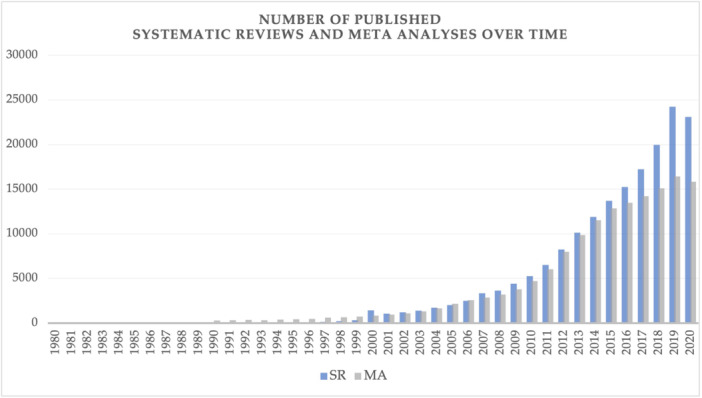
Systematic reviews are a method of secondary research that combines findings from multiple primary studies to produce more reliable conclusions. These conclusions are used in various contexts, including to guide patient care and inform future research topics. The number of published systematic reviews in the field of dermatology has substantially increased in the last few years. However, it is unknown how well‐performed these systematic reviews are. Our aim was to find out whether the quality of these systematic reviews has changed between 2010 and 2019. To do this, we appraised the systematic reviews published in the 10 highest‐ranking dermatology journals in 2010 and 2019, using tools designed to assess the quality of systematic reviews — specifically, the “'Risk Of Bias In Systematic reviews' (ROBIS) and 'A MeaSurement Tool to Assess systematic Reviews‐2' (AMSTAR‐2) tools. All included systematic reviews were assessed by two different authors independently. We also assessed if all essential components of the systematic reviews were reported transparently and completely to allow the reader to review accurately and interpret the systematic review and its findings. For this, we used the 'Preferred Reporting Items of Systematic reviews and Meta‐Analyses' (PRISMA) and 'PRISMA for Abstracts' (PRISMA‐A) statements.
© 2024 The Authors. Cochrane Evidence Synthesis and Methods published by John Wiley & Sons Ltd on behalf of The Cochrane Collaboration.
Conflict of interest statement
The authors declare no conflict of interest.
Figures
Similar articles
-
Folic acid supplementation and malaria susceptibility and severity among people taking antifolate antimalarial drugs in endemic areas.Cochrane Database Syst Rev. 2022 Feb 1;2(2022):CD014217. doi: 10.1002/14651858.CD014217. Cochrane Database Syst Rev. 2022. PMID: 36321557 Free PMC article.
-
Topics and PRISMA Checklist Compliance for Meta-analyses in Dermatology: Journal Case Study.Acta Dermatovenerol Croat. 2019 Dec;27(4):275-277. Acta Dermatovenerol Croat. 2019. PMID: 31969243
-
Reporting and Methodological Quality of Systematic Reviews and Meta-Analyses of Nursing Interventions in Patients With Alzheimer's Disease: General Implications of the Findings.J Nurs Scholarsh. 2019 May;51(3):308-316. doi: 10.1111/jnu.12462. Epub 2019 Feb 25. J Nurs Scholarsh. 2019. PMID: 30806019
-
Association of study quality with completeness of reporting: have completeness of reporting and quality of systematic reviews and meta-analyses in major radiology journals changed since publication of the PRISMA statement?Radiology. 2013 Nov;269(2):413-26. doi: 10.1148/radiol.13130273. Epub 2013 Jul 3. Radiology. 2013. PMID: 23824992
-
The methodological and reporting characteristics of Campbell reviews: A systematic review.Campbell Syst Rev. 2021 Feb 7;17(1):e1134. doi: 10.1002/cl2.1134. eCollection 2021 Mar. Campbell Syst Rev. 2021. PMID: 37133262 Free PMC article. Review.
References
-
- Bühn S, Mathes T, Prengel P, et al. The risk of bias in systematic reviews tool showed fair reliability and good construct validity. J Clin Epidemiol. 2017;91:121‐128. - PubMed
-
- Drucker AM, Fleming P, Chan A‐W. Research techniques made simple: assessing risk of bias in systematic reviews. J Invest Dermatol. 2016;136:e109‐e114. - PubMed
-
- Green SHJ, Alderson P, Clarke M, Mulrow CD, Oxman AD. Chapter 1: Introduction. In: Higgins JPT, Green S, eds. Cochrane Handbook for Systematic Reviews of Interventions. 5.1.0 ed. The Cochrane Collaboration; 2011.
LinkOut - more resources
Full Text Sources
Miscellaneous