


Long-Term Sequelae of COVID-19: A Systematic Review and Meta-Analysis of Symptoms 3 Years Post-SARS-CoV-2 Infection
- PMID: 40476637
- PMCID: PMC12143191
- DOI: 10.1002/jmv.70429
Long-Term Sequelae of COVID-19: A Systematic Review and Meta-Analysis of Symptoms 3 Years Post-SARS-CoV-2 Infection
Abstract
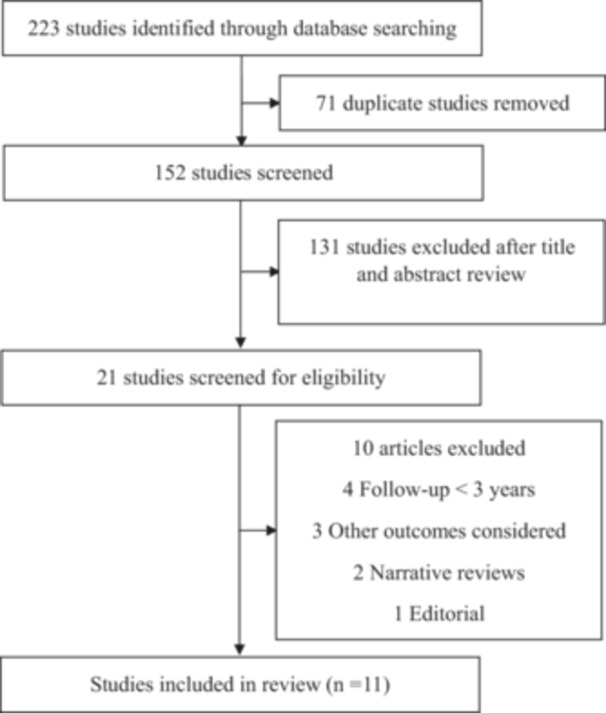
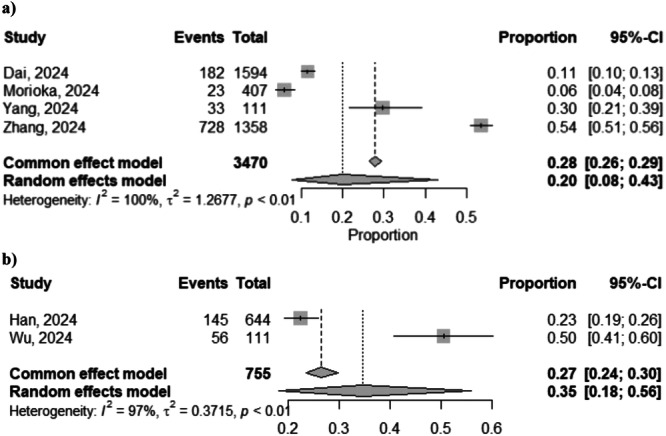
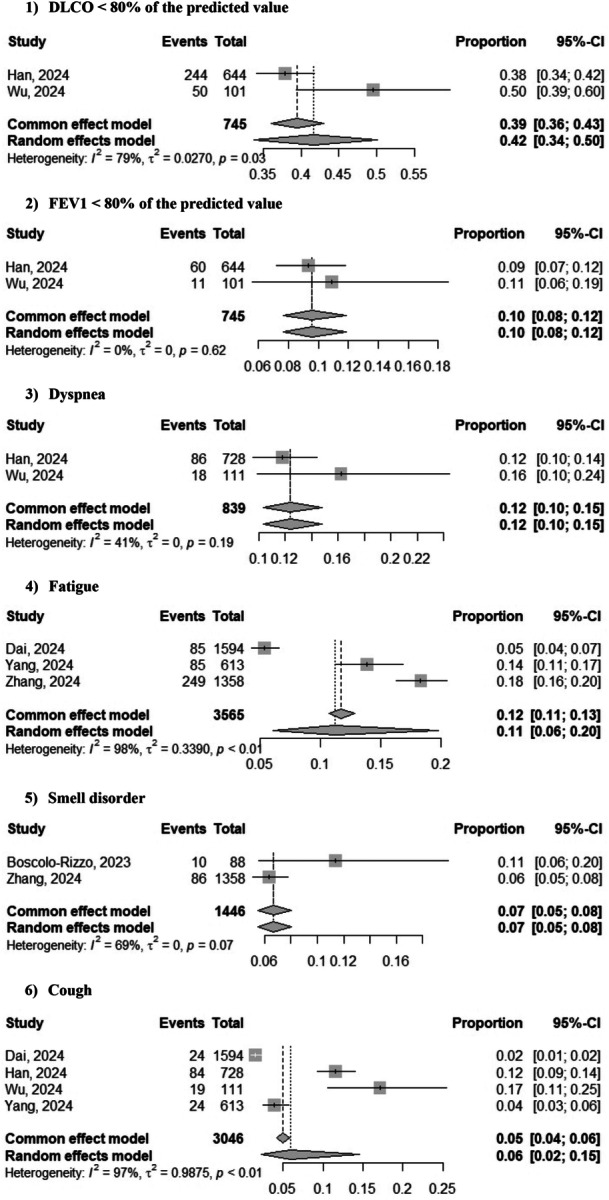
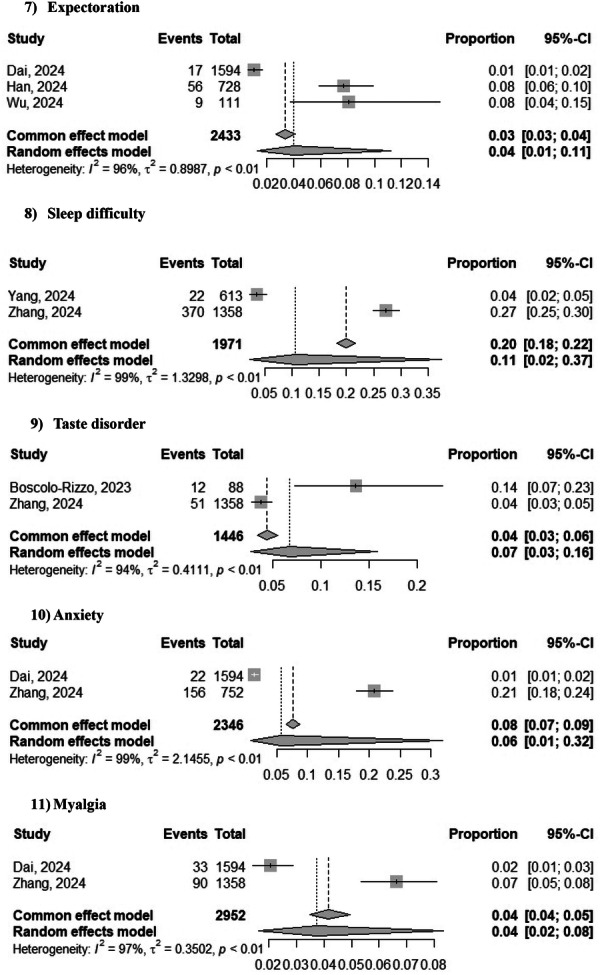
The symptoms of long COVID are well-documented. However, the long-term effects beyond 2 years remain poorly understood due to a lack of data. This systematic review and meta-analysis examined the prevalence of persistent symptoms in COVID-19 survivors 3 years following initial SARS-CoV-2 infection. PubMed, MEDLINE (Ovid), CENTRAL, Web of Science, Scopus, and Embase were searched from inception of the databases up to July 20, 2024, by two independent researchers for articles reporting on the prevalence of persistent symptoms 3 years' post-infection of people who survived COVID-19 infection. We employed a random-effect model for the pooled analysis, and the meta-analytical effect size was prevalence for the applicable end-points, I2 statistics, and quality assessment of included studies using the Newcastle-Ottawa Scale. Eleven articles were included after the literature search yielded 223 potentially relevant articles. We found that among patients with long COVID, fatigue, sleep disturbances, and dyspnea were the most common symptoms. Pooled analysis showed that the proportion of individuals experiencing at least one persistent symptom 3 years post-COVID-19 is 20% (95% confidence interval [CI]: 8-43). The prevalence of persistent symptoms was dyspnea (12%; 95% CI: 10-15), fatigue (11%; 95% CI: 6-20), insomnia (11%; 95% CI: 2-37), loss of smell (7%; 95% CI: 5-8), loss of taste (7%; 95% CI: 3-16), and anxiety (6%; 95% CI: 1-32). Prevalence of other findings include impaired diffusion capacity (42%; 95% CI: 34-50) and impaired forced expiratory volume in 1 s (10%; 95% CI: 8-12). Our findings confirm the persistence of unresolved symptoms 3 years post-COVID-19 infection, with implications for future research, healthcare policy, and patient care.
Keywords: COVID‐19; SARS‐CoV‐2 infection; long COVID; meta‐analysis.
© 2025 The Author(s). Journal of Medical Virology published by Wiley Periodicals LLC.
Conflict of interest statement
The authors declare no conflicts of interest.
Figures
Comment in
-
Incidence of fatigue 2 years after SARS-CoV-2 infection: An updated meta-analysis and subgroup analysis.J Med Virol. 2024 Apr;96(4):e29619. doi: 10.1002/jmv.29619. J Med Virol. 2024. PMID: 38623071 No abstract available.
References
Publication types
MeSH terms
Grants and funding
LinkOut - more resources
Full Text Sources
Medical
Miscellaneous
