


Comparing efficacy of different scoring models to predict hepatic encephalopathy after TIPS in cirrhotic patients
- PMID: 40478655
- PMCID: PMC12147511
- DOI: 10.1080/07853890.2025.2514082
Comparing efficacy of different scoring models to predict hepatic encephalopathy after TIPS in cirrhotic patients
Abstract
Background: Assessing hepatic encephalopathy (HE) risk post-transjugular intrahepatic portosystemic shunt (TIPS) in cirrhotic patients is crucial. This study compares the predictive performance of Child-Pugh and Model for End-Stage Liver Disease (MELD), CLIFC-AD and Freiburg index of post-TIPS survival (FIPS) scores for overt and severe HE. To compare the predictive value of Child-Pugh, MELD, CLIFC-AD and FIPS scores for overt and severe HE post-TIPS in cirrhotic patients.
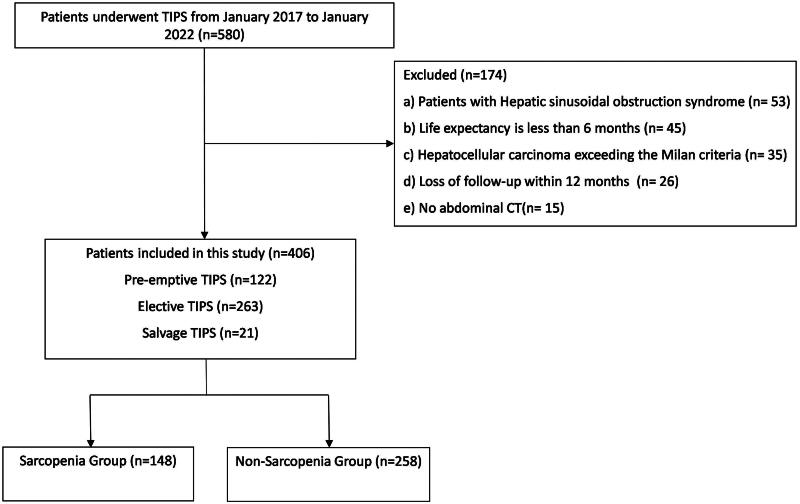
Materials and methods: We retrospectively analysed data from 406 cirrhotic TIPS patients (January 2017-January 2021). Scoring models were assessed for differentiation (C-index), calibration, clinical utility and overall performance at 1, 3, 6 and 12 months post-TIPS.
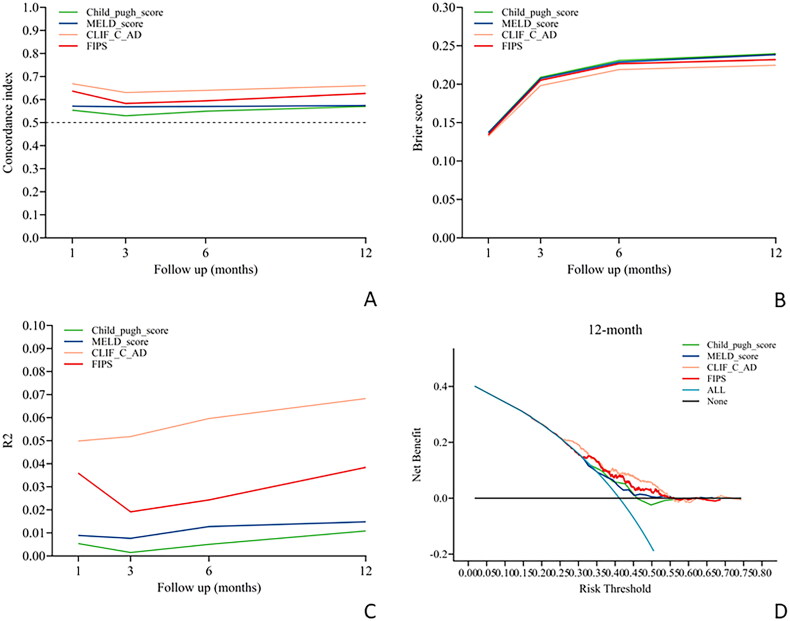
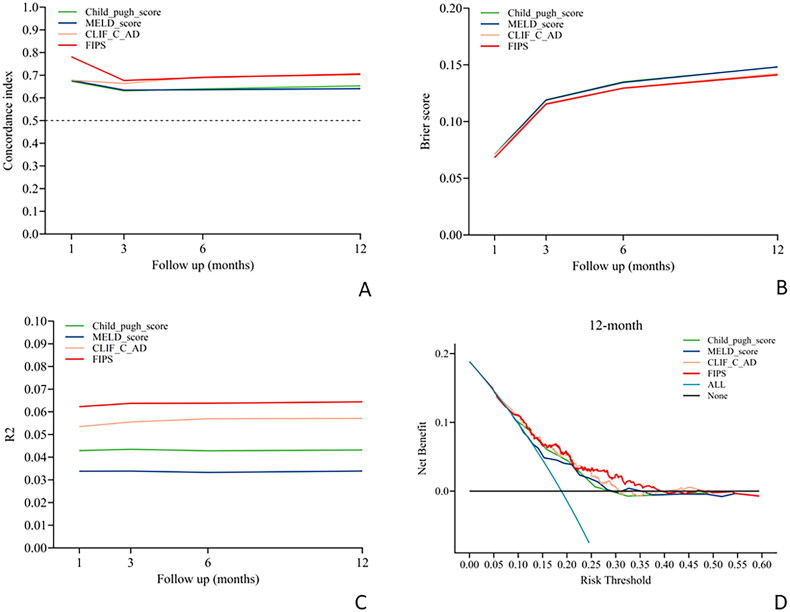
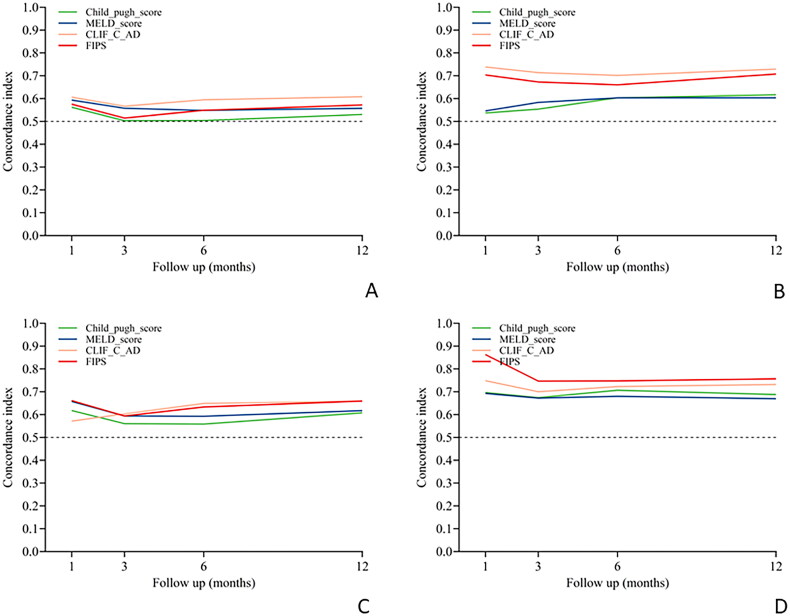
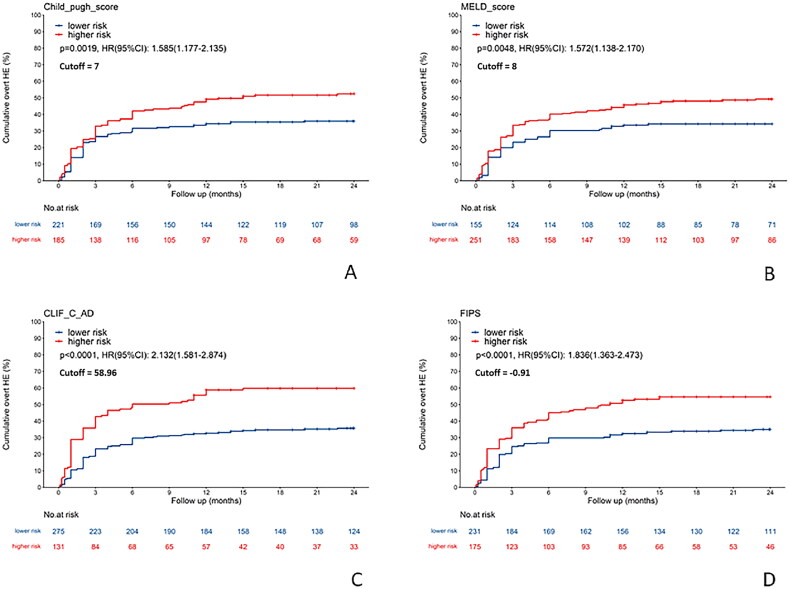
Results: Predictive performance for overt HE post-TIPS was low across models. FIPS had superior predictive ability for severe HE at 1 and 12 months post-TIPS (C-index: 0.781, 0.705). FIPS and CLIFC-AD showed good predictive capacity for severe HE in sarcopenic patients at 1 and 12 months (FIPS: C-index 0.863, 0.757; CLIFC-AD: C-index 0.748, 0.732). FIPS had the highest hazard ratio for severe HE (HR = 3.520, 95% CI: 2.134-5.807) and CLIFC-AD for overt HE (HR = 2.132, 95% CI: 1.581-2.874).
Conclusion: FIPS and CLIFC-AD scores demonstrate significant predictive ability for severe HE post-TIPS, particularly in sarcopenic patients.
Keywords: CLIFC-AD score; Child-Pugh score; FIPS score; MELD score; TIPS; hepatic encephalopathy.
Plain language summary
The study compares Child-Pugh, MELD, CLIFC-AD and FIPS scores for predicting hepatic encephalopathy post-TIPS.FIPS excels in predicting post-TIPS severe hepatic encephalopathy.FIPS and CLIFC-AD scores effectively predict severe hepatic encephalopathy in sarcopenic patients.
Conflict of interest statement
No potential conflict of interest was reported by the author(s).
Figures

References
Publication types
MeSH terms
LinkOut - more resources
Full Text Sources
Other Literature Sources
Medical
