Inducible protein degradation reveals inflammation-dependent function of the Treg cell lineage-defining transcription factor Foxp3
- PMID: 40478934
- PMCID: PMC7617780
- DOI: 10.1126/sciimmunol.adr7057
Inducible protein degradation reveals inflammation-dependent function of the Treg cell lineage-defining transcription factor Foxp3
Abstract
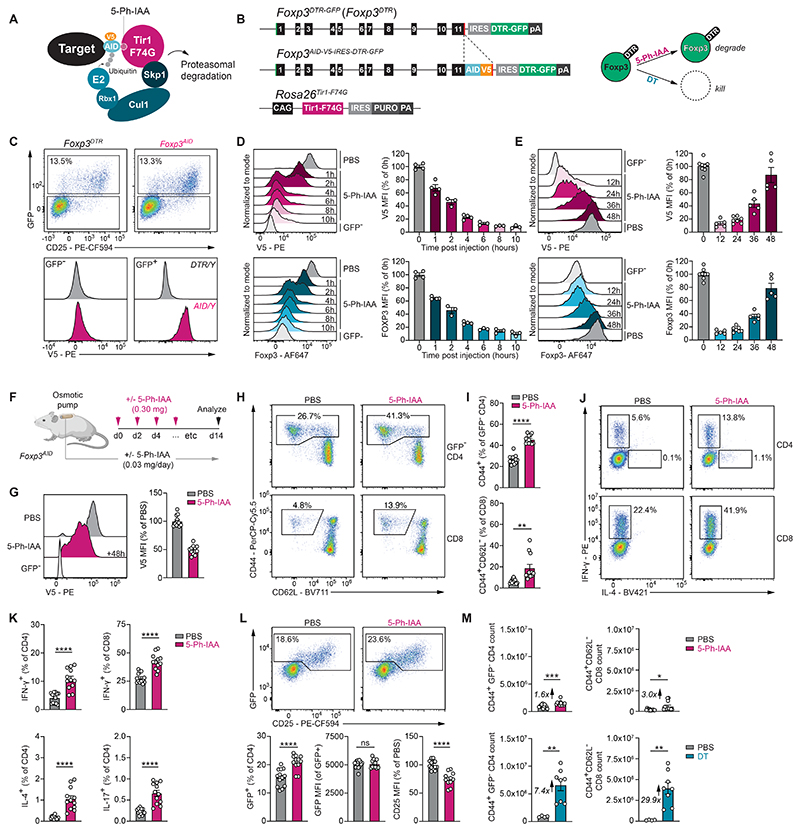
Regulatory T cells (Treg cells) are immunosuppressive CD4 T cells defined by expression of the transcription factor Foxp3. Genetic loss-of-function mutations in Foxp3 cause lethal multiorgan autoimmune inflammation resulting from defects in Treg cell development and suppressive activity. Whether Treg cells are continuously dependent on Foxp3 is still unclear. Here, we leveraged chemically induced protein degradation to show that functionally suppressive Treg cells in healthy organs can persist in the near-complete absence of Foxp3 protein for at least 10 days. Conversely, Treg cells responding to type 1 inflammation in settings of autoimmunity, viral infection, or cancer were selectively lost upon Foxp3 protein depletion. Acute degradation experiments revealed that Foxp3 acts mostly as a direct transcriptional repressor and modulates responsiveness to cytokine stimulation. This inflammation-dependent requirement for continuous Foxp3 activity enabled induction of a selective antitumor immune response upon systemic Foxp3 depletion, without causing deleterious T cell expansion in healthy organs.
Conflict of interest statement
Figures


References
-
- Kim JM, Rasmussen JP, Rudensky AY. Regulatory T cells prevent catastrophic autoimmunity throughout the lifespan of mice. Nat Immunol. 2007;8:191–197. - PubMed
-
- Klages K, et al. Selective depletion of Foxp3+ regulatory T cells improves effective therapeutic vaccination against established melanoma. Cancer Res. 2010;70:7788–7799. - PubMed
Publication types
MeSH terms
Substances
Grants and funding
LinkOut - more resources
Full Text Sources
Research Materials