


Influence of loud auditory noise on postural stability in autistic children: an exploratory study
- PMID: 40481205
- PMCID: PMC12144126
- DOI: 10.1038/s41598-025-04686-x
Influence of loud auditory noise on postural stability in autistic children: an exploratory study
Abstract
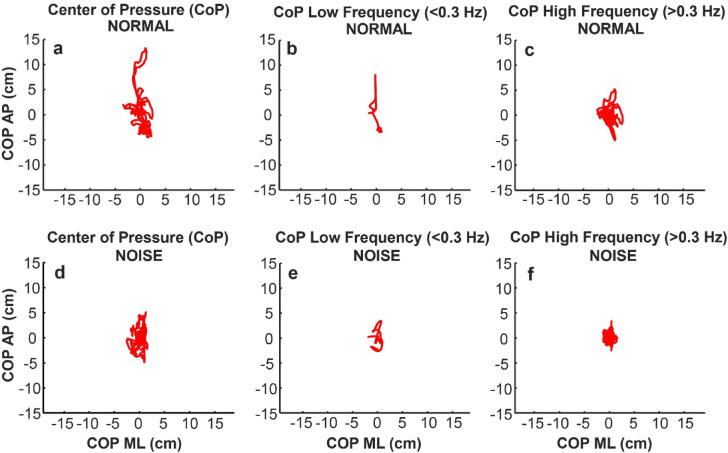
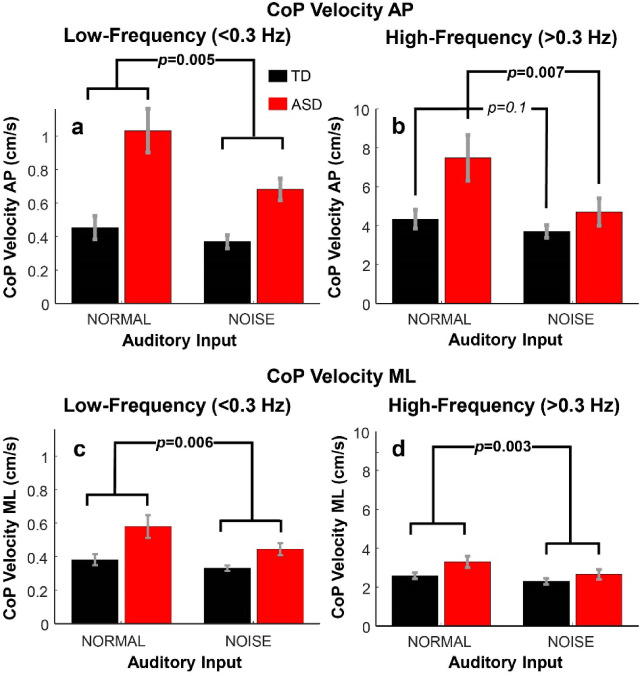
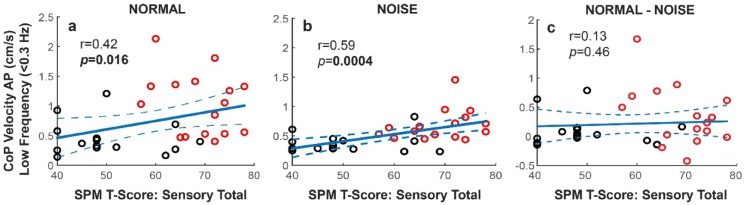
Autistic children often experience sensory processing challenges and postural instability. While auditory noise has been reported to improve balance in various populations, its effects in autistic children remain unclear. This study examined whether auditory noise could similarly influence balance in this population. Sixteen autistic and sixteen typically developing (TD) children aged 6-12 years performed a tandem stance task with and without auditory noise. Postural stability was assessed via stance duration and center of pressure (CoP) velocity. Sensory processing difficulties were evaluated using a parent-report questionnaire. Autistic children stood longer in the presence of auditory noise, while all TD children reached the maximum duration regardless of condition. A reduction in CoP velocity with auditory noise was observed across both groups. Although postural stability was correlated with sensory processing difficulties, the effect of auditory noise was not. These findings suggest that the beneficial effect of auditory noise on postural stability is applicable to autistic children, regardless of individual sensory processing profiles. This exploratory study highlights the potential of sensory-based interventions to support postural control in autism. Future research with larger samples is needed to confirm these findings and to identify the auditory stimulus characteristics that most effectively improve balance in autistic individuals.
Keywords: Auditory noise; Autism spectrum disorder; Postural control; Sensory processing; Stochastic resonance.
© 2025. The Author(s).
Conflict of interest statement
Declarations. Competing interests: S-WP is an Editorial Board Member of Scientific Reports. Other authors declare no conflicts of interest.
Figures



References
-
- Peterka, R. J. Sensory integration for human balance control. Handb. Clin. Neurol.159, 27–42. 10.1016/B978-0-444-63916-5.00002-1 (2018). - PubMed
-
- Jeka, J., Oie, K. S. & Kiemel, T. Multisensory information for human postural control: integrating touch and vision. Exp. Brain Res.134, 107–125. 10.1007/s002210000412 (2000). - PubMed
-
- Mahmud, M. R., Stewart, M., Cordova, A. & Quarles, J. in 2022 IEEE Conference on Virtual Reality and 3D User Interfaces (VR). 782–791 (IEEE).
MeSH terms
LinkOut - more resources
Full Text Sources
Medical
