


Ingroup favoritism and outgroup derogation in intergenerational cooperation
- PMID: 40481314
- PMCID: PMC12144128
- DOI: 10.1038/s44271-025-00272-z
Ingroup favoritism and outgroup derogation in intergenerational cooperation
Abstract
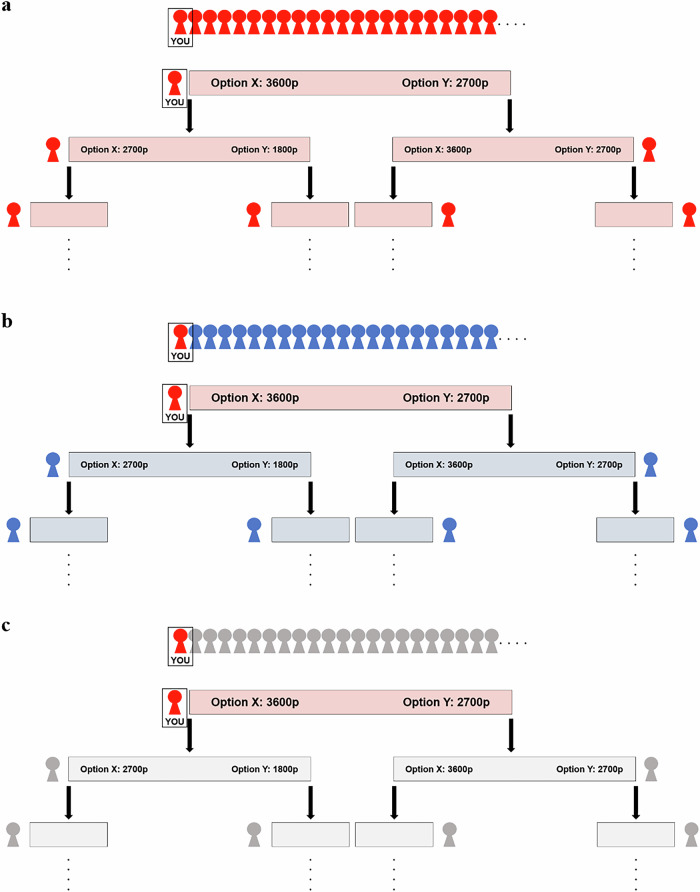
Issues related to sustainability (e.g., climate change and over-fishing) often manifest themselves as intergenerational social dilemmas, where people are faced with a choice between self-serving, unsustainable behavior and sustainable, personally costly behavior. Extending the previous literature on (non-intergenerational) intergroup cooperation, we tested whether group membership of the future generations influenced sustainable decision-making. In two preregistered studies using the intergenerational sustainability dilemma game, we found that individuals were more likely to make a sustainable (vs. selfish) decision when they believed that their current behavior would benefit future ingroup members, whereas more selfish decisions were made when benefits would accrue to outgroup members. These findings held in both the minimal group (Study 1: N = 1393) and national group (Study 2: Japan vs. China, N = 1781) contexts. The effect of ingroup intergenerational membership on cooperation was mediated by higher felt responsibility for future generations in both minimal and national group contexts. The effect of outgroup membership on intergenerational cooperation was mediated by a reduced sense of reputational concern in the minimal group context and by reduced affinity, legacy motivation, and responsibility for future generations in the nationality context.
© 2025. The Author(s).
Conflict of interest statement
Competing interests: The authors declare no competing interests.
Figures
References
-
- Dawes, R. M. Social dilemmas. Annu. Rev. Psychol.31, 169–193 (1980). - DOI
-
- Van Lange, P. A. M., Joireman, J., Parks, C. D. & Van Dijk, E. The psychology of social dilemmas: a review. Organ. Behav. Hum. Decis. Process.120, 125–141 (2013). - DOI
-
- Wade-Benzoni, K. A. Maple trees and weeping willows: The role of time, uncertainty, and affinity in intergenerational decisions. Negot. Confl. Manag. Res.1, 220–245 (2008). - DOI
-
- Imada, H., Romano, A. & Mifune, N. Dynamic indirect reciprocity: When is indirect reciprocity bounded by group membership? Evol. Hum. Behav.44, 373–383 (2023). - DOI
LinkOut - more resources
Full Text Sources