


Acceptability of the Moyo device for intrapartum fetal heart rate monitoring at a referral hospital in Uganda: a qualitative study
- PMID: 40481404
- PMCID: PMC12142845
- DOI: 10.1186/s12884-025-07756-0
Acceptability of the Moyo device for intrapartum fetal heart rate monitoring at a referral hospital in Uganda: a qualitative study
Abstract
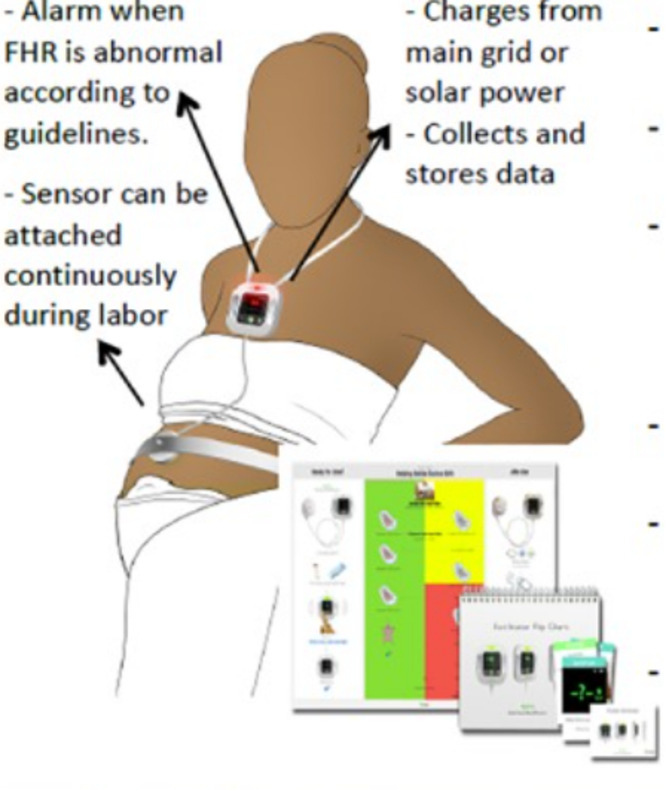
Background: The Moyo device is an easy-to-use device that allows continuous electronic fetal heart rate monitoring (FHRM). We explored the acceptability of using the Moyo device for continuous intrapartum FHRM in Eastern Uganda.
Methods: Between November 2023 and August 2024, we introduced the Moyo device for continuous intrapartum FHRM among mothers with high-risk pregnancies at Mbale Regional Referral Hospital in Eastern Uganda. We then conducted 34 in-depth interviews with 14 health workers who had used the Moyo device for continuous FHRM and with 20 mothers on whom the Moyo device was used. Participants were purposively selected and interviewed using a semi-structured interview guide. The interviews were audio recorded and transcribed verbatim. We analyzed data using thematic content analysis in Atlas ti.9 software and presented our findings using Sekhon's acceptability model.
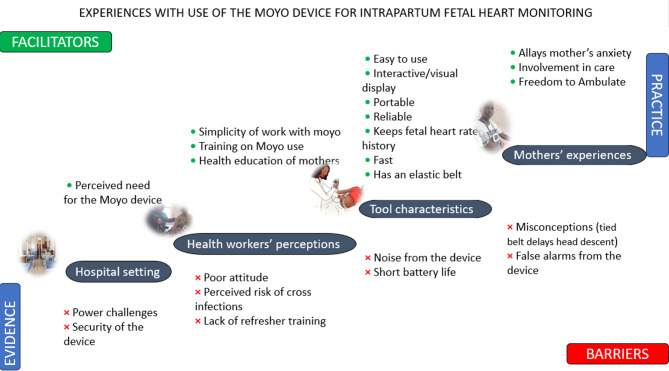
Results: Participants perceived the Moyo device as a useful and an easy-to-use tool for intrapartum FHRM. Mothers felt involved in monitoring their babies' condition, with the freedom to ambulate during labour. Moyo facilitated early detection of fetal distress, and triage of patients awaiting caesarean section in a very busy setting. The facilitators to its use were: adequate staff training, health education and counselling of mothers about the device, and tool attributes such as accuracy, reliability and being user friendly. The barriers included poor health worker attitudes, risk of cross-infection, short battery life and the device alarms that were perceived as disturbances.
Conclusion: The Moyo device was acceptable to both health workers and mothers, with perceived improvements in both obstetric outcomes and birth experience. When introducing the device, careful attention needs to be paid to the training of both staff and the laboring women. Potential success of large scale roll out is supported by participants' positive attitudes toward the Moyo and high perceived effectiveness.
Keywords: Acceptability; Fetal heart rate monitoring; Health workers; Mothers; Moyo device; Uganda.
© 2025. The Author(s).
Conflict of interest statement
Declarations. Ethics approval and consent to participate: Ethical approval to conduct the study was obtained from the Busitema University Research and Ethics Committee, approval number; REF BUFHS-164 and Uganda National Council of Science and Technology, reference number; HS3196ES. We also sought administrative clearance from the Mbale regional referral hospital. Written informed consent was obtained from the participants before conducting the interview. The consent form was translated into the local dialects (Lumasaba, Luganda, Lugwere and Ateso) to ensure that participants understood what they were signing. All study procedures were conducted according to the Declaration of Helsinki and in line with the principles of Good Clinical Practice. Consent for publication: We obtained consent for publication from the participants. Competing interests: The authors declare no competing interests.
Figures
References
-
- World Health Organisation. WHO recommendations: intrapartum care for a positive childbirth experience 2018. Available from: https://www.who.int/publications/i/item/9789241550215 - PubMed
-
- Kamala BA, Kidanto HL, Wangwe PJ, Dalen I, Mduma ER, Perlman JM, et al. Intrapartum fetal heart rate monitoring using a handheld doppler versus Pinard stethoscope: a randomized controlled study in Dar Es Salaam. Int J Women’s Health. 2018;10:341–8. 10.2147/ijwh.s160675. Epub 2018/07/20. - PMC - PubMed
-
- Kamala BA, Ersdal HL, Dalen I, Abeid MS, Ngarina MM, Perlman JM, et al. Implementation of a novel continuous fetal doppler (Moyo) improves quality of intrapartum fetal heart rate monitoring in a resource-limited tertiary hospital in Tanzania: an observational study. PLoS ONE. 2018;13(10):e0205698. 10.1371/journal.pone.0205698. - PMC - PubMed
MeSH terms
Grants and funding
LinkOut - more resources
Full Text Sources
