


Comparison of spatial prediction models from Machine Learning of cholangiocarcinoma incidence in Thailand
- PMID: 40483400
- PMCID: PMC12144797
- DOI: 10.1186/s12889-025-23119-y
Comparison of spatial prediction models from Machine Learning of cholangiocarcinoma incidence in Thailand
Abstract
Background: Cholangiocarcinoma (CCA) poses a significant public health challenge in Thailand, with notably high incidence rates. This study aimed to compare the performance of spatial prediction models using Machine Learning techniques to analyze the occurrence of CCA across Thailand.
Methods: This retrospective cohort study analyzed CCA cases from four population-based cancer registries in Thailand, diagnosed between January 1, 2012, and December 31, 2021. The study employed Machine Learning models (Linear Regression, Random Forest, Neural Network, and Extreme Gradient Boosting (XGBoost)) to predict Age-Standardized Rates (ASR) of CCA based on spatial variables. Model performance was evaluated using Root Mean Square Error (RMSE) and R2 with 70:30 train-test validation.
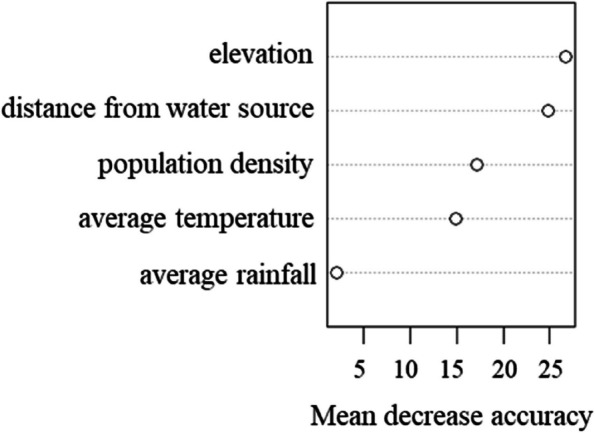
Results: The study included 6,379 CCA cases, with a male predominance (4,075 cases; 63.9%) and a mean age of 66.2 years (standard deviation = 11.1 years). The northeastern region accounted for most of the cases (3,898 cases; 61.1%). The overall ASR of CCA was 8.9 per 100,000 person-years (95% CI: 8.7 to 9.2), with the northeastern region showing the highest incidence (ASR = 13.4 per 100,000 person-years; 95% CI: 12.9 to 13.8). In the overall dataset, the Random Forest model demonstrated better prediction performance in both the training (R2 = 72.07%) and testing datasets (R2 = 71.66%). Regional variations in model performance were observed, with Random Forest performing best in the northern, northeastern regions, while XGBoost excelled in the central and southern regions. The most important spatial predictors for CCA were elevation and distance from water sources.
Conclusion: The Random Forest model demonstrated the highest efficiency in predicting CCA incidence rates in Thailand, though predictive performance varied across regions. Spatial factors effectively predicted ASR of CCA, providing valuable insights for national-level disease surveillance and targeted public health interventions. These findings support the development of region-specific approaches for CCA control using spatial epidemiology and machine learning techniques.
Keywords: Cholangiocarcinoma; Machine Learning; Population-based cancer registries; Prediction Models; Spatial Predictions; Thailand.
© 2025. The Author(s).
Conflict of interest statement
Declarations. Ethics approval and consent to participate: This study utilized secondary data from four PBCRs, which did not involve the collection of individuals’ identifying information. Therefore, individual informed consent was not required. This study received ethical approval from the Human Research Ethics Committees of all four data sources: Lampang Cancer Hospital (No. 10/2567), Lop Buri Cancer Hospital (No. LEC 6647), Khon Kaen University, where the consideration of human research ethics is in accordance with the Helsinki Declaration (No. HE671027), and Surat Thani Cancer Hospital (No. SCH_EC_01/2567). Consent for publication: Not applicable. Competing interests: The authors declare no competing interests.
Figures

References
-
- Honjo S, Srivatanakul P, Sriplung H, Kikukawa H, Hanai S, Uchida K, et al. Genetic and environmental determinants of risk for cholangiocarcinoma via Opisthorchis viverrini in a densely infested area in Nakhon Phanom, northeast Thailand. Int J Cancer. 2005;117(5):854–60. 10.1002/ijc.21146. - DOI - PubMed
Publication types
MeSH terms
LinkOut - more resources
Full Text Sources
Medical
