


DMPat-based SOXFE: investigations of the violence detection using EEG signals
- PMID: 40485845
- PMCID: PMC12141701
- DOI: 10.1007/s11571-025-10266-6
DMPat-based SOXFE: investigations of the violence detection using EEG signals
Abstract
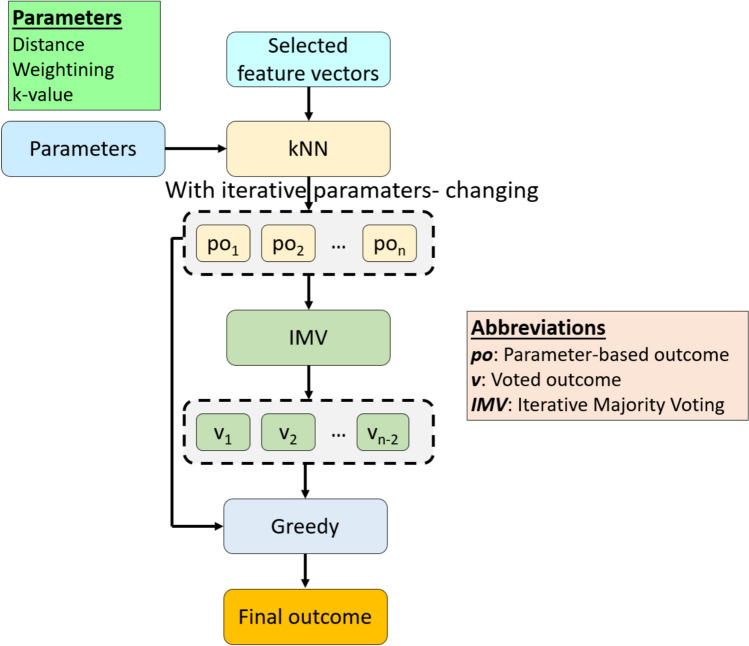
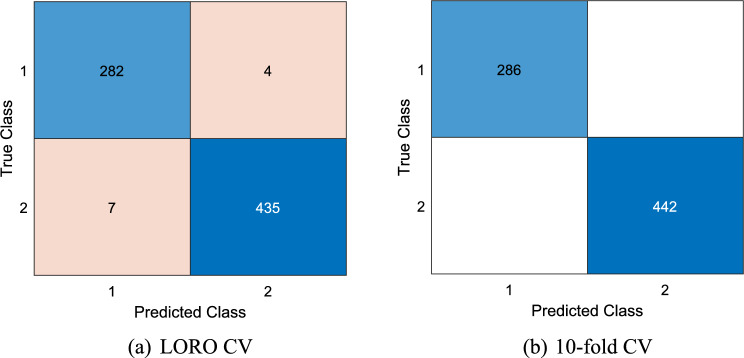
Automatic violence detection is one of the most important research areas at the intersection of machine learning and information security. Moreover, we aimed to investigate violence detection in the context of neuroscience. Therefore, we have collected a new electroencephalography (EEG) violence detection dataset and presented a self-organized explainable feature engineering (SOXFE) approach. In the first phase of this research, we collected a new EEG violence dataset. This dataset contains two classes: (i) resting, (ii) violence. To detect violence automatically, we proposed a new SOXFE approach, which contains five main phases: (1) feature extraction with the proposed distance matrix pattern (DMPat), which generates three feature vectors, (2) feature selection with iterative neighborhood component analysis (INCA), and three selected feature vectors were created, (3) explainable results generation using Directed Lobish (DLob) and statistical analysis of the generated DLob string, (4) classification deploying t algorithm-based k-nearest neighbors (tkNN), and (5) information fusion employing mode operator and selecting the best outcome via greedy algorithm. By deploying the proposed model, classification and explainable results were generated. To obtain the classification results, tenfold cross-validation (CV), leave-one-record-out (LORO) CV were utilized, and the presented model attained 100% classification accuracy with tenfold CV and reached 98.49% classification accuracy with LORO CV. Moreover, we demonstrated the cortical connectome map related to violence. These results and findings clearly indicated that the proposed model is a good violence detection model. Moreover, this model contributes to feature engineering, neuroscience and social security.
Keywords: Cortical connectome diagram; Distance matrix pattern; EEG signal analysis; SOXFE; Violence detection.
© The Author(s) 2025.
Conflict of interest statement
Conflict of interestThe authors of this manuscript declare no conflict of interest.
Figures




References
-
- Abbass MAB, Kang H-S (2023) Violence detection enhancement by involving convolutional block attention modules into various deep learning architectures: comprehensive case study for ubi-fights dataset. IEEE Access 11:37096–37107 - DOI
-
- Aldehim G, Asiri MM, Aljebreen M, Mohamed A, Assiri M, Ibrahim SS (2023) Tuna swarm algorithm with deep learning enabled violence detection in smart video surveillance systems. IEEE Access
-
- Bakhshi A, García-Gómez J, Gil-Pita R, Chalup S (2023) Violence detection in real-life audio signals using lightweight deep neural networks. Procedia Comput Sci 222:244–251 - DOI
LinkOut - more resources
Full Text Sources
