


Associations among mental well-being, marital quality, and maternal depressive symptoms in China: a cross - sectional study and mediated analysis
- PMID: 40485929
- PMCID: PMC12141218
- DOI: 10.3389/fpsyt.2025.1551588
Associations among mental well-being, marital quality, and maternal depressive symptoms in China: a cross - sectional study and mediated analysis
Abstract
Background: Postpartum depression (PPD) is an extremely common mood disorder that occurs at any time up to 1 year after delivery. PPD can have a negative impact on the mother and family. This study aimed to determine the prevalence of PPD and factors influencing PPD. Specifically, this study focused on the effects of marital quality and mental well-being on PPD and the mediating roles.
Methods: A cross-sectional study was conducted in the Maternity and Child Health Care Hospitals of Liaoning Province in northeast China. The PHQ-9 scale was used to screen for PPD with a score ≥10, indicating a positive result. The Warwick-Edinburgh Mental Health and Marriage Perception scales were used to evaluate the mental well-being and marital quality of parturients.
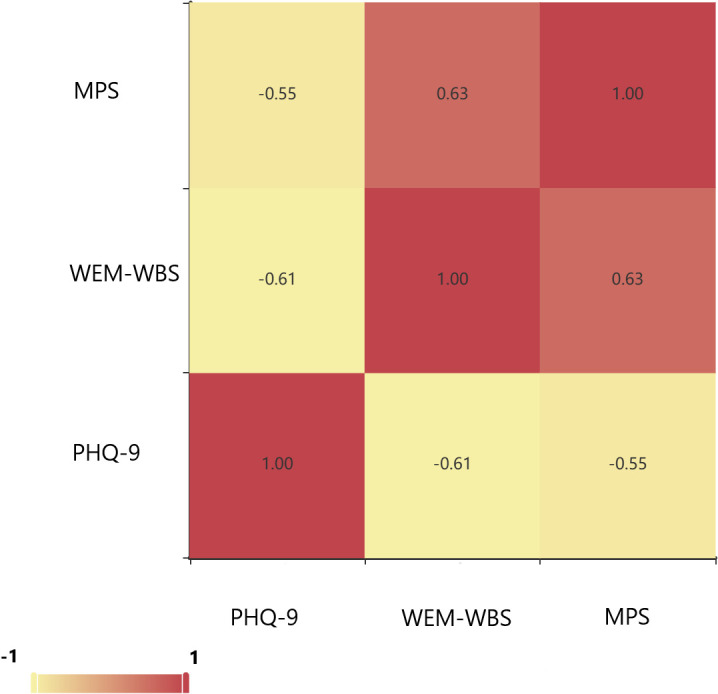
Results: A total of 1048 participants were included in the study. The prevalence of PPD symptoms was 11.16%. Factors, such as education level (F = 2.63; p < 0.05), co-living status (F = 5.84; p < 0.01), agreement with fetal gender expectations (t = 19.39; p < 0.001), amount of physical activity (F = 17.15; p < 0.001), and knowledge about PPD (t = 3.66; p < 0.001 and t = 5.099; p < 0.001), were all associated with the PPD score and the prevalence. Mental well-being and marital quality were intricately linked to PPD symptoms. Mental well-being influenced PPD via two mediating factors (marital interaction [p < 0.001] and marital conflict [p< 0.001]).
Conclusions: PPD is a significant postpartum issue that is influenced by numerous factors. Early screening of parturients, accurate diagnosis of PPD, and timely intervention are crucial. Targeted interventions addressing risk factors may help to mitigate the incidence of PPD.
Keywords: China; marital quality; mental health; mental well-being; postpartum depression.
Copyright © 2025 Jinhuan, Jie, Ying, Dongzhuo, Zhongli, Jiayue, Yan and Jintao.
Conflict of interest statement
The authors declare that the research was conducted in the absence of any commercial or financial relationships that could be construed as a potential conflict of interest.
Figures
References
-
- Hirst KP, Moutier CY. Postpartum major depression. Am Fam Physician. (2010) 82:926–33. - PubMed
LinkOut - more resources
Full Text Sources
