


Macrophage regulated cell death: implications and mechanisms in organ transplantation
- PMID: 40486507
- PMCID: PMC12140982
- DOI: 10.3389/fimmu.2025.1604429
Macrophage regulated cell death: implications and mechanisms in organ transplantation
Abstract
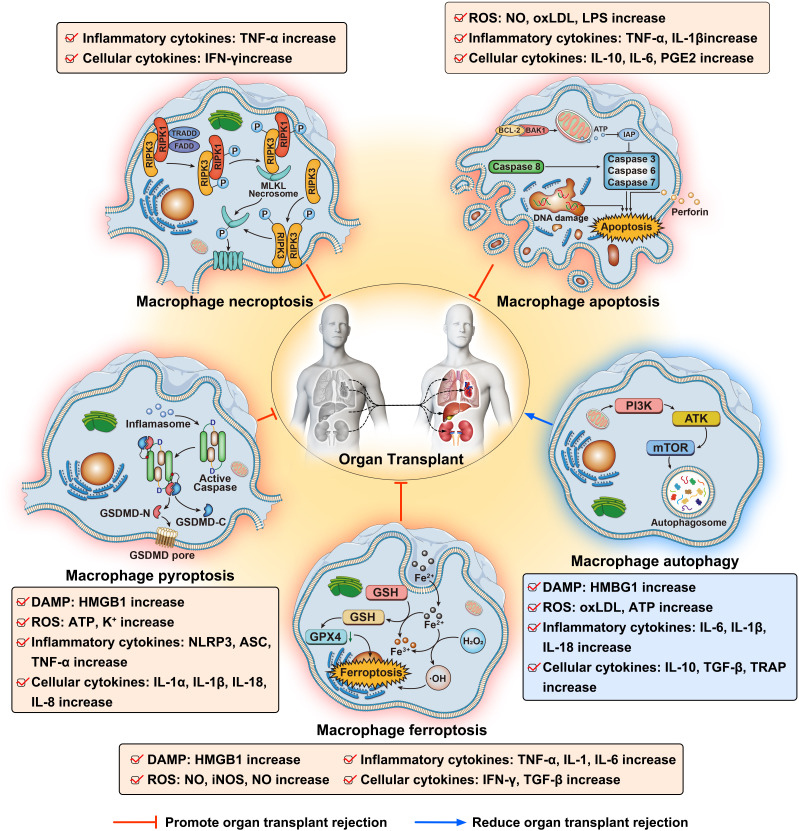
Organ transplantation is a critical treatment for end-stage organ failure, but long-term graft survival remains suboptimal due to ischemia-reperfusion injury (IRI) and transplant rejection. The immune microenvironment, especially macrophages, plays a key role in these processes. Various forms of regulated cell death (apoptosis, autophagy, pyroptosis, ferroptosis, necroptosis) in macrophages significantly influence transplant rejection by mediating cellular communication and shaping the immune microenvironment. Apoptosis, pyroptosis, ferroptosis and necroptosis in macrophages exacerbate graft rejection while autophagy in macrophages protects against transplant rejection by reducing inflammation.This paper reviews the specific molecular mechanisms of macrophage regulated cell death, their impact on the IRI and transplant rejection, thus further provide potential therapeutic target for improving transplant outcomes.
Keywords: ischemia-reperfusion injury; macrophage cell; organ transplantation; regulated cell death (RCD); transplant rejection.
Copyright © 2025 Hou, Li, Li, Yim, Geng, Cheng, Wang, Fan, Tong, Shi, Wang and Dong.
Conflict of interest statement
The authors declare that the research was conducted in the absence of any commercial or financial relationships that could be construed as a potential conflict of interest.
Figures
References
Publication types
MeSH terms
LinkOut - more resources
Full Text Sources
Medical
