


Effects and mechanisms of exosomes in microenvironment angiogenesis in breast cancer: An updated review
- PMID: 40486870
- PMCID: PMC12144631
- DOI: 10.32604/or.2024.059113
Effects and mechanisms of exosomes in microenvironment angiogenesis in breast cancer: An updated review
Abstract
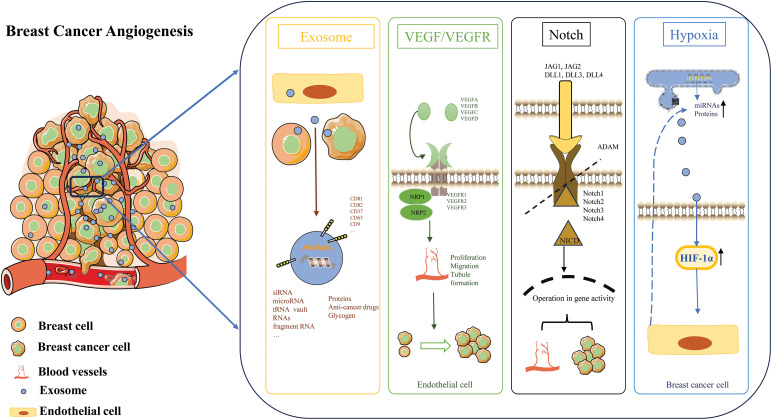
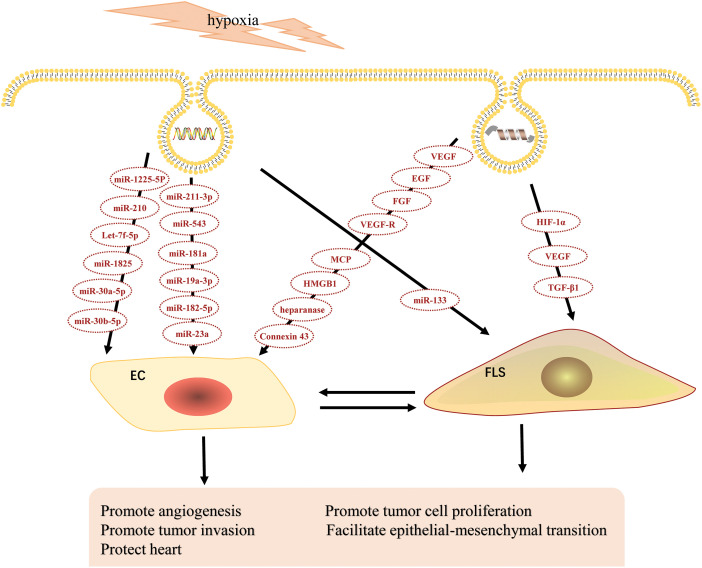
Exosomes (EXOs) play an important role in the progression of breast cancer. EXOs, with a diameter of approximately 100 nm, have a simple structure but diverse functions, and can affect the development of breast cancer through signal transduction and molecular transfer, etc. Angiogenesis provides nutrients for the growth and metastasis of breast cancer and is a crucial part of tumor progression. The mechanism of tumor angiogenesis is complex. The VEGF/VEGFR pathway promotes angiogenesis by regulating the activities of ECs. Hypoxia, a common feature in the tumor microenvironment, as a key regulator, can affect angiogenesis in multiple aspects such as the transfer of miRNAs in EXOs, protein transport, extracellular matrix regulation, and metabolic adaptation. The Notch pathway has a bidirectional regulatory role in breast cancer angiogenesis, and different molecules can promote or inhibit angiogenesis. EXOs secreted by breast cancer cells are rich in angiogenic factors. Components such as proteins and nucleic acids in EXOs can affect the functions and behaviors of vascular ECs, thereby influencing breast cancer angiogenesis. Research on the mechanisms of EXOs in breast cancer angiogenesis is of great significance for tumor treatment. EXOs are expected to become biomarkers for breast cancer diagnosis/prognosis. This research provides potential targets for in-depth understanding of the biological characteristics of breast cancer and the development of new treatment strategies.
Keywords: Angiogenesis; Breast cancer; Exosomes (EXOs); Hypoxia; Notch; miRNAs.
© 2025 The Authors.
Conflict of interest statement
The authors declare no conflicts of interest to report regarding the present study.
Figures
References
-
- Hashemi N, Kavousi M, Jamshidian F. Study of KDM1A and VEGF changes as the responsible genes in the angiogenesis of breast cancer. Klinicka onkologie: casopis Ceske a Slovenske onkologicke spolecnosti. 2023;4:281–6. - PubMed
Publication types
MeSH terms
Substances
LinkOut - more resources
Full Text Sources
Medical