


Prebiotics in animal nutrition: Harnessing agro-industrial waste for improved gut health and performance
- PMID: 40487103
- PMCID: PMC12143621
- DOI: 10.1016/j.aninu.2024.11.025
Prebiotics in animal nutrition: Harnessing agro-industrial waste for improved gut health and performance
Abstract
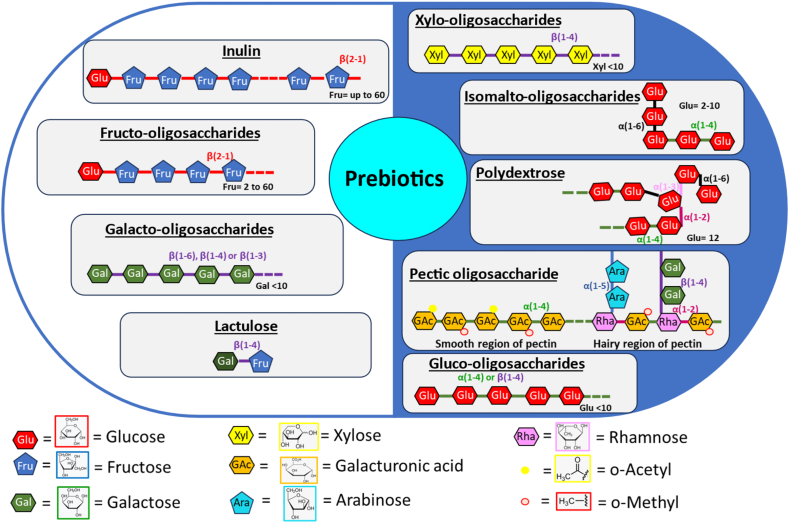
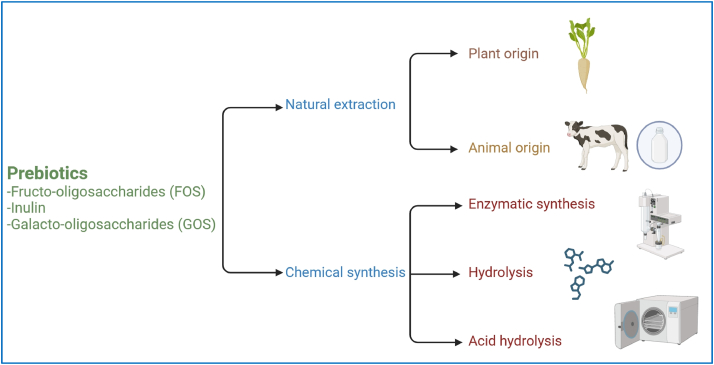
This review provides an overview of the current research on prebiotics and their applications in animal nutrition and health. Various types of prebiotics are introduced and classified, with an analysis of agro-industrial residues as sources. The potential of prebiotics as substrates for the growth and/or activity of probiotic microorganisms, as well as their applications in animal feeds, were examined. This analysis also considered the health-promoting advantages linked to different production techniques and bioactive compounds. The mechanisms by which prebiotics alter gastrointestinal tract microbiota are discussed, specifically in terms of combating pathogenic bacteria and modulating immune cells in the gut. Investigations of the impact of prebiotics in both polygastric and monogastric animals are reported, highlighting their effects on the gut ecosystem and animal performance. This review concludes that agro-industrial residues are valuable sources of prebiotics that possess numerous beneficial health-promoting properties suitable for animal nutrition. These prebiotics can serve as a relevant substitute in the ongoing search for alternative strategies to prevent and control the presence of pathogenic bacteria in animals, particularly considering the restriction on antimicrobial growth promoters. However, further research is necessary to explore the interaction between prebiotics and probiotics in animal care and well-being, to establish systematic management of production and practical applications of these functional feed additives.
Keywords: Agro-industrial residue; Animal nutrition; Feed additives; Gastrointestinal microbiota; Prebiotics.
© 2025 The Authors.
Conflict of interest statement
We declare that we have no financial and personal relationships with other people or organizations that can inappropriately influence our work, and there is no professional or other personal interest of any nature or kind in any product, service and/or company that could be construed as influencing the content of this paper.
Figures

References
-
- Adhikari P., Cosby D.E., Cox N.A., Franca M.S., Williams S.M., Gogal R.M., et al. Effect of dietary fructooligosaccharide supplementation on internal organs Salmonella colonization, immune response, ileal morphology, and ileal immunohistochemistry in laying hens challenged with Salmonella enteritidis. Poult Sci. 2018;97:2525–2533. - PubMed
-
- Ahmadifar E., Sheikhzadeh N., Roshanaei K., Dargahi N., Faggio C. Can dietary ginger (Zingiber officinale) alter biochemical and immunological parameters and gene expression related to growth, immunity and antioxidant system in zebrafish (Danio rerio)? Aquaculture. 2019;507:341–348.
-
- Al-Baadani H.H., Al-Mufarrej S.I., Al-Garadi M.A., Alhidary I.A., Al-Sagan A.A., Azzam M.M. The use of gum Arabic as a natural prebiotic in animals: a review. Anim Feed Sci Technol. 2021;274
-
- Abd El-Aziz Aa-O, Abo Ghanima Ma-O, Alsanie W.F., Gaber Aa-OX., Alsenosy Aa-O, Easa A.A., Moawed S.A., Raza Sa-O, Elfadadny Aa-O, Yossef H.A., Ghoneem Wa-O, Shukry Ma-O, Hendawy Aa-OX., Mahrose Ka-O. Fructooligosaccharide supplementation boosts growth performance, antioxidant status, and cecal microbiota differently in two rabbit breeds. Animals. 2022;12:1528. - PMC - PubMed
-
- Al-Sheraji S.H., Ismail A., Manap M.Y., Mustafa S., Yusof R.M., Hassan F.A. Prebiotics as functional foods: a review. J Funct Foods. 2013;5:1542–1553.
Publication types
LinkOut - more resources
Full Text Sources
