


Development and validation of machine learning nomograms for predicting survival in stage IV pancreatic cancer: A retrospective study
- PMID: 40487945
- PMCID: PMC12142263
- DOI: 10.4251/wjgo.v17.i5.102459
Development and validation of machine learning nomograms for predicting survival in stage IV pancreatic cancer: A retrospective study
Abstract
Background: Stage IV pancreatic cancer (PC) has a poor prognosis and lacks individualized prognostic tools. Current survival prediction models are limited, and there is a need for more accurate, personalized methods. The Surveillance, Epidemiology, and End Results (SEER) database offers a valuable resource for studying large patient cohorts, yet machine learning-based nomograms for stage IV PC prognosis remain underexplored. This study hypothesizes that a machine learning-based nomogram can predict cancer-specific survival (CSS) and overall survival (OS) with high accuracy in stage IV PC patients.
Aim: To construct and validate a machine learning-based nomogram for predicting survival in stage IV PC patients using real-world data.
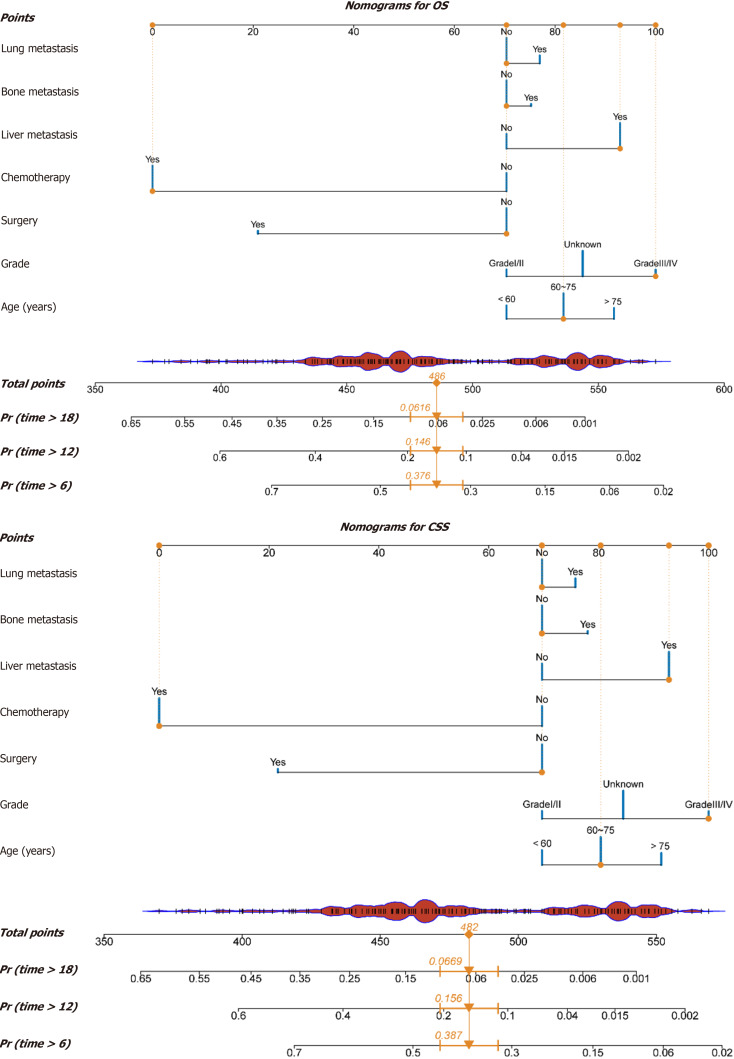
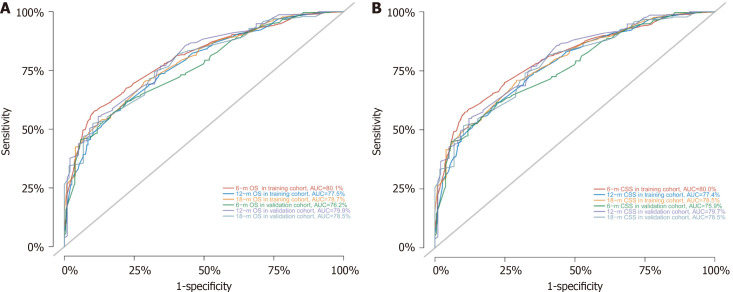
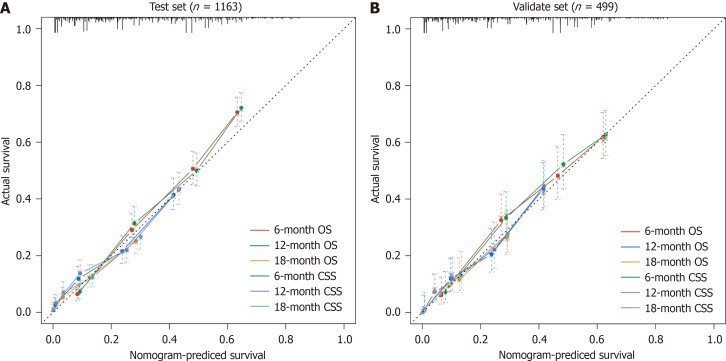
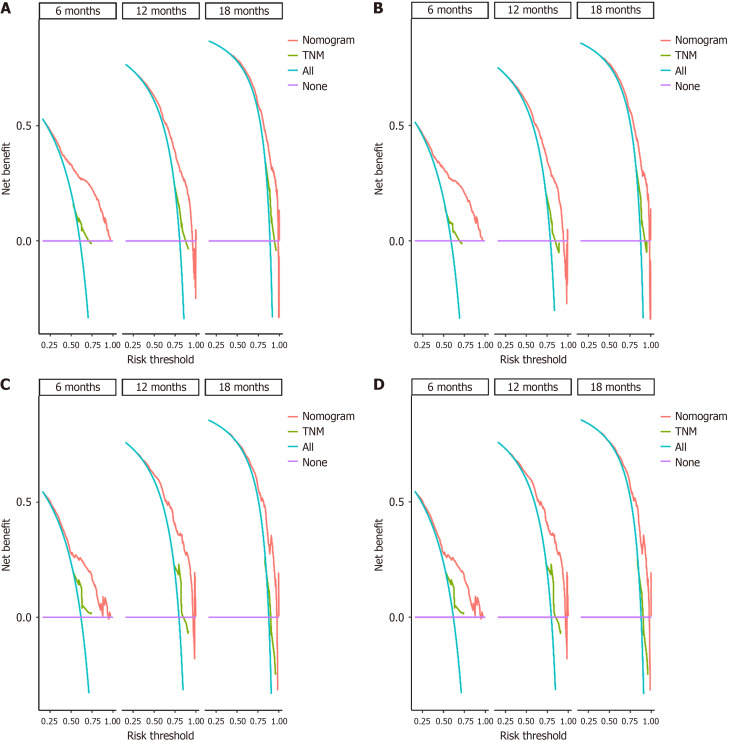
Methods: Clinical data from stage IV PC patients diagnosed via pathology from 2000 to 2019 were extracted from the SEER database. Patients were randomly divided into a training set and a validation set in a 7:3 ratio. Multivariate Cox proportional hazards, Least Absolute Shrinkage and Selection Operator regression, and Random Survival Forest models were used to identify prognostic variables. A nomogram was constructed to predict CSS and OS at 6, 12, and 18 months. The C-index, receiver operating characteristic curves, and calibration curves were used to evaluate the model's predictive performance.
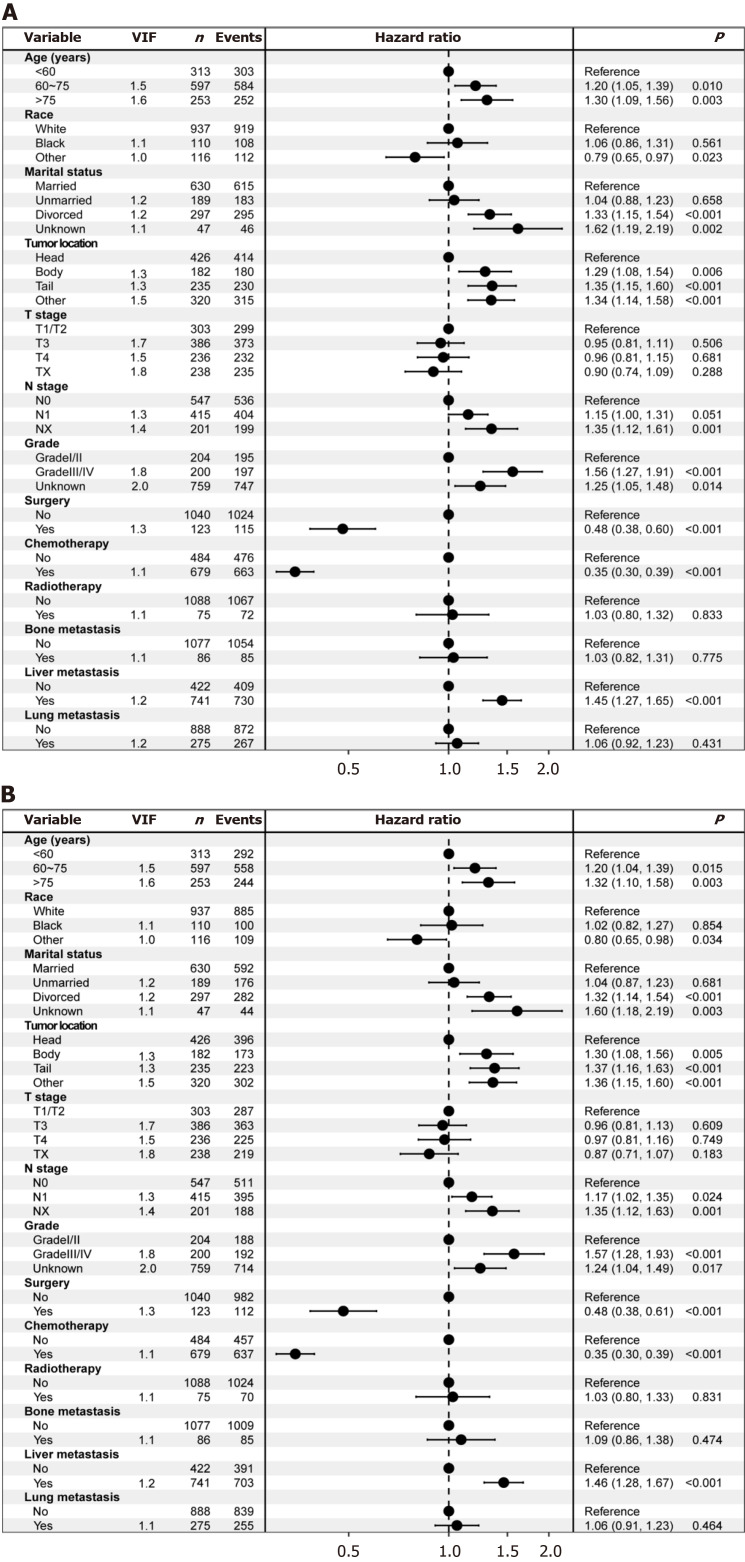
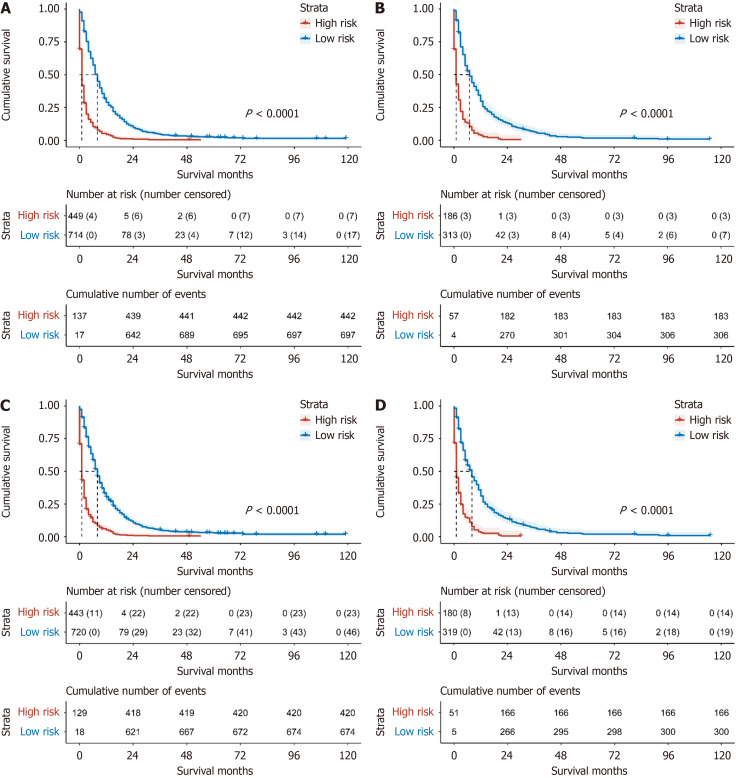
Results: A total of 1662 patients were included (1163 in the training set, 499 in the validation set). The median follow-up times were 4 months [interquartile range (IQR): 1-10 months] for the training set and 4 months (IQR: 1-11 months) for the validation set. Key independent prognostic factors identified included age, race, marital status, tumor location, N stage, grade, surgery, chemotherapy, and liver metastasis. The nomogram accurately predicted OS and CSS at 6, 12, and 18 months, with a C-index of 0.727 (OS) and 0.727 (CSS) in the training set, and 0.719 (OS) and 0.716 (CSS) in the validation set. Calibration curves demonstrated excellent model accuracy.
Conclusion: The nomogram developed using age, grade, chemotherapy, surgery, and liver metastasis as predictors can reliably estimate survival outcomes for stage IV PC patients and offers a potential tool for individualized clinical decision-making.
Keywords: Cancer survival; Machine learning; Prognosis; Prognostic model; Stage IV pancreatic ductal adenocarcinoma; Surveillance Epidemiology, and End Results Program.
©The Author(s) 2025. Published by Baishideng Publishing Group Inc. All rights reserved.
Conflict of interest statement
Conflict-of-interest statement: The authors declare that they have no conflicts of interest to disclose.
Figures
References
-
- Dalmartello M, La Vecchia C, Bertuccio P, Boffetta P, Levi F, Negri E, Malvezzi M. European cancer mortality predictions for the year 2022 with focus on ovarian cancer. Ann Oncol. 2022;33:330–339. - PubMed
LinkOut - more resources
Full Text Sources
