


Protecting bacteriophages under UV irradiation with brilliant blue FCF for targeted bacterial control
- PMID: 40487989
- PMCID: PMC12143832
- DOI: 10.1016/j.bioflm.2025.100286
Protecting bacteriophages under UV irradiation with brilliant blue FCF for targeted bacterial control
Abstract
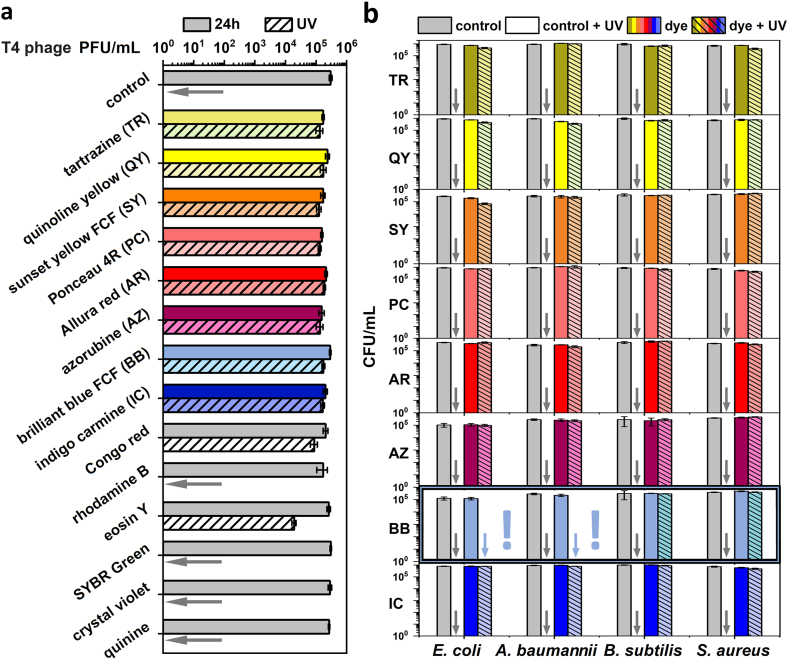
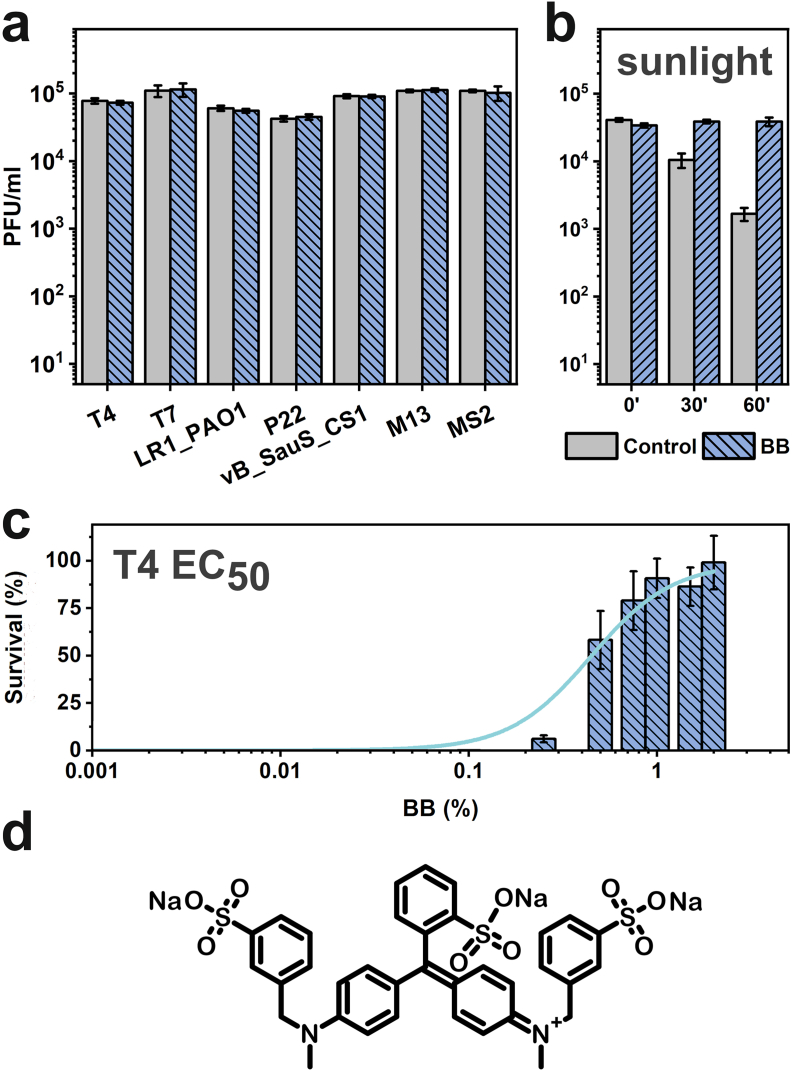
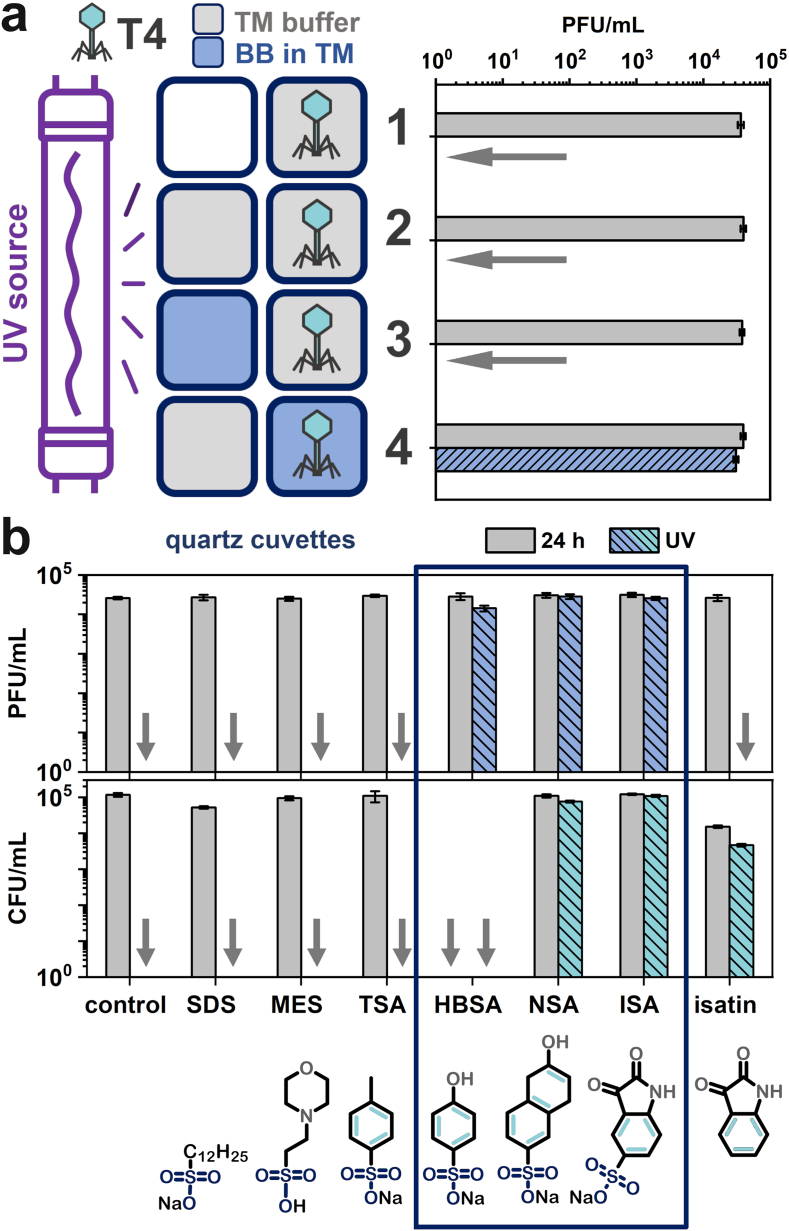
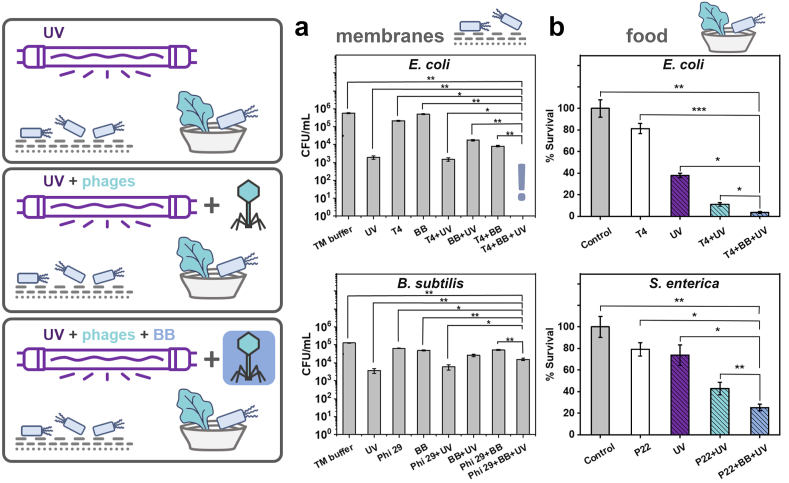
Compared to the standard methods for treating bacterial diseases, bacteriophages are eco-friendly and chemical-free. Exposure to ultraviolet (UV) light or sunlight hampers the efficacy of phage-based approaches. This is crucial when phages are i) exposed to sunlight (e.g., in agriculture) or ii) are to be used simultaneously with UV for sterilization. Here, we develop a method utilizing a food dye, brilliant blue FCF (BB), that selectively stabilizes bacteriophages against exposure to UV irradiation. In the absence of BB, all tested phages and bacteria are completely inactivated by UV exposure. However, with the addition of BB, all tested non-enveloped phages are effectively protected, while gram-negative bacteria remain vulnerable to UV inactivation. The mechanism of protection requires selective binding of BB to the virion. The simultaneous action of BB-stabilized bacteriophages and UV allows for the removal of up to 99.99 % of bacteria within only 30-60 min. We demonstrate the method's applicability in combating biofouling of membranes and food sterilization. We envision using the developed approach against biofouling in industrial processes, agriculture, and the food industry.
Keywords: Antimicrobial combinations; Bacteriophages; Biofilms; Food dyes; Food preservation; Membranes; Stabilization.
© 2025 The Authors.
Conflict of interest statement
The authors declare that they have no known competing financial interests or personal relationships that could have appeared to influence the work reported in this paper.
Figures
References
-
- Ikuta K.S., Swetschinski L.R., Aguilar G.R., Sharara F., Mestrovic T., Gray A.P., et al. Global mortality associated with 33 bacterial pathogens in 2019: a systematic analysis for the Global Burden of Disease Study 2019. Lancet. 2022;400:2221–2248. doi: 10.1016/S0140-6736(22)02185-7. - DOI - PMC - PubMed
LinkOut - more resources
Full Text Sources
