


An update on carbapenem-resistant Enterobacterales: A prospective study from Western India
- PMID: 40488303
- PMCID: PMC12236389
- DOI: 10.4103/jpgm.jpgm_558_24
An update on carbapenem-resistant Enterobacterales: A prospective study from Western India
Abstract
Introduction: Antimicrobial resistance is a global health threat. Carbapenem-resistant Enterobacterales (CRE) are increasingly becoming an important cause of concern. We aimed to present a comprehensive update on CRE, including their prevalence, antimicrobial susceptibility profile, phenotypic and genotypic characterization. The study also evaluated the activity of ceftazidime-avibactam (CZA) against CRE.
Materials and methods: This was a prospective observational study conducted in a multispecialty tertiary care teaching hospital in Jaipur, western India. All consecutive non-duplicate CRE strains isolated from various clinical samples received in the laboratory during the study period were included in the study. Detection of carbapenemase enzyme production and phenotypic characterization was done using modified carbapenem inactivation method (mCIM) and EDTA-modified carbapenem inactivation method (eCIM), respectively, and genotypic detection was performed by multiplex PCR.
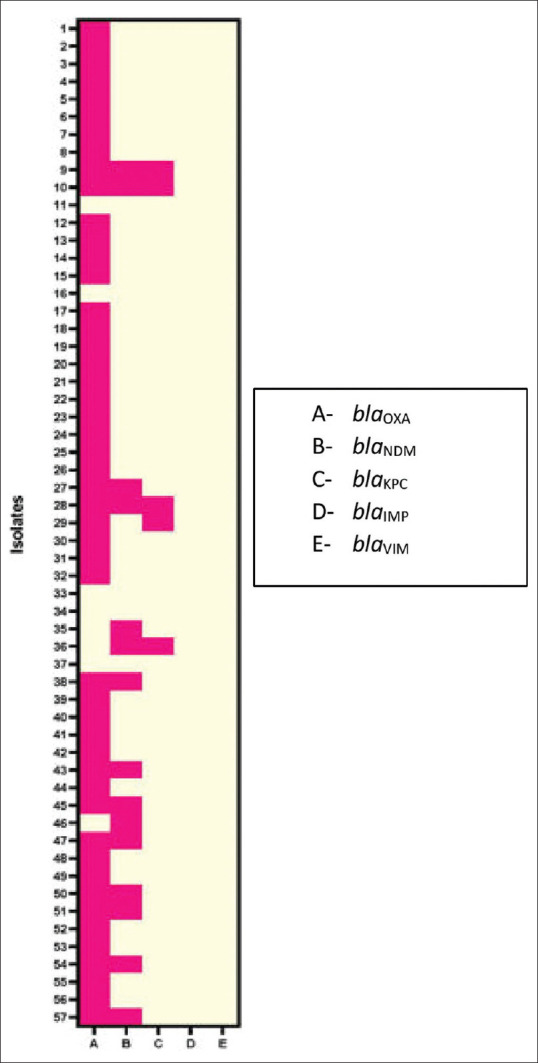
Results: CRE prevalence was 43%, and 91% were found to be carbapenemase producers. In addition, 94%, 91%, 21%, and 20% susceptibility was observed for tigecycline, colistin, amikacin, and trimethoprim/sulfamethoxazole, respectively. Thirty-three percent of CRE were susceptible to CZA alone, and 93% were found to exhibit synergy between CZA and aztreonam. The most prevalent carbapenemase gene detected in the current study was bla OXA-48 , which was found in 61.4% of the isolates tested. More than one carbapenemase gene was detected in 35% of the isolates.
Conclusions: This study highlights the escalating threat of CRE and emphasizes the pressing need for their continuous surveillance for appropriate management.
Keywords: Carbapenem-resistant Enterobacterales; carbapenemase production; ceftazidime–avibactam; multiplex PCR; synergy testing.
Copyright © 2025 Journal of Postgraduate Medicine.
Conflict of interest statement
There are no conflicts of interest.
Figures


References
-
- AMR Surveillance Network. Annual Report on Antimicrobial Resistance. New Delhi: Indian Council of Medical Research; 2022. Indian Council of Medical Research.
-
- World Health Organization. WHO Bacterial Priority Pathogens List, 2024: Bacterial Pathogens of Public Health Importance to Guide Research, Development and Strategies to Prevent and Control Antimicrobial Resistance. Geneva: World Health Organization; 2024.
-
- Indian Council of Medical Research. Guidance on Diagnosis and Management of Carbapenem Resistant Gram-negative Infections. New Delhi: Indian Council of Medical Research; 2023.
Publication types
MeSH terms
Substances
LinkOut - more resources
Full Text Sources
Medical
