


Metabolomic and Genomic Analysis of Bioactive Compounds of Phacidium infestans Karsten DSM 5139 Cultivated on Pinus sylvestris Needles
- PMID: 40491007
- PMCID: PMC12148953
- DOI: 10.1111/1758-2229.70084
Metabolomic and Genomic Analysis of Bioactive Compounds of Phacidium infestans Karsten DSM 5139 Cultivated on Pinus sylvestris Needles
Abstract
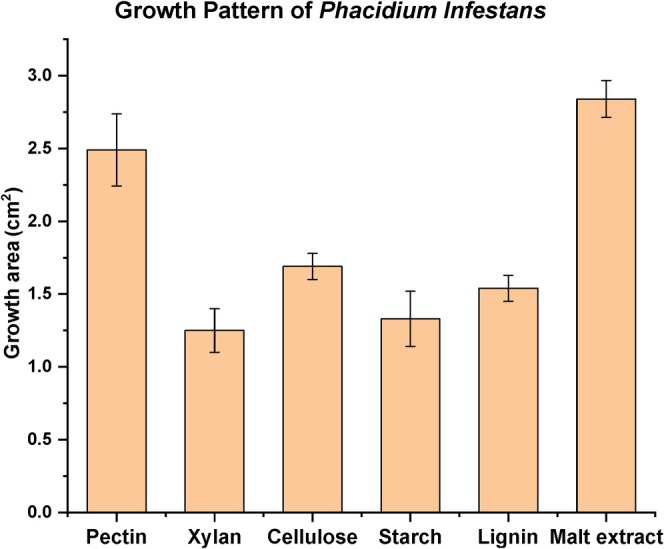
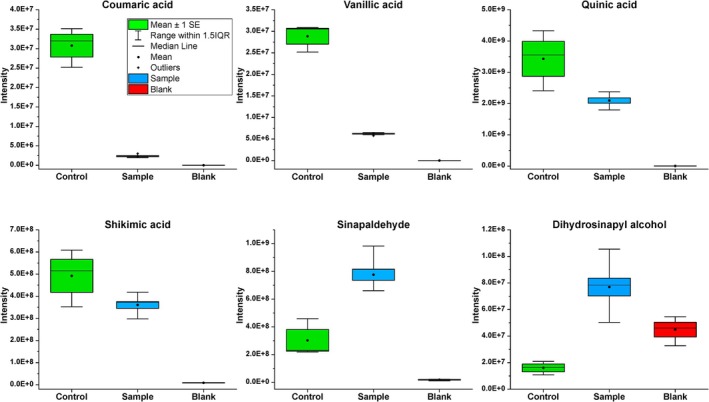
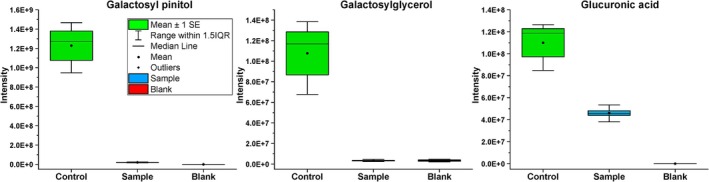
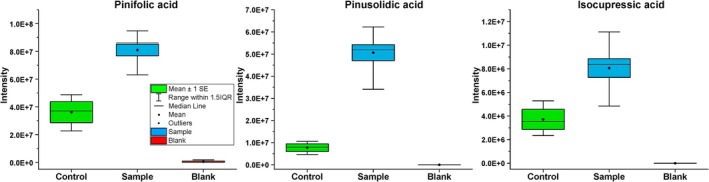
This study investigates how Phacidium infestans acquires nutrients on Pinus sylvestris needles, which possess antimicrobial properties. P. infestans was evaluated for its growth and enzyme production on various substrates, alongside genomic and metabolomic analysis. Direct-infusion high-resolution mass spectrometry (DI-HRMS) was performed on methanol extracts obtained from P. infestans cultivated on needles and malt extract media. DI-HRMS analysis identified 21 compounds from the malt extract and 112 from the needle samples. The resin components increased in the needle samples post-cultivation, suggesting terpenoid release from resin ducts due to fungal degradation of plant cell walls. P. infestans fully consumed sugars and antifungal compounds, including taxiresinol and salicylic acid, with control-to-sample ratios (CTR/SA) of 289.76 and 47.24, respectively. Moreover, lariciresinol and pinoresinol were reduced to undetectable levels. The genomic analysis identified 421 secreted proteins, including 128 carbohydrate-active enzymes, 3 cutinases, and 49 lipases that aid host penetration and wax degradation. Several multi-drug efflux pumps and two acyclic terpene utilisation proteins were identified as well. These proteins support the cellular integrity of P. infestans by expelling toxic compounds. Our findings provide valuable insights into the metabolic strategies of P. infestans for nutrient assimilation on pine needles.
Keywords: Pinus sylvestris; Gremmenia infestans; FT‐ICR; Phacidium infestans Karsten DSM 5139; mass spectrometry; needles; secreted carbohydrate‐active enzymes.
© 2025 The Author(s). Environmental Microbiology Reports published by John Wiley & Sons Ltd.
Conflict of interest statement
The authors declare no conflicts of interest.
Figures
References
-
- Admassie, M. , Woldehawariat Y., and Alemu T.. 2022. “In Vitro Evaluation of Extracellular Enzyme Activity and Its Biocontrol Efficacy of Bacterial Isolates From Pepper Plants for the Management of Phytophthora Capsici.” BioMed Research Inernational 2022, no. 1: 6778352. 10.1155/2022/6778352. - DOI - PMC - PubMed
-
- Agrios, G. N. 2005. “How Pathogens Attack Plants.” In Plant Pathology, edited by Agrios G. N., Fifth ed., 175–205. Academic Press. 10.1016/B978-0-08-047378-9.50011-7. - DOI
-
- Ander, P. , Hatakka A., and Eriksson K. E.. 1980. “Vanillic Acid Metabolism by the White‐Rot Fungus Sporotrichum Pulverulentum.” Archives of Microbiology 125: 189–202. 10.1007/BF00446876. - DOI
-
- Andersson, R. , Gref R., and Lundgren L. N.. 1990. “Manoyl Oxide Acid From Resin of Pinus sylvestris Needles.” Phytochemistry 29, no. 4: 1320–1322.
MeSH terms
Substances
Grants and funding
LinkOut - more resources
Full Text Sources
