


Enhanced production of ergothioneine in Aspergillus oryzae
- PMID: 40493205
- PMCID: PMC12152031
- DOI: 10.1007/s00253-025-13505-2
Enhanced production of ergothioneine in Aspergillus oryzae
Abstract
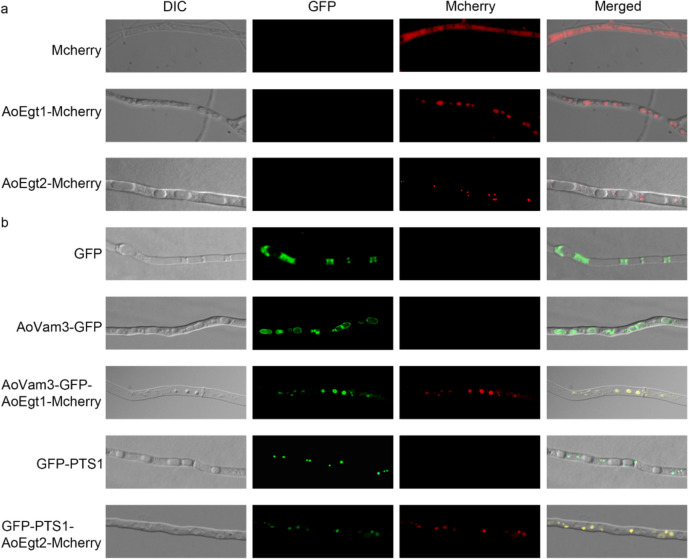
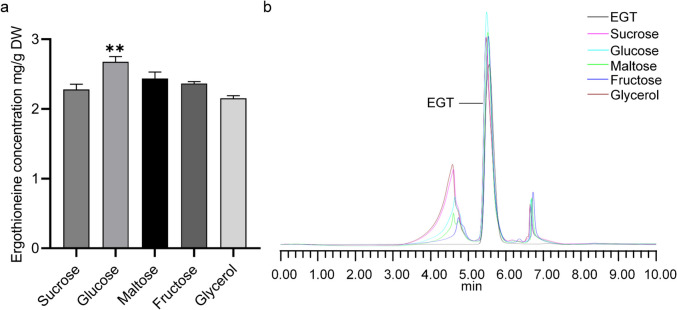
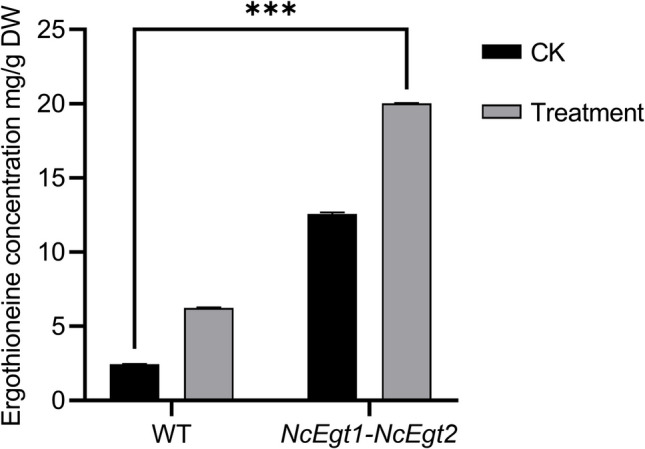
Ergothioneine (EGT) is a rare amino acid with potent antioxidant and anti-inflammatory properties, with a wide range of applications in food, cosmetics, and medicine. In the present study, Aspergillus oryzae, a common edible fungus, was engineered as an optimal host for EGT production. Moreover, two endogenous genes involved in EGT biosynthesis were characterized. The homolog AoEgt1 was shown to be localized in the vacuoles, whereas the homolog AoEgt2 was found in the peroxisomes. Overexpression of EGT biosynthetic genes from different organisms enhanced EGT production, yielding 15.17 mg EGT/g of dry weight. Using glucose as the carbon source and supplementing methionine (Met) as a precursor further increased EGT production to 20.03 mg EGT/g of dry weight, constituting an eight-fold increase compared to the wild-type strain. This study discusses the successful construction of a high-yielding A. oryzae strain for EGT biosynthesis, providing a novel strategy for efficient EGT synthesis. KEY POINTS: • Two newly described homologs, AoEgt1 and AoEgt2, were identified in A. oryzae. • AoEgt1 and AoEgt2 were found to contribute to EGT biosynthesis. • EGT production was significantly increased by overexpression of Egt1 and Egt2. • Glucose and Met supplementation in the medium increased EGT production.
Keywords: Agrobacterium transformation; Aspergillus oryzae; Neurospora crassa; Ergothioneine; Filamentous fungus.
© 2025. The Author(s).
Conflict of interest statement
Declarations. Ethics approval: Not applicable. Competing interests: The authors declare no competing interests.
Figures


References
-
- Bello MH, Barrera-Perez V, Morin D, Epstein L (2012) The Neurospora crassa mutant NcΔEgt-1 identifies an ergothioneine biosynthetic gene and demonstrates that ergothioneine enhances conidial survival and protects against peroxide toxicity during conidial germination. Fungal Genet Biol 49:160–172. 10.1016/j.fgb.2011.12.007 - DOI - PubMed
MeSH terms
Substances
Grants and funding
LinkOut - more resources
Full Text Sources
Miscellaneous
