Resistance to ceftriaxone and penicillin G among contemporary syphilis strains confirmed by natural in vitro mutagenesis
- PMID: 40494996
- PMCID: PMC12152143
- DOI: 10.1038/s43856-025-00948-x
Resistance to ceftriaxone and penicillin G among contemporary syphilis strains confirmed by natural in vitro mutagenesis
Abstract
Background: For many years, syphilis treatment was considered straightforward due to the universal susceptibility of Treponema pallidum subsp. pallidum (TPA) to penicillin antibiotics.
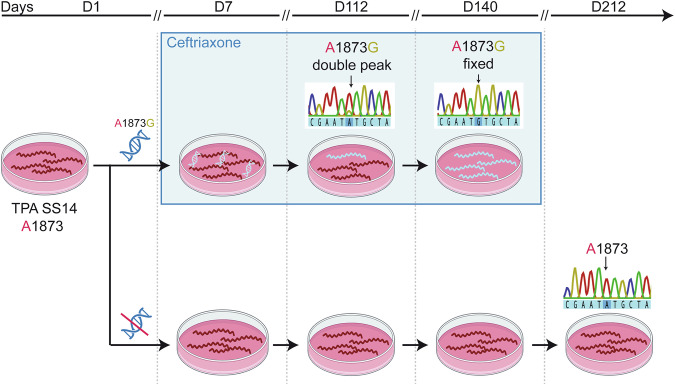
Methods: Penicillin-binding protein genes from a ceftriaxone treatment failure T. pallidum isolate were assessed, and the introduction of identified mutations into two laboratory strains via natural competence was aimed for, followed by in vitro analysis of antibiotic susceptibility of the recombinants.
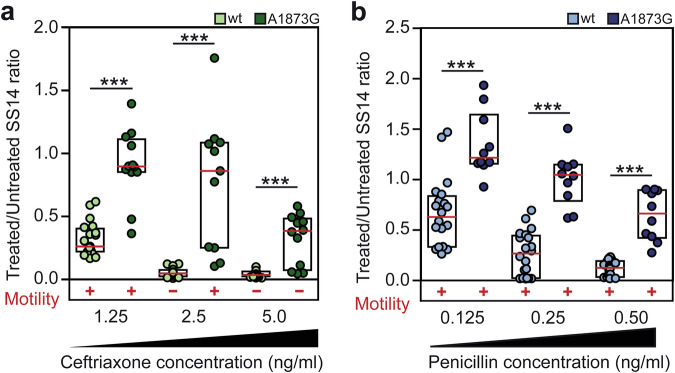
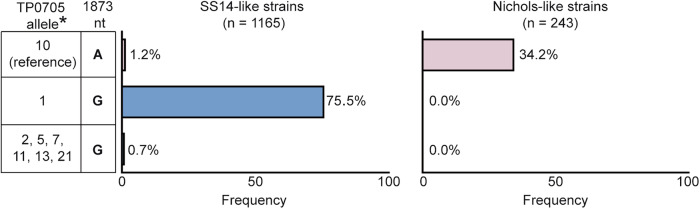
Results: TPA from the ceftriaxone treatment failure case contained A1873G and G2122A mutations in the TP0705 gene. Introduction of the A1873G mutation into laboratory strains DAL-1 and SS14 resulted in partial resistance to ceftriaxone and penicillin G in vitro. Furthermore, in silico analyses revealed that the majority of contemporary TPA SS14-like strains harbors this mutation and are thus partially resistant to ceftriaxone and penicillin G.
Conclusions: This finding indicates that TPA strains accumulate mutations that increase their resistance to β-lactam antibiotics. Alternative approaches for controlling syphilis will be needed, including the development of the syphilis vaccine.
Plain language summary
Penicillin antibiotics have been used to treat syphilis since the 1950s. Resistance to antibiotics is a growing concern. We investigated cases where antibiotics had failed to treat infection and found two mutations in a specific gene that could be responsible. Introduction of one of these mutations into two laboratory T. pallidum strains (the bacteria that cause syphilis) resulted in partial resistance to both ceftriaxone and penicillin antibiotics. Moreover, analysis of existing data revealed the presence of this mutation in numerous circulating T. pallidum strains, suggesting widespread partial resistance may already exist and increasing concerns about the future emergence of fully resistant syphilis strains.
© 2025. The Author(s).
Conflict of interest statement
Competing interests: The authors declare no competing interests.
Figures
Similar articles
-
Macrolide Resistance in the Syphilis Spirochete, Treponema pallidum ssp. pallidum: Can We Also Expect Macrolide-Resistant Yaws Strains?Am J Trop Med Hyg. 2015 Oct;93(4):678-83. doi: 10.4269/ajtmh.15-0316. Epub 2015 Jul 27. Am J Trop Med Hyg. 2015. PMID: 26217043 Free PMC article.
-
High increase of Nichols-like clade circulating Treponema pallidum subsp. pallidum in Barcelona from 2021 to 2023.Sci Rep. 2024 Oct 8;14(1):23419. doi: 10.1038/s41598-024-74355-y. Sci Rep. 2024. PMID: 39379557 Free PMC article.
-
Antimicrobial susceptibility of Treponema pallidum subspecies pallidum: an in-vitro study.Lancet Microbe. 2023 Dec;4(12):e994-e1004. doi: 10.1016/S2666-5247(23)00219-7. Epub 2023 Oct 9. Lancet Microbe. 2023. PMID: 37827185 Free PMC article.
-
The Critical Role of Penicillin in Syphilis Treatment and Emerging Resistance Challenges.Diseases. 2025 Jan 31;13(2):41. doi: 10.3390/diseases13020041. Diseases. 2025. PMID: 39997048 Free PMC article. Review.
-
Azithromycin resistance in Treponema pallidum.Curr Opin Infect Dis. 2008 Feb;21(1):83-91. doi: 10.1097/QCO.0b013e3282f44772. Curr Opin Infect Dis. 2008. PMID: 18192791 Review.
References
-
- Nechvátal, L. et al. Syphilis-causing strains belong to separate SS14-like or Nichols-like groups as defined by multilocus analysis of 19 Treponema pallidum strains. Int. J. Med. Microbiol.304, 645–653 (2014). - PubMed
-
- Arora, N. et al. Origin of modern syphilis and emergence of a pandemic Treponema pallidum cluster. Nat. Microbiol.2, 16245 (2016). - PubMed
-
- Šmajs, D., Strouhal, M. & Knauf, S. Genetics of human and animal uncultivable treponemal pathogens. Infect. Genet. Evol.61, 92–107 (2018). - PubMed
Grants and funding
LinkOut - more resources
Full Text Sources