Prevalence of musculoskeletal symptoms from online learning during the COVID-19 epidemic: a systematic review and meta-analysis
- PMID: 40496907
- PMCID: PMC12150206
- DOI: 10.12688/f1000research.152382.3
Prevalence of musculoskeletal symptoms from online learning during the COVID-19 epidemic: a systematic review and meta-analysis
Abstract
Purpose: The objective of this research was to assess the prevalence of musculoskeletal symptoms in online students.
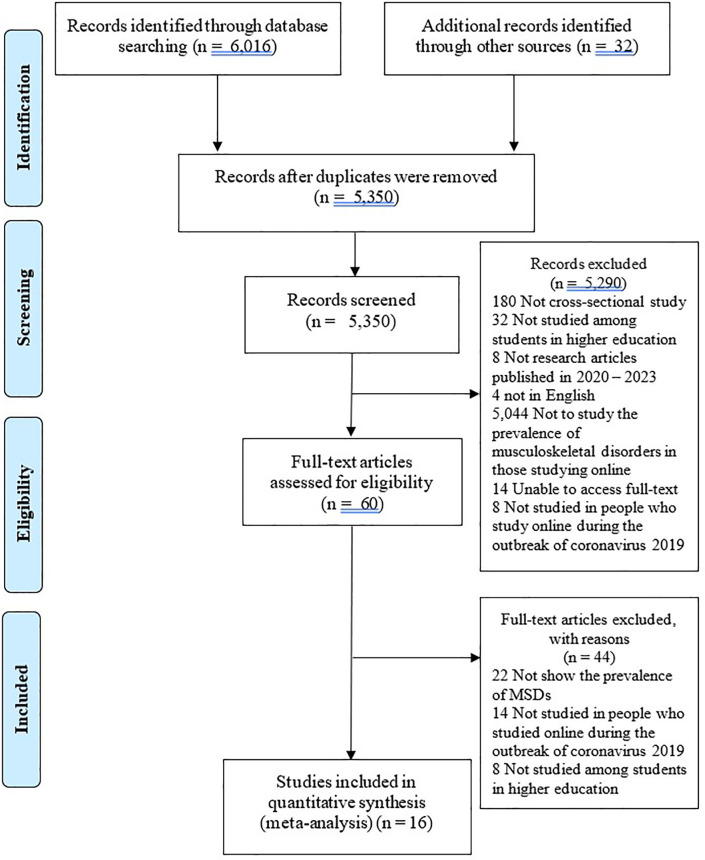
Materials and methods: A systematic review and meta-analysis were performed by searching the PubMed, Cochrane Library, SCOPUS, Web of Science, ScienceDirect, ProQuest, CINAHL plus with full text, and Wiley InterScience databases. A total of 3,749 studies were identified between January 2020 and December 2023. The Joanna Briggs Tool for studies reporting prevalence was used to assess the quality of studies. Jamovi 2.4 was used in the meta-analysis.
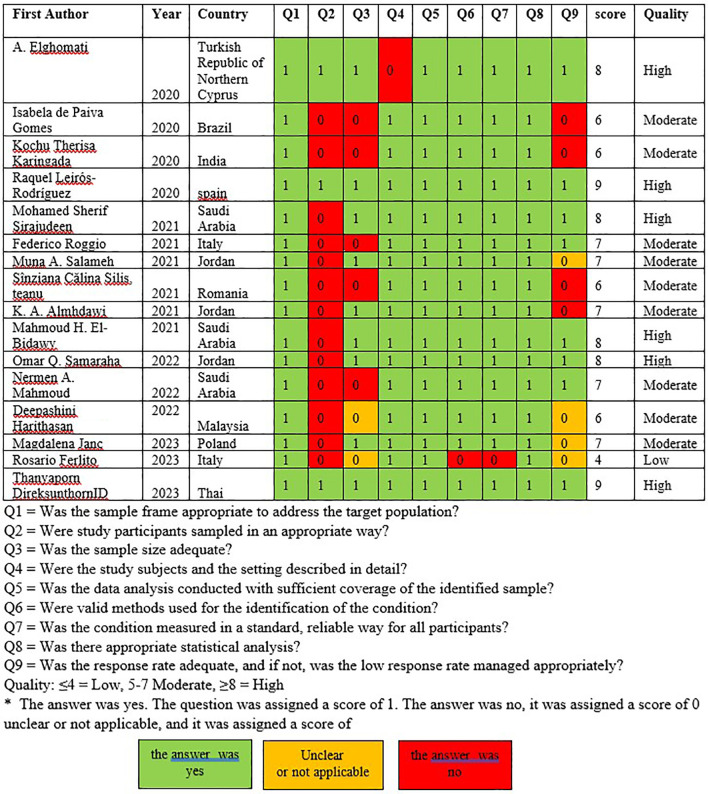
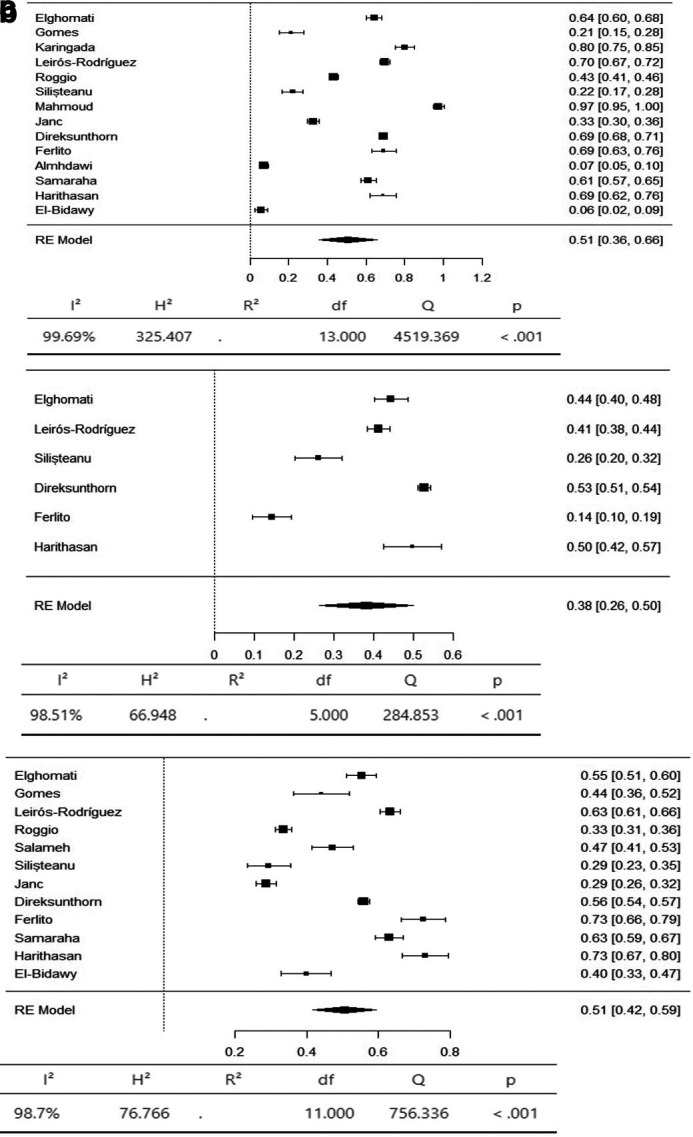
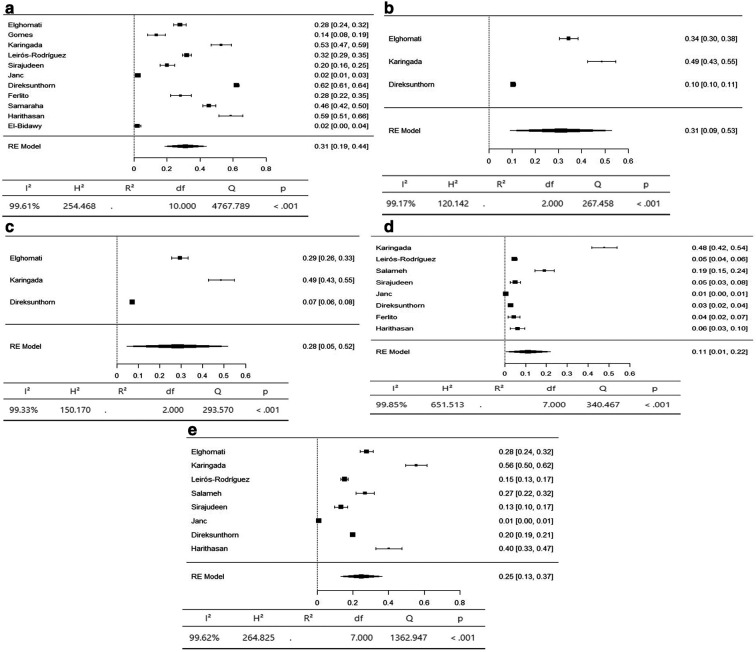
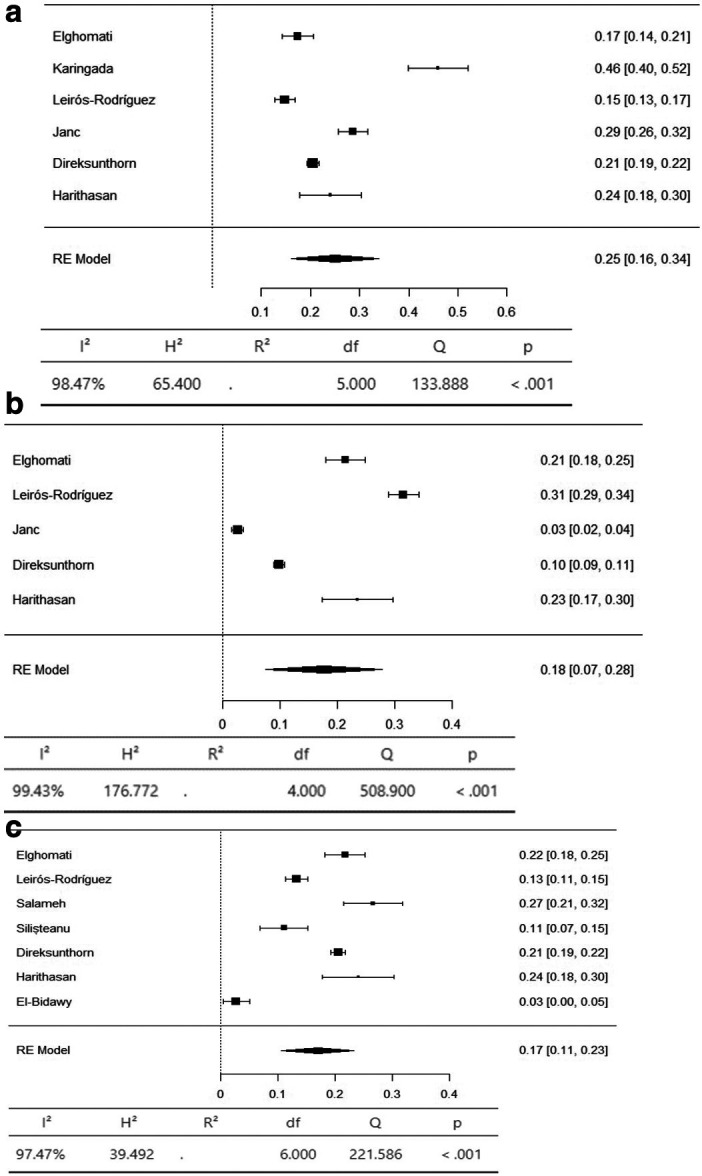
Results: Sixteen studies were included and used for the meta-analysis. The average age of participants was 22 years, with an age range of 17-45 years, Sample range 120-3,705. There were 6 studies of high quality, 9 studies of medium quality and 1 study of low quality. The areas with the highest prevalence of musculoskeletal pain were the neck (51%, 95% CI = 36-66%, I 2 = 99.96), lower back (51%, 95% CI = 42-59%, I 2 = 99.96) and shoulder (36%, 95% CI = 26-47%, I 2 = 99.61).
Conclusions: The shift to online learning during the COVID-19 pandemic has emerged as a potential factor influencing musculoskeletal pain in students. Educational institutions should study the duration of online learning that begins to impact student injury outcomes.
Keywords: COVID-19; Meta-analysis; Musculoskeletal pain; Online learning; Student; Systematic review.
Copyright: © 2025 Gotum T et al.
Conflict of interest statement
No competing interests were disclosed.
Figures
References
-
- organization wh: WHO coronavirus (COVID-19) dashboard. World health organization;2022 [updated 31 May 2022]. Reference Source
-
- Department of Disease Control: The Department of Disease Control reveals guidelines for people living in the most controlled areas. As for provinces with no reported cases Please take strict measures. 2021 [updated 4 January 2021; cited 2024 14 April]. Reference Source
-
- Office of the Basic Education Commission: Guidelines for organizing distance learning during the COVID-19 outbreak situation. 2020 20 May [cited 2024 14 April]:[2 p.]. Reference Source
-
- Department of Mental Health: Thai Health Promotion Foundation brainstorms with partners to find a solution to the problem of stressed children studying online. 2021 [cited 2024 14 April]. Reference Source
Publication types
MeSH terms
LinkOut - more resources
Full Text Sources
Medical