


Sound intensity-dependent cortical activation: implications of the electrical and vascular activity on auditory intensity
- PMID: 40496979
- PMCID: PMC12149058
- DOI: 10.1007/s11571-025-10281-7
Sound intensity-dependent cortical activation: implications of the electrical and vascular activity on auditory intensity
Abstract
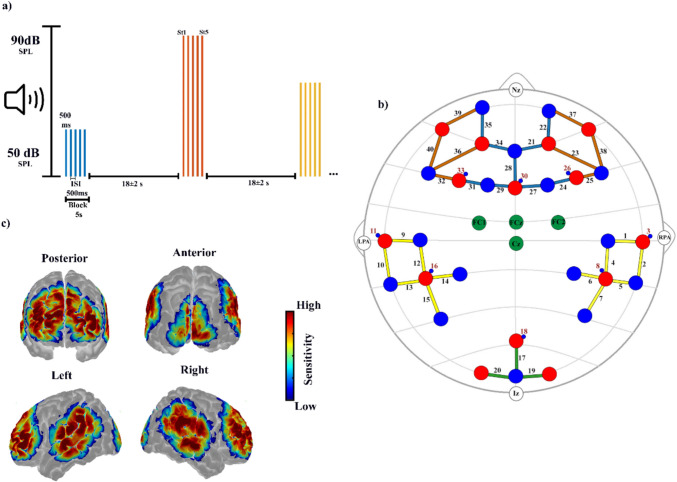
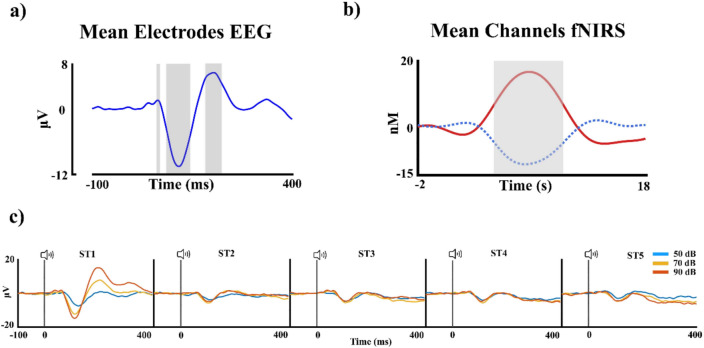
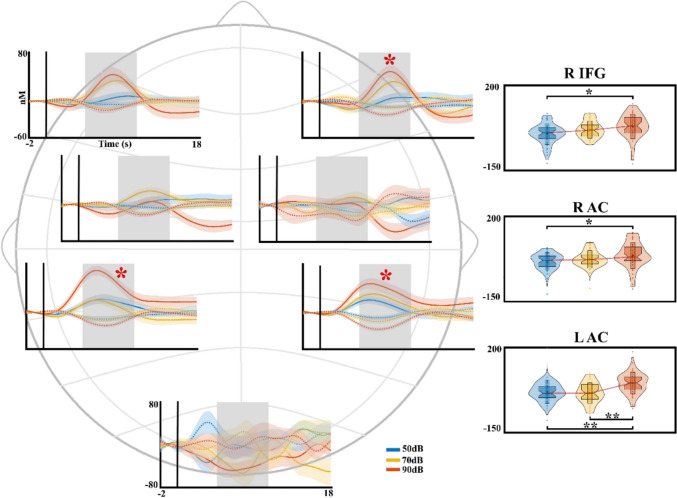
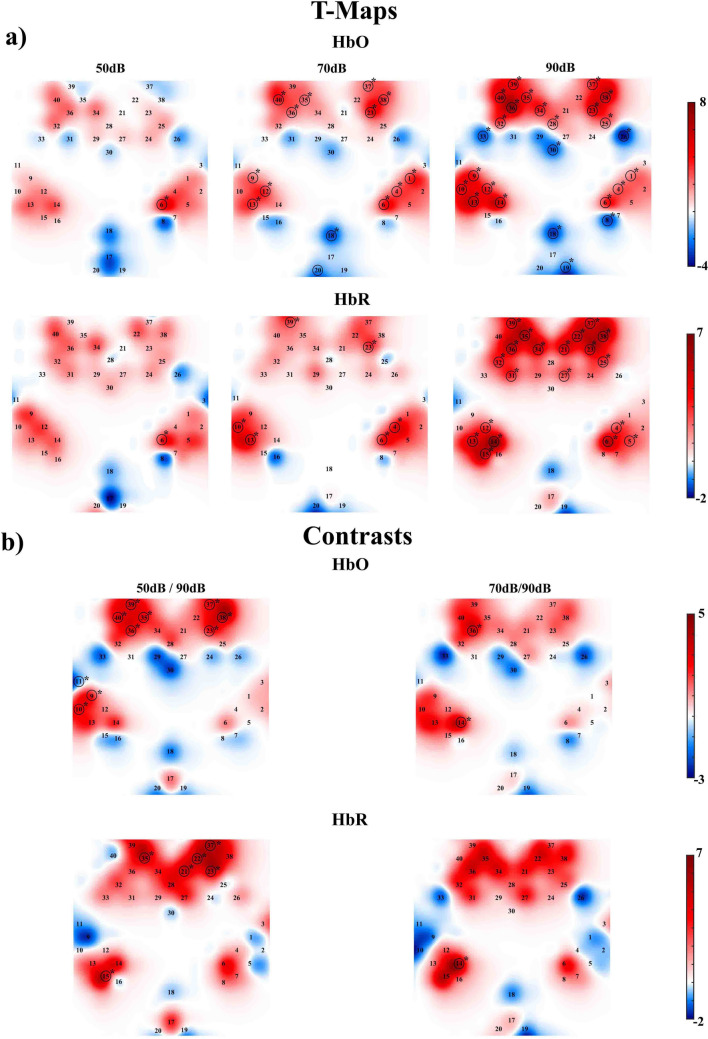
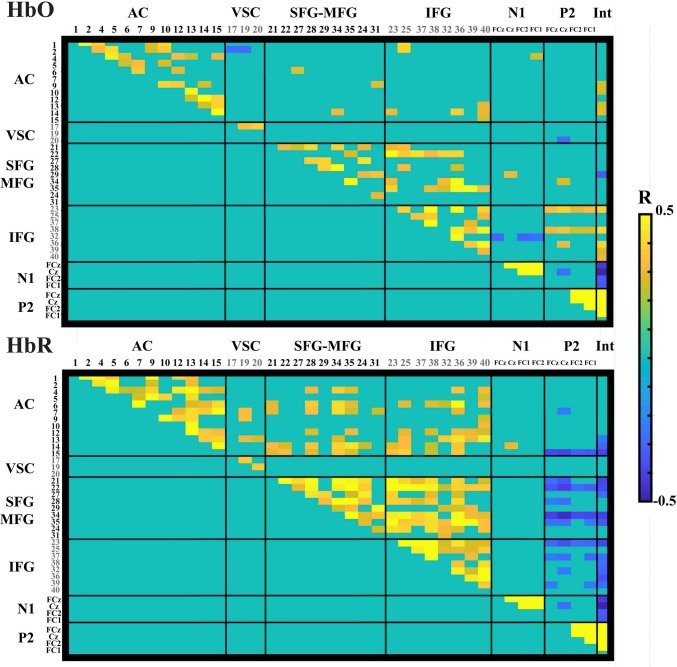
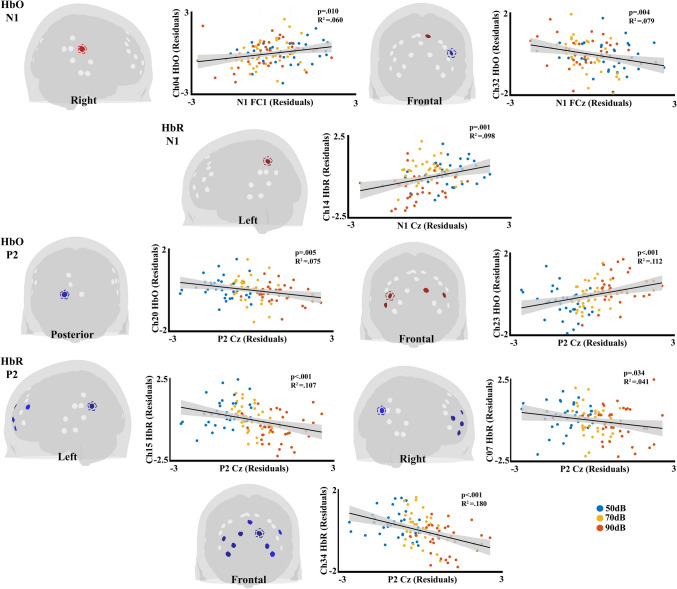
Recent studies combining electroencephalography (EEG) and functional near-infrared spectroscopy (fNIRS) have shown promising results linking neural and vascular responses. This study analyzes the topographical effect of auditory stimulus intensity on cortical activation and explores neurovascular coupling between fNIRS hemodynamic signals and auditory-evoked potentials (AEPs), extracted from EEG. Forty healthy volunteers (13 males, 27 females; mean age = 22.27 ± 3.96 years) listened to complex tones of varying intensities (50-, 70-, and 90-dB SPL) across seven frequencies (range of 400-2750 Hz) in blocks of five, while EEG and fNIRS were recorded. PERMANOVA analysis revealed that increasing intensity modulated hemodynamic activity, leading to amplitude changes and enhanced recruitment of auditory and prefrontal cortices. To isolate stimulus-specific activity, Spearman correlations were computed on residuals-components of AEPs and fNIRS responses with individual trends removed. The N1 amplitude increase was correlated with higher superior temporal gyrus (STG) and superior frontal gyrus (SFG) activity, and reduced activity in inferior frontal gyrus (IFG) for the oxygenated hemoglobin (HbO), while the deoxygenated hemoglobin (HbR) was associated with increased activity in one channel near the Supramarginal Gyrus (SMG). P2 amplitude increase was associated with higher activation in SFG and IFG for HbO, while for HbR with the activity in SMG, angular gyrus (AnG), SFG, and IFG. Additionally, internal correlations between fNIRS channels revealed strong associations within auditory and frontal regions. These findings provide insights into existing models of neurovascular coupling by showing how stimulus properties, such as intensity, modulate the relationship between neural activity and vascular responses.
Supplementary information: The online version contains supplementary material available at 10.1007/s11571-025-10281-7.
Keywords: AEPs; Auditory intensity; FNIRS; Neurovascular coupling.
© The Author(s) 2025.
Conflict of interest statement
Competing interestsThe authors declare no competing interests.
Figures

References
LinkOut - more resources
Full Text Sources
Miscellaneous
