


This is a preprint.
P. aeruginosa rhamnolipids stabilize human rhinovirus 14 virions
- PMID: 40502102
- PMCID: PMC12157531
- DOI: 10.1101/2025.06.04.657910
P. aeruginosa rhamnolipids stabilize human rhinovirus 14 virions
Update in
-
Pseudomonas aeruginosa rhamnolipids stabilize human rhinovirus 14 virions.J Virol. 2025 Sep 23;99(9):e0093125. doi: 10.1128/jvi.00931-25. Epub 2025 Aug 18. J Virol. 2025. PMID: 40824088 Free PMC article.
Abstract
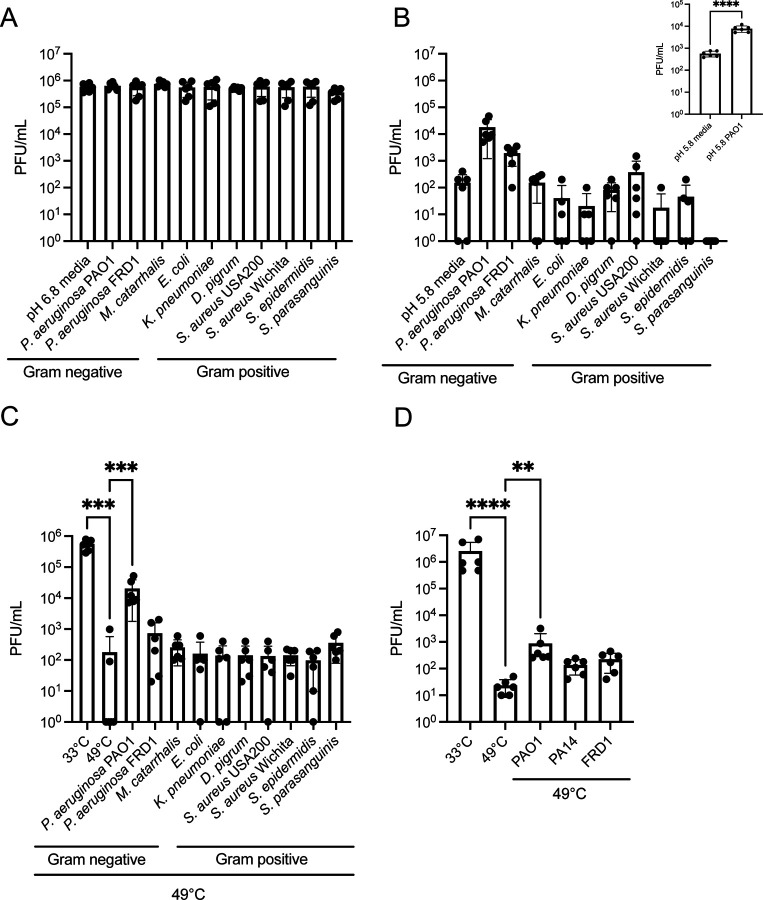
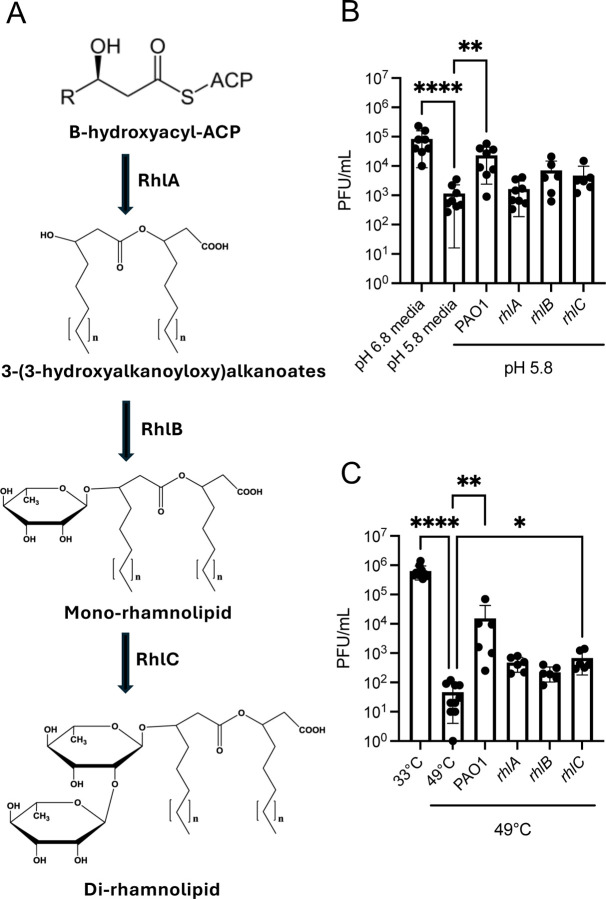
Many mammalian viruses encounter bacteria and bacterial molecules over the course of infection. Previous work has shown that the microbial ecology of the gut plays an integral role in poliovirus and coxsackievirus infection, where bacterial glycans can facilitate virus-receptor interactions, enhance viral replication, and stabilize viral particles. However, how airway bacteria alter respiratory viral infection is less understood. Therefore, we investigated whether a panel of airway bacteria affect rhinovirus stability. We found that Pseudomonas aeruginosa, an opportunistic airway pathogen, protects human rhinovirus 14 from acid or heat inactivation. Further investigation revealed that P. aeruginosa rhamnolipids, glycolipids with surfactant properties, are necessary and sufficient for stabilization of rhinovirus virions. Taken together, this work demonstrates that specific molecules produced by an opportunistic airway pathogen can influence a respiratory virus.
Figures




References
Publication types
Grants and funding
LinkOut - more resources
Full Text Sources
