This is a preprint.
Enhanced Risk Stratification of Smoldering Multiple Myeloma with Dynamic Biomarkers: A Multinational, Multicenter Study including 2,270 Participants (PANGEA 2.0)
- PMID: 40502745
- PMCID: PMC12155220
- DOI: 10.21203/rs.3.rs-6696313/v1
Enhanced Risk Stratification of Smoldering Multiple Myeloma with Dynamic Biomarkers: A Multinational, Multicenter Study including 2,270 Participants (PANGEA 2.0)
Abstract
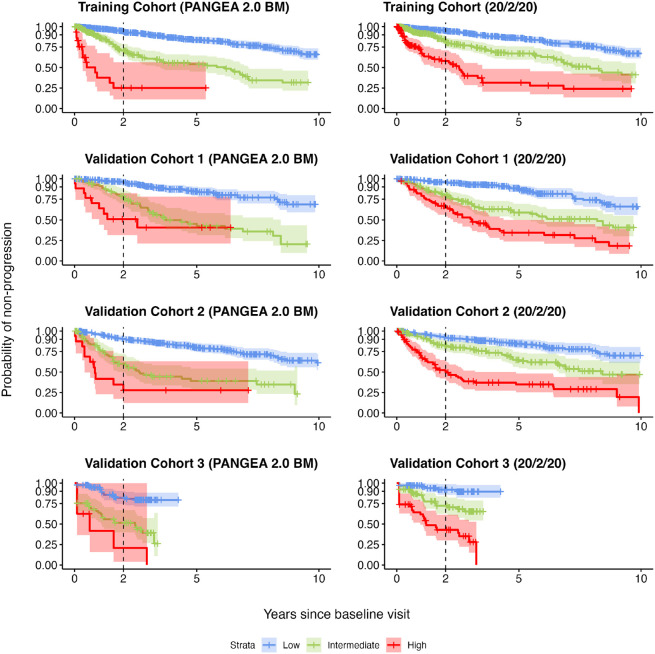
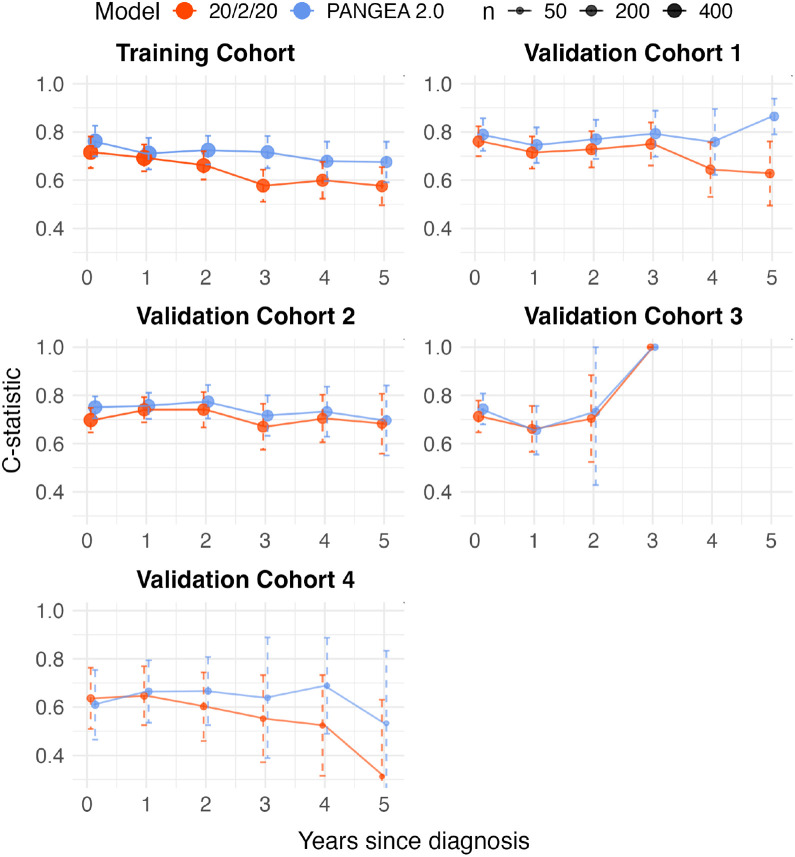
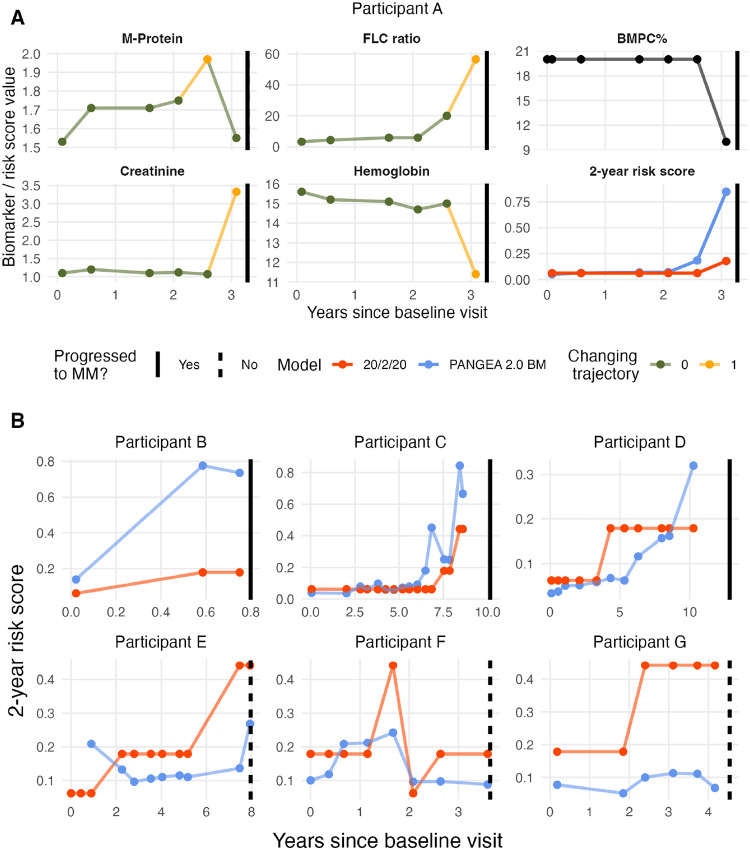
Accurate prediction of risk of progression from smoldering (SMM) to active multiple myeloma (MM) is paramount to individualized early therapeutic strategies with minimum risk of overtreatment. Current risk stratification models do not account for evolving biomarker trajectories. We assembled the largest cohort to date of 2,270 SMM patients from six international centers with longitudinal clinical and biological data to train and validate the PANGEA 2.0 risk models. Four evolving biomarkers were significantly associated with shorter time-to-progression: M-protein increase ≥0.2g/dL, involved:uninvolved serum free light chain ratio increase ≥20, creatinine increase >25%, and hemoglobin decrease ≥1.5g/dL. PANGEA 2.0 outperforms established models including the 20/2/20 and IMWG models by more accurately predicting progression (C-statistics=0.69-0.84), even without biomarker history (C-statistics=0.69-0.83) or recent bone marrow biopsy. PANGEA 2.0 is an easy-to-use, open-access tool (https://ghobrial.shinyapps.io/pangea_2_calculator) to improve and individualize SMM risk stratification. Validation tools are available to compare PANGEA 2.0 to established models (https://ghobrial.shinyapps.io/pangea_validation).
Keywords: Smoldering multiple myeloma; dynamic risk stratification; multiple myeloma; risk prediction.
Figures
References
-
- Rajkumar SV, Dimopoulos MA, Palumbo A, et al. : International Myeloma Working Group updated criteria for the diagnosis of multiple myeloma. Lancet Oncol 15:e538–48, 2014. - PubMed
-
- Fernández de Larrea C, Isola I, Pereira A, et al. : Evolving M-protein pattern in patients with smoldering multiple myeloma: impact on early progression. Leukemia 32:1427–34, 2018. - PubMed
Publication types
Grants and funding
LinkOut - more resources
Full Text Sources