


Vitamin D Levels in Patients Presenting to a Rheumatology Clinic in Germany: Associations with Patient Characteristics and Season
- PMID: 40507162
- PMCID: PMC12158044
- DOI: 10.3390/nu17111893
Vitamin D Levels in Patients Presenting to a Rheumatology Clinic in Germany: Associations with Patient Characteristics and Season
Abstract
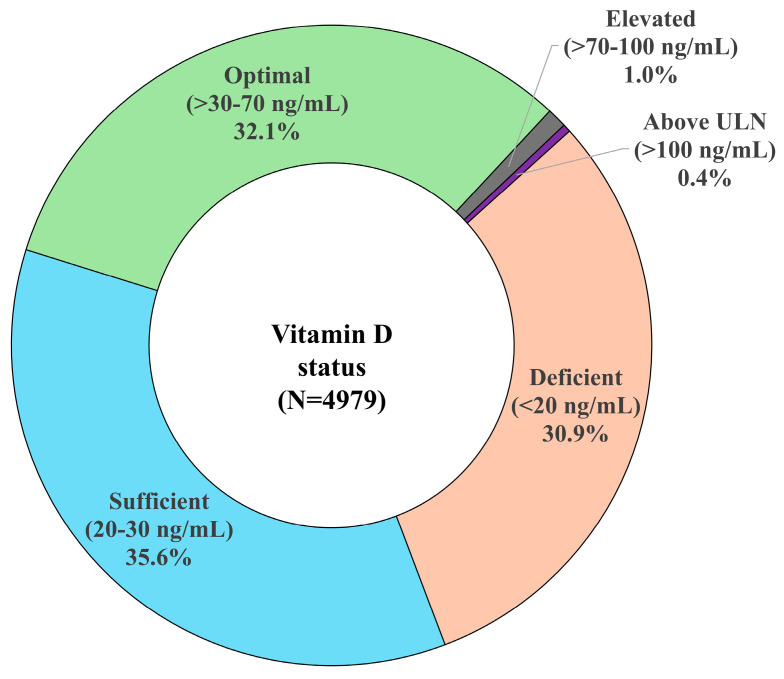
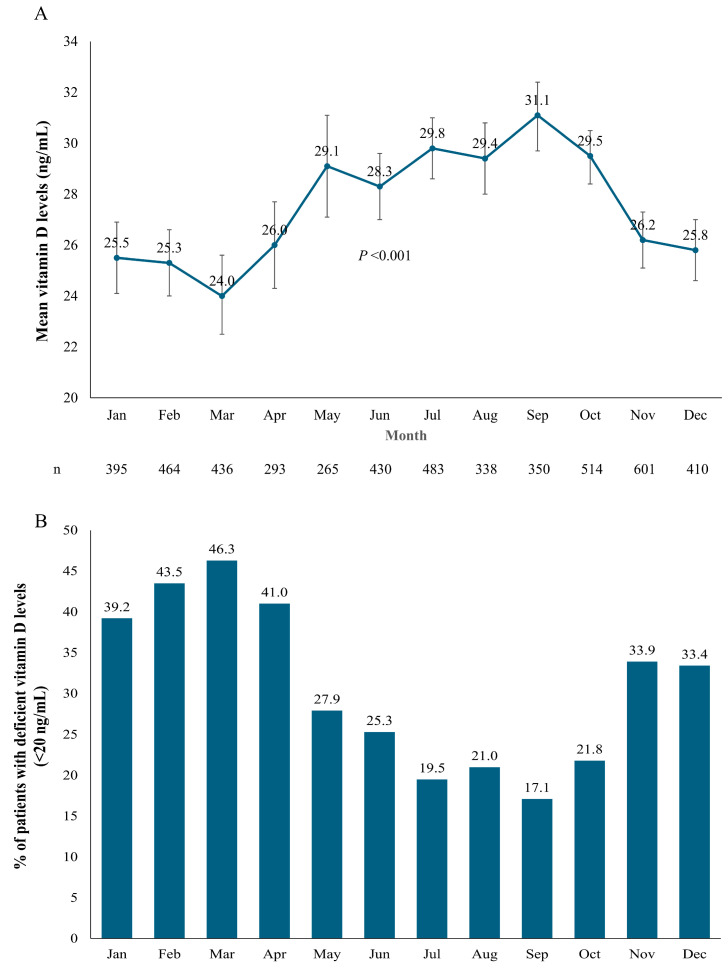
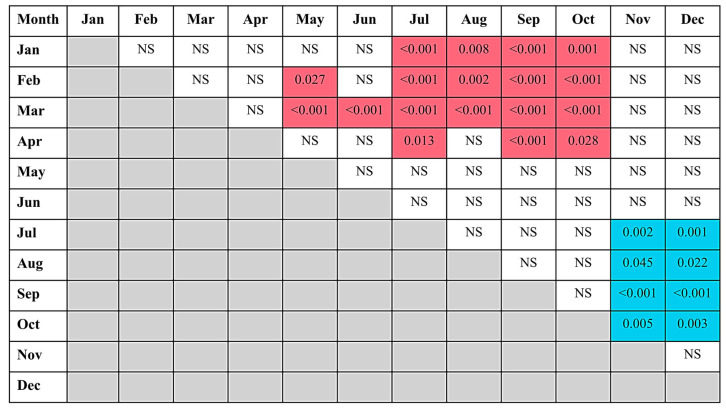
Background: High rates of vitamin D deficiency have been reported in population-based studies, including those conducted in Germany. The goal of this study was to evaluate vitamin D levels and associated factors in a clinical cohort of German patients presenting to a rheumatology clinic. Methods: We conducted a retrospective observational study of electronic health record data from patients presenting to a rheumatology clinic in southern Germany. Data included demographic characteristics and vitamin D levels as measured by the Elecsys® Vitamin D total III assay (Roche). Associations between vitamin D levels and patient characteristics were evaluated by Pearson correlation analyses, t-tests, and multiple regression analyses. We also explored seasonal changes. Results: A total of 4979 patients were included; 3230 (64.9%) were female and the mean (standard deviation [SD]) age was 53.6 (15.2) years. The mean (SD) vitamin D level was 27.4 (14.0) ng/mL (range, 3-240 ng/mL). Overall, 1540 (30.9%) had vitamin D levels in the deficient range (<20 ng/mL), 1774 (35.6%) had sufficient vitamin D (20 to 30 ng/mL), 1597 (32.1%) had optimal vitamin D levels (>30 to 70 ng/mL), and 68 (1.4%) had levels >70 ng/mL. Lower vitamin D levels were significantly associated with younger age, male sex, and higher body mass index. Mean levels were significantly lower during winter months and the percentages of patients with vitamin D deficiency were higher. Conclusions: Our data indicate that low levels of vitamin D are common in clinical cohorts, particularly in men, younger adults, overweight individuals, and during winter months. Patient education and/or supplementation may help to address this issue and potentially improve patient health.
Keywords: electronic health records; epidemiology; rheumatology; seasons; vitamin D; vitamin D deficiency.
Conflict of interest statement
Authors M.S.K., A.N. and M.F. were employed by the company MVZ MED BAYERN OST. A.S. reports personal fees from Amgen, AstraZeneca, Novo Nordisk Pharma GmbH, outside the submitted work. M.F. reports personal fees from AbbVie, personal fees from Roche, and personal fees from UCB outside of the submitted work. M.S.K. and A.N. declare no disclosures relevant to this manuscript.
Figures
References
-
- Giustina A., Bilezikian J.P., Adler R.A., Banfi G., Bikle D.D., Binkley N.C., Bollerslev J., Bouillon R., Brandi M.L., Casanueva F.F., et al. Consensus statement on vitamin D status assessment and supplementation: Whys, whens, and hows. Endocr. Rev. 2024;45:625–654. doi: 10.1210/endrev/bnae009. - DOI - PMC - PubMed
Publication types
MeSH terms
Substances
LinkOut - more resources
Full Text Sources
Medical
