


Antimicrobial Resistance in Companion Animals: A 30-Month Analysis on Clinical Isolates from Urinary Tract Infections in a Veterinary Hospital
- PMID: 40509013
- PMCID: PMC12153634
- DOI: 10.3390/ani15111547
Antimicrobial Resistance in Companion Animals: A 30-Month Analysis on Clinical Isolates from Urinary Tract Infections in a Veterinary Hospital
Abstract
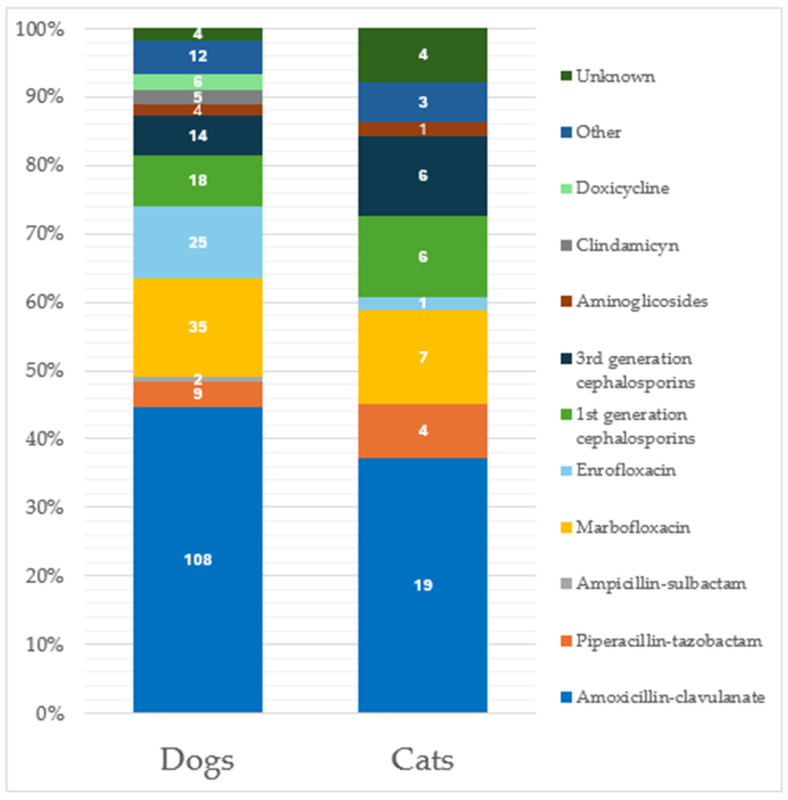
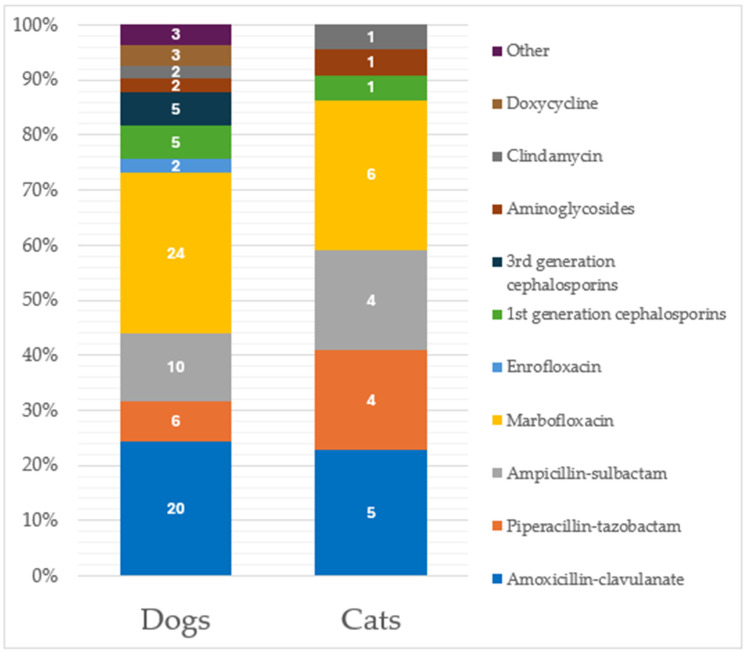
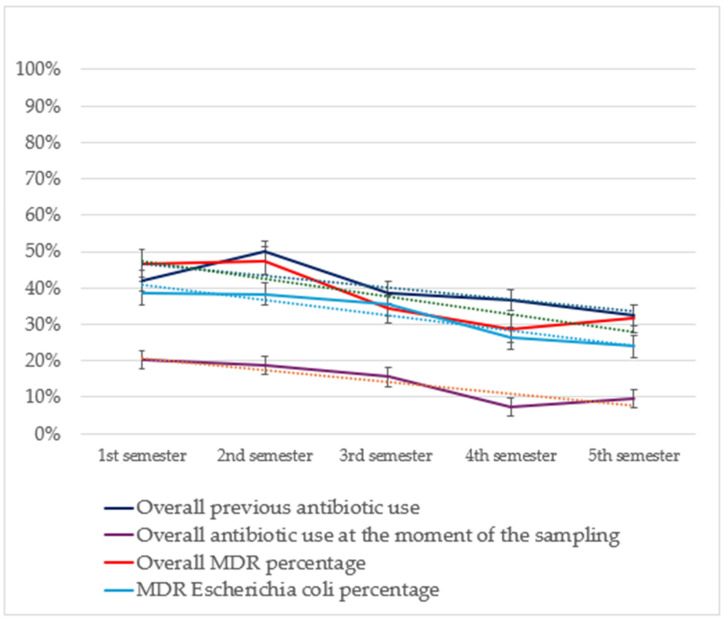
Bacterial urinary tract infections (UTIs) are common in small animal practice and their inappropriate treatment contributes to the antimicrobial resistance (AMR) spreading. This study assessed bacterial prevalence, non-susceptibility percentages, antimicrobial prescription and the impact of the application of international guidelines redacted by the International Society for Companion Animals Infectious Disease (ISCAID) in dogs and cats with UTIs evaluated at a European veterinary university hospital, over a 30-month period. A total of 729 bacterial isolates were included. The most frequently isolated bacterial species was Escherichia coli in both dogs (52.8%) and cats (45.7%). Following ISCAID guidelines, almost half of the cases were classified as upper UTIs (24.9%) or recurrent cystitis (24.8%). Multidrug resistance (MDR) percentage was 37.3% (n = 272). Over five semesters, MDR significantly decreased (p = 0.001). Additionally, a significant decrease was recorded for specimens from patients previously treated (p = 0.018) and under treatment at sampling (p < 0.001). Previous treatment with amoxicillin-clavulanate (p = 0.001), marbofloxacin (p < 0.001), enrofloxacin (p < 0.001) and piperacillin-tazobactam (p = 0.016) was linked with higher MDR rates. This study highlighted that companion animals are potential reservoirs for AMR; moreover, international guidelines applied in the daily practice guiding antimicrobial stewardship can lead to a reduction in AMR over time.
Keywords: ISCAID guidelines; companion animals; cystitis; multidrug antibiotic resistance; small animal infection; subclinical bacteriuria; surveillance.
Conflict of interest statement
The authors declare no conflicts of interest.
Figures
References
-
- WHO . WHO List of Critically Important Antimicrobials for Human Medicine (WHO CIA List) World Health Organization; Geneve, Switzerland: 2019.
LinkOut - more resources
Full Text Sources
Miscellaneous
