


Advances in the application of patient-derived xenograft models in acute leukemia resistance
- PMID: 40510031
- PMCID: PMC12159603
- DOI: 10.20517/cdr.2025.18
Advances in the application of patient-derived xenograft models in acute leukemia resistance
Abstract
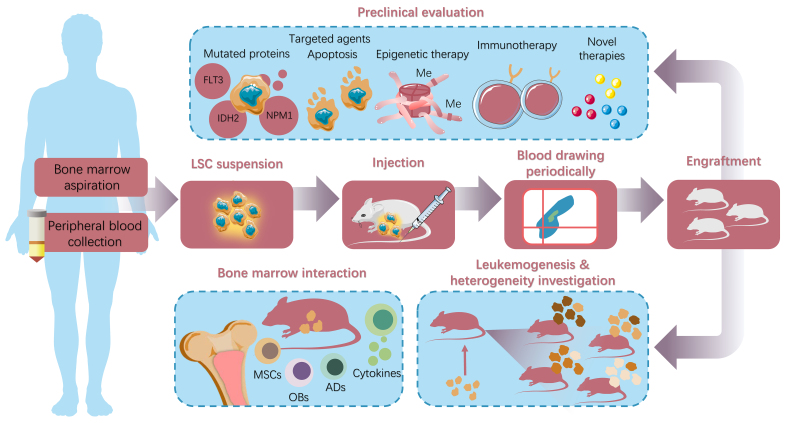
Acute myeloid leukemia (AML) and acute lymphoblastic leukemia (ALL) are genetically heterogeneous malignancies of hematopoietic stem cells, characterized by complex mutations and a high risk of drug resistance and relapse. Patient-derived xenograft (PDX) models are dynamic entities transplanted with leukemia stem cells (LSCs), retaining patients' biological and genetic characteristics. By elucidating LSCs, clonal dynamics, and microenvironment interaction, PDXs facilitate the preclinical evaluation of therapy sensitivity, including immunotherapies, epigenetic therapies, and other agents targeting mutated proteins or apoptosis. The application of PDXs has provided translational evidence for various studies with reliable clinical relevance. Additionally, conventional PDXs remain a robust tool in identifying drug resistance compared with other models, and their potential is further unleashed when examined in large cohorts or combined with novel technologies, which not only enhances our understanding of acute leukemia biology but also enables the discovery and identification of novel biomarkers. In this review, we present the application of PDX models for acute leukemia resistance, including mechanism investigation, therapy evaluation, and associated challenges.
Keywords: Patient-derived xenografts; acute leukemia; leukemia stem cells.
© The Author(s) 2025.
Conflict of interest statement
All authors declared that there are no conflicts of interest.
Figures
References
Publication types
LinkOut - more resources
Full Text Sources