


Re-emergence of Oropouche virus as a novel global threat
- PMID: 40510237
- PMCID: PMC12159208
- DOI: 10.1016/j.crmicr.2025.100406
Re-emergence of Oropouche virus as a novel global threat
Abstract
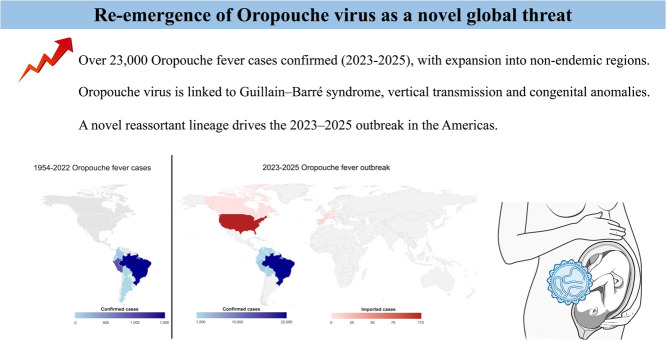
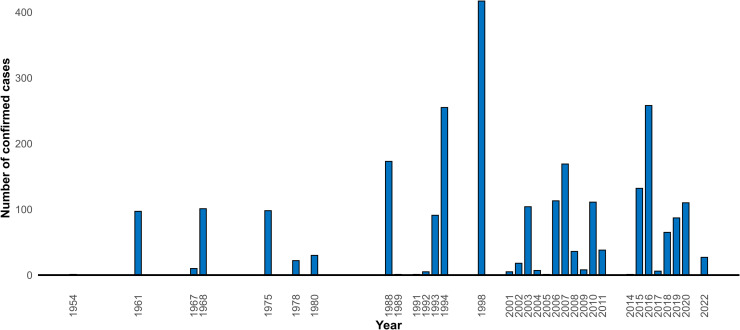
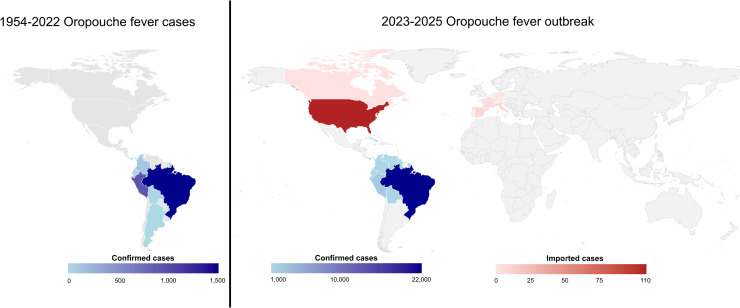
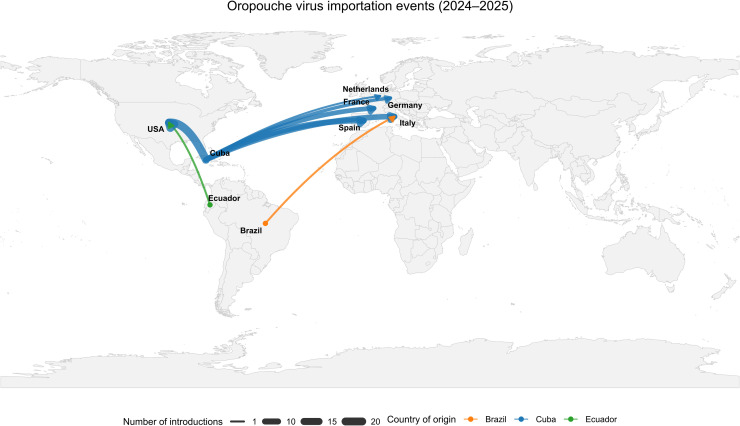
Oropouche fever is a viral infectious disease caused by the Oropouche virus (OROV), primarily transmitted by the biting midge Culicoides paraensis. Historically considered endemic to the Amazon region, particularly in Brazil, Peru, and Ecuador, Oropouche fever has resulted in an estimated 500,000 recorded infections. However, its true burden has remained largely unknown for over seven decades, serving as a classic example of a neglected tropical disease. In 2024, however, OROV rapidly expanded beyond its traditional Amazonian hotspots, spreading across Brazil and into other parts of South and Central America. Imported cases have also been reported in North America and Europe, underscoring its emergence as an escalating global public health concern. This literature review explores the historical epidemiology of Oropouche fever while shedding light on its rising public health relevance and emerging clinical challenges. The ongoing 2023-2025 outbreak has significantly affected Brazil, Peru, Bolivia, Cuba, and Panama and is linked to a novel reassortant OROV lineage that originated in the Brazilian Amazon. This new lineage has since established transmission chains throughout South and Central America, with international spread likely driven by increased human mobility and air travel. As of early 2025, over 23,000 confirmed cases have been reported worldwide, including five fatalities and clear evidence of viral expansion into previously unaffected regions. Alongside this viral geographic spread, OROV infection is increasingly associated with severe clinical outcomes, including Guillain-Barré syndrome and vertical transmission leading to miscarriage and congenital anomalies. The ongoing outbreak OROV reassortant lineage also demonstrates increased virulence, immune evasion, and enhanced viral fitness, likely contributing to their epidemic potential. Despite advances in surveillance during the current outbreak, critical gaps remain, including the absence of a standardized global lineage classification system, underscoring the urgent need for strengthened genomic surveillance, deeper insights into pathogenesis, expanded vector competence research, and innovative strategies for disease and vector control.
Keywords: Arbovirus; Congenital abnormalities; Epidemiology; Genomic surveillance; Oropouche.
© 2025 The Author. Published by Elsevier B.V.
Conflict of interest statement
The author declare no competing interests in relation to this study. There were no financial supports or funding sources that could be perceived as influencing the research outcomes or interpretations presented in this manuscript. All authors have contributed to the study and have no conflicts of interest to disclose.
Figures
References
-
- A potential mechanism of transplacental transmission of Oropouche virus in pregnancy. Lancet Microbe. 2025 - PubMed
-
- Alvarez-Falconi P.P., Ba R.R. [Oropuche fever outbreak in Bagazan, San Martin, Peru: epidemiological evaluation, gastrointestinal and hemorrhagic manifestations] Rev. Gastroenterol. Peru. 2010;30 https://pubmed.ncbi.nlm.nih.gov/21263761/ Available: - PubMed
-
- auspice. [cited 31 Mar 2025]. Available: https://nextstrain.org/oropouche/M.
Publication types
LinkOut - more resources
Full Text Sources
Research Materials
