


A review of the efficacy of clinical tuberculosis vaccine candidates in mouse models
- PMID: 40510368
- PMCID: PMC12159005
- DOI: 10.3389/fimmu.2025.1609136
A review of the efficacy of clinical tuberculosis vaccine candidates in mouse models
Abstract
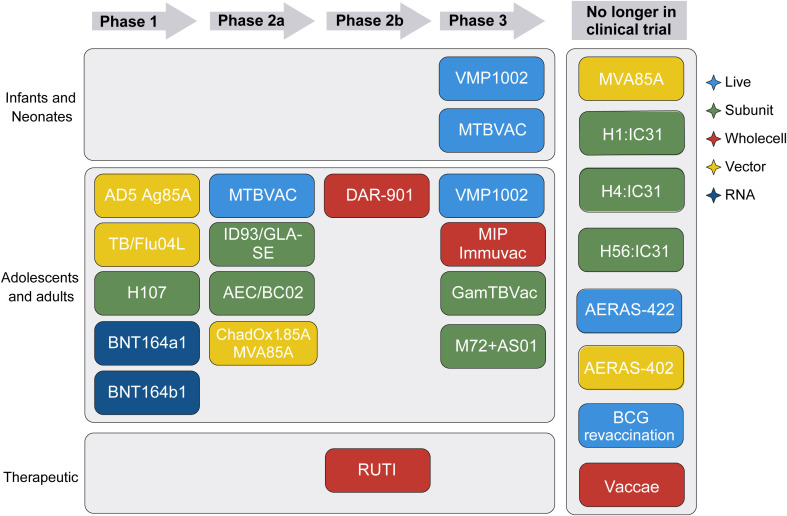
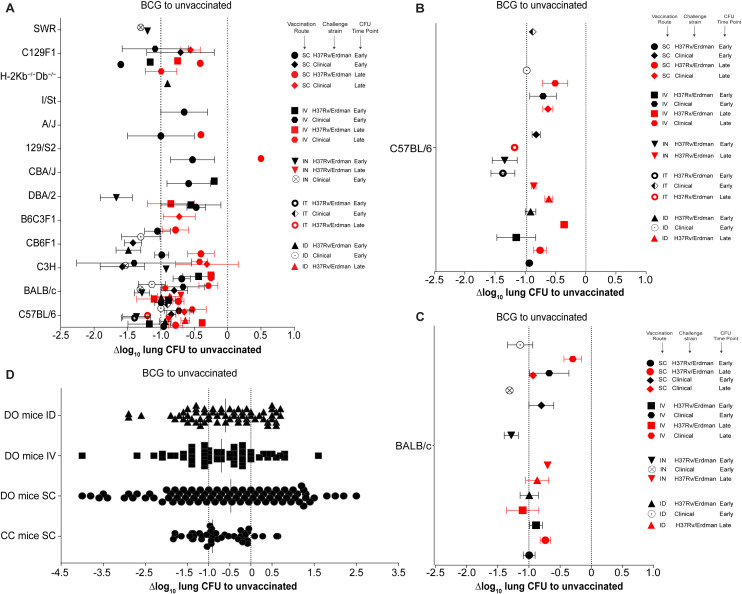
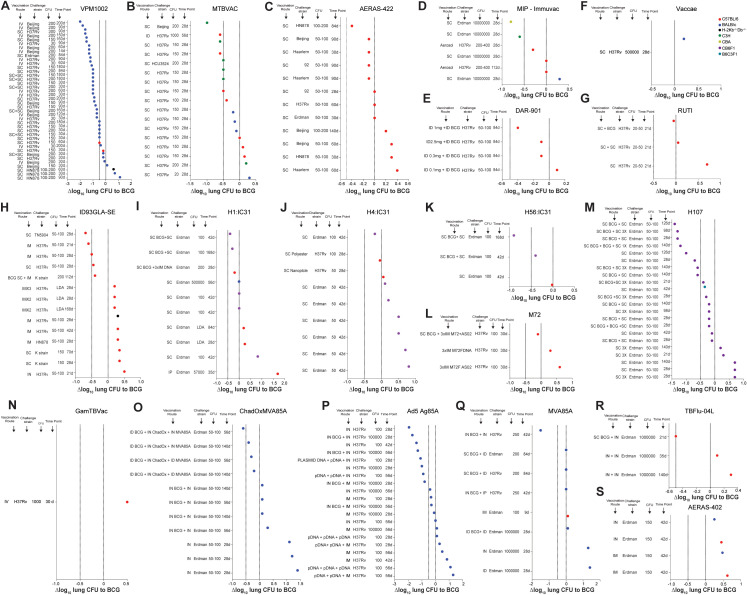
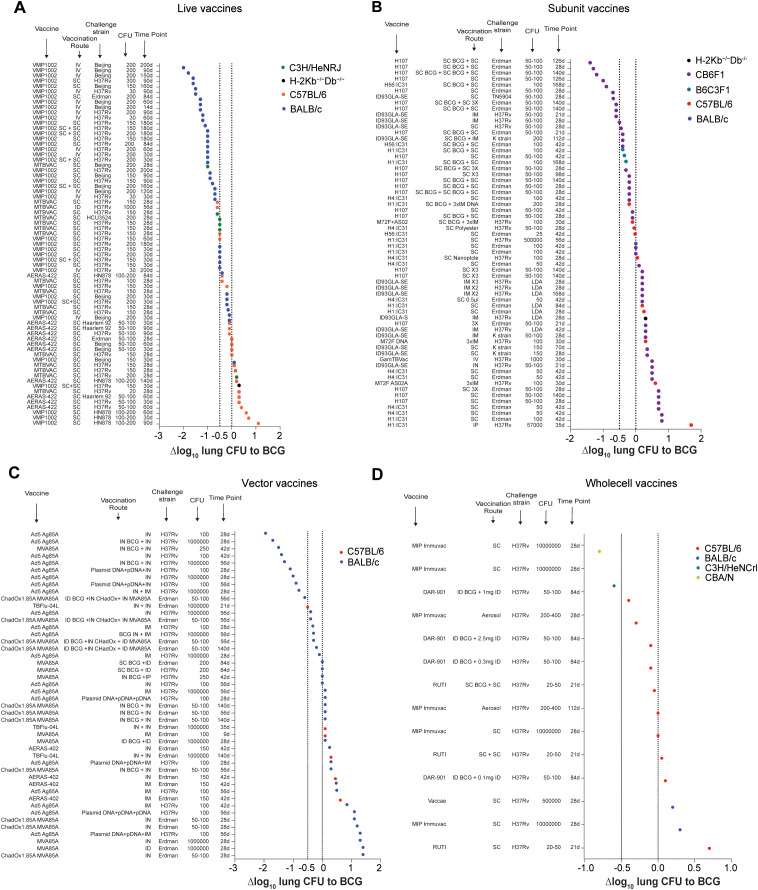
Tuberculosis (TB) remains one of the deadliest infectious diseases worldwide, causing over a million deaths annually. The only licensed TB vaccine for human use, Bacille Calmette-Guérin (BCG), a mycobacteria-based live-attenuated vaccine, confers immunity to children but fails to efficiently protect adults from pulmonary TB. Several TB vaccine candidates have been developed over the last two decades, but some have failed to provide substantially better protection than BCG in clinical trials. Most of these vaccine candidates were initially evaluated for their protective capacity in mouse models of TB. With the availability of several mouse strains, vaccination routes and Mycobacterium tuberculosis (Mtb) challenge strains, to-date there is no consensus in the field about the predictive value of different murine models of TB, and it remains a matter of debate whether host genetics or vaccine-driven parameters primarily determine vaccine efficacy. Here we reviewed the performance of all TB vaccine candidates that have entered clinical trials over the last 25 years. We extracted protective efficacy data from all published studies that utilized mouse models to assess vaccination efficacy. The efficacy of each vaccine candidate to reduce lung bacterial burden depending on the mouse genotype, the vaccine administration route, and the Mtb challenge strain at different time-points was evaluated. Our data reveals insights into the effect of experimental parameters on vaccine performance and emphasizes the potential benefits of standardizing TB mouse models across vaccination-challenge studies to identify pre-clinical vaccine candidates with the highest potential to succeed.
Keywords: BCG; clinical; host genetics; mouse models; tuberculosis; vaccine.
Copyright © 2025 del Pozo-Ramos and Kupz.
Conflict of interest statement
The authors declare that the research was conducted in the absence of any commercial or financial relationships that could be construed as a potential conflict of interest. The author(s) declared that they were an editorial board member of Frontiers, at the time of submission. This had no impact on the peer review process and the final decision.
Figures
References
-
- World Health Organization . Global Tuberculosis Report -2024 (2024). Available online at: https://iris.who.int/bitstream/handle/10665/379339/9789240101531-eng.pdf... (Accessed February 1, 2025).
-
- World Health Organization . Tuberculosis . Available online at: https://www.who.int/news-room/fact-sheets/detail/tuberculosis (Accessed October 1, 2024).
Publication types
MeSH terms
Substances
LinkOut - more resources
Full Text Sources
Medical
