


Cardiac myosin inhibitors: Efficacy, safety and future directions of aficamten in hypertrophic obstructive cardiomyopathy
- PMID: 40512253
- PMCID: PMC12165912
- DOI: 10.1186/s43044-025-00652-0
Cardiac myosin inhibitors: Efficacy, safety and future directions of aficamten in hypertrophic obstructive cardiomyopathy
Abstract
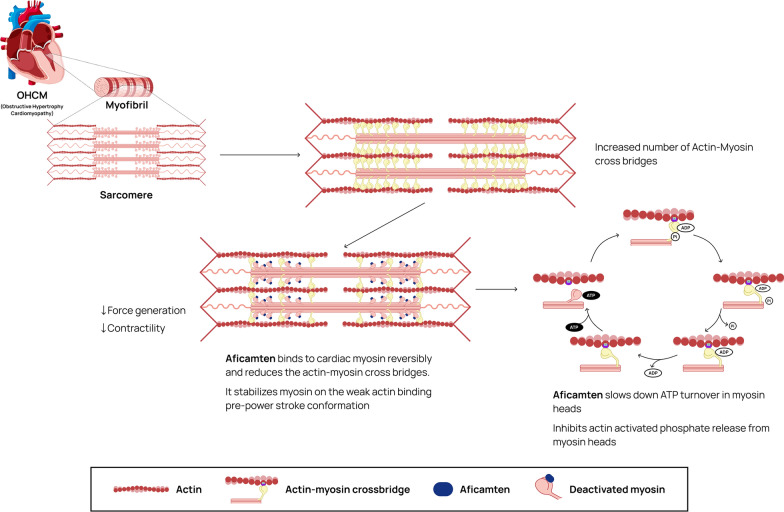
Background: Hypertrophic obstructive cardiomyopathy (HOCM) is a genetic disorder that affects the cardiac myocytes leading to asymmetric hypertrophy of the left ventricle and obstruction of the left ventricular outflow tract (LVOT) with possible risk of sudden cardiac death in some high-risk patients. This paper aims to evaluate the efficacy, safety, and future prospects of aficamten in the management of HOCM and its potential to transform current standards of care.
Main body: Over the years, there have been significant milestones in HOCM management, including pharmacological and surgical techniques, which have reduced the morbidity and mortality associated with this disease. However, HOCM remains a challenging disease to manage for healthcare providers due to the heterogeneous nature of its presentation and limitations to the conventional treatment medications including beta blockers and non-dihydropyridine calcium channel blockers. These traditional options often provide inadequate symptomatic relief and have significant side effects. Surgical options such as septal ablation have shown positive outcomes but are associated with procedural risks. Therefore, recent advancements have led to the development of novel agents such as cardiac myosin inhibitors (CMIs).
Conclusion: Aficamten is a new second-generation cardiac myosin inhibitor (CMI) that has shown promising results from clinical trials. With reports of reduced LVOT obstruction and improvement in heart failure symptoms, these findings indicate potential improvement in the quality of life of patients with HOCM.
Keywords: Aficamten; Cardiac Myosin Inhibitors; Clinical Trials; Efficacy; Hypertrophic obstructive cardiomyopathy.
© 2025. The Author(s).
Conflict of interest statement
Declarations. Consent for publication: Not applicable. Ethics approval and consent to participate: Not applicable. Competing interests: The authors declare no competing interests.
Figures
References
-
- Maron BJ, Gardin JM, Flack JM, Gidding SS, Kurosaki TT, Bild DE (1995) Prevalence of hypertrophic cardiomyopathy in a general population of young adults: Echocardiographic analysis of 4111 subjects in the CARDIA Study. Circulation 92(4):785–789. 10.1161/01.cir.92.4.785 - PubMed
-
- Ommen SR, Mital S, Burke MA et al (2020) 2020 AHA/ACC guideline for the diagnosis and treatment of patients with hypertrophic cardiomyopathy: A report of the American College of Cardiology/American heart association joint committee on clinical practice guidelines (vol 142, e558, 2020). Circulation 142(25):e633. 10.1161/CIR.0000000000000945 - PubMed
-
- Aljeaid D, Sanchez AI, Wakefield E, Chadwell SE, Moore N, Prada CE, Zhang W (2019) Prevalence of pathogenic and likely pathogenic variants in the RASopathy genes in patients who have had panel testing for cardiomyopathy. Am J Med Genet A 179(4):608–614 - PubMed
Publication types
LinkOut - more resources
Full Text Sources