


Transplants foster B cell alloimmunity by relaying extracellular vesicles to follicular dendritic cells
- PMID: 40516053
- PMCID: PMC12281710
- DOI: 10.1016/j.celrep.2025.115832
Transplants foster B cell alloimmunity by relaying extracellular vesicles to follicular dendritic cells
Abstract
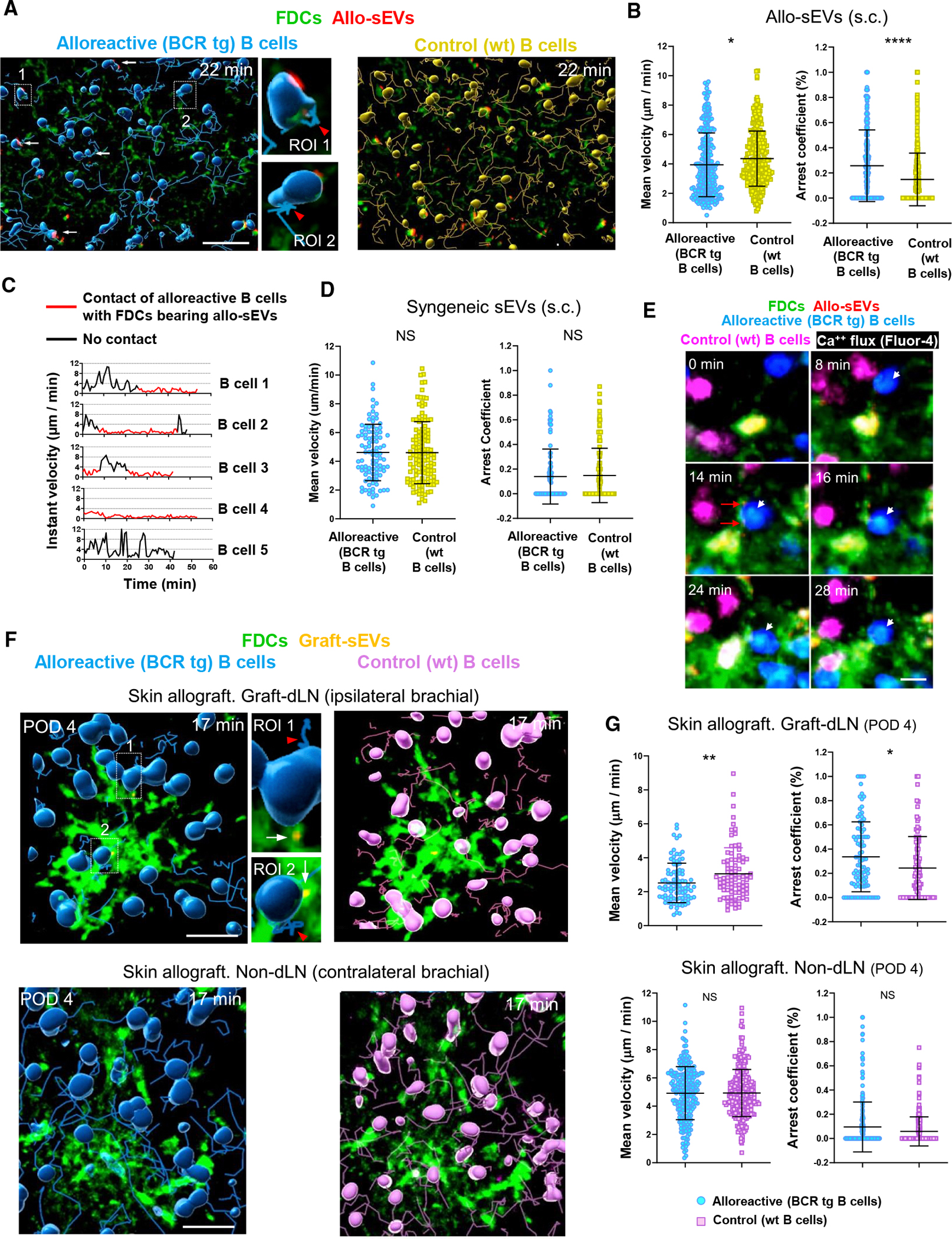
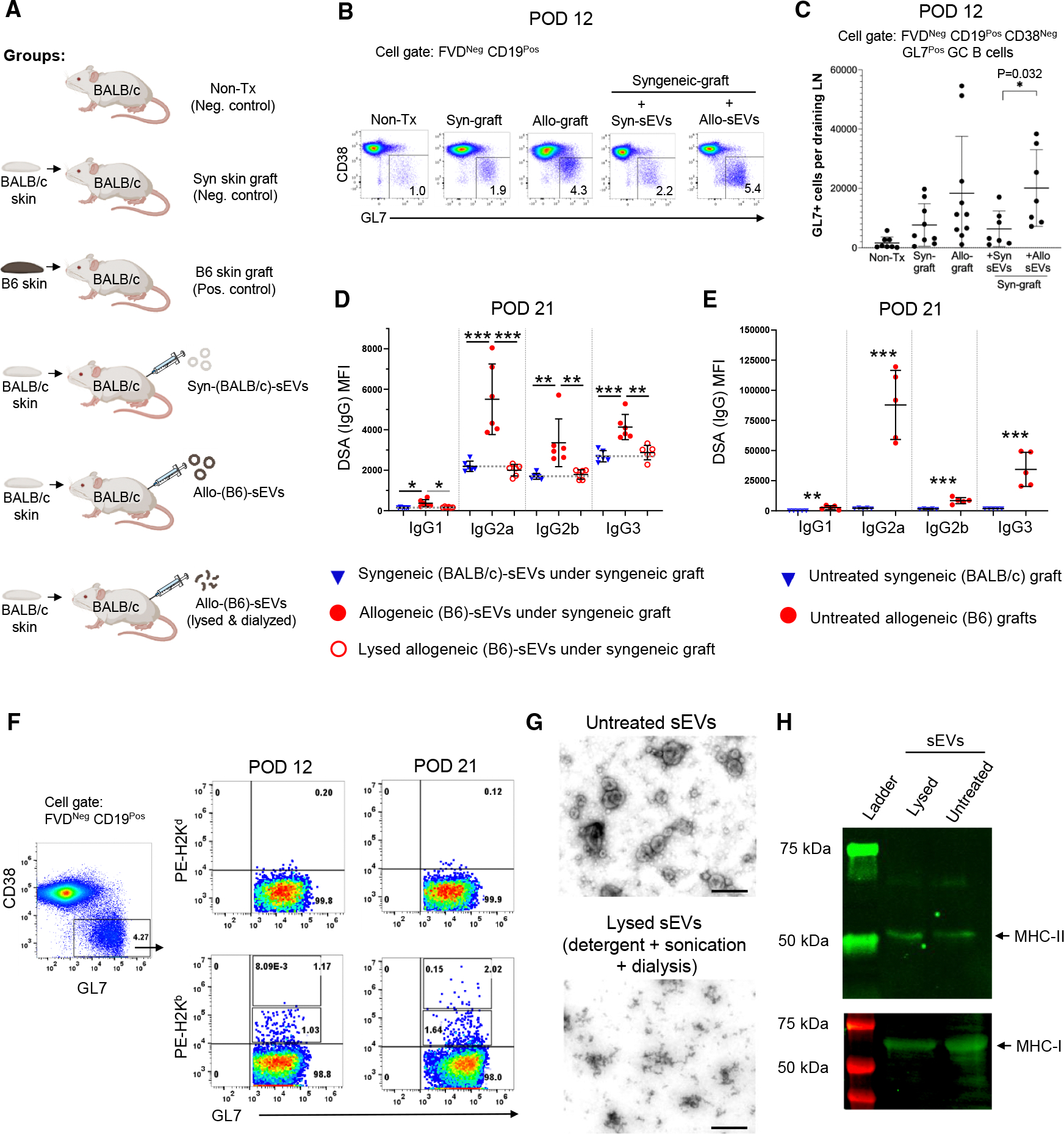
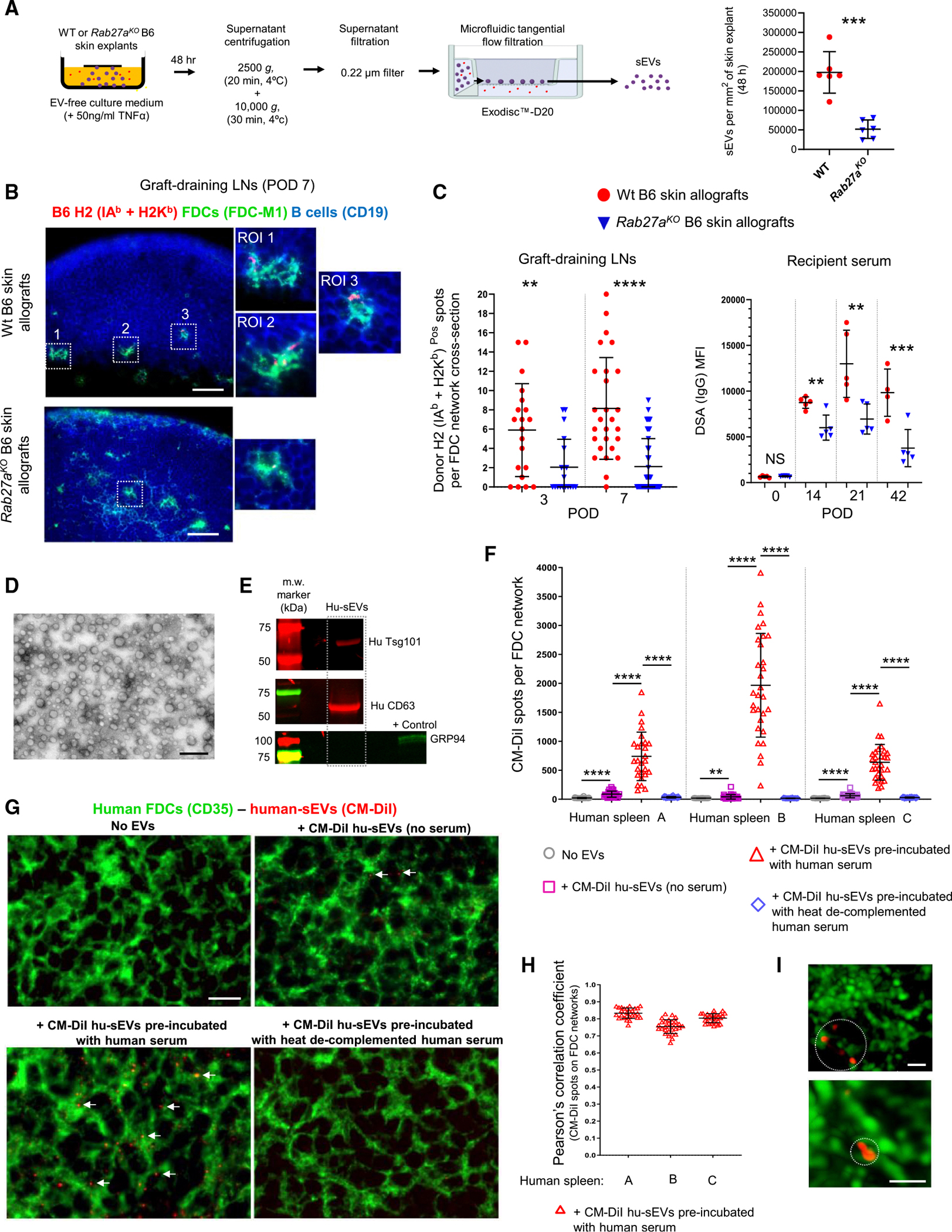
B cells play fundamental roles in transplant rejection. However, how allogeneic (allo)-antigens (Ags) are transported from allografts to follicular dendritic cells (FDCs) in lymphoid tissues for development of B cell responses remains unknown. We demonstrated that graft allo-Ags are relayed to FDCs via small extracellular vesicles (sEVs), which activate complement via immunoglobulin M (IgM) bound to vesicle phospholipids. Complement-opsonized allo-sEVs bind splenic marginal-zone B cells that shuttle the vesicles to FDCs, which retain and recycle the allo-sEVs so they are recognized by B cells. Accordingly, graft release of allo-sEVs promoted allo-major histocompatibility complex (MHC) accumulation in FDCs, germinal center formation, Ig switch and affinity maturation, and donor-specific antibodies, which decreased in allografts with impaired sEV secretion or when allo-Ags were delivered via disrupted sEVs. Importantly, human spleen FDCs bound allo-sEVs opsonized with human serum bearing active complement. Our findings provide insight into the mechanisms that lead to antibody-mediated rejection, for which there are no FDA-approved therapies.
Keywords: ABMR; CP: Immunology; allorecognition; antibody-mediated rejection; complement; donor-specific antibodies; exosomes; extracellular vesicles; follicular dendritic cells; natural antibodies; transplant rejection.
Copyright © 2025 The Authors. Published by Elsevier Inc. All rights reserved.
Conflict of interest statement
Declaration of interests The authors declare no competing interests.
Figures
References
MeSH terms
Substances
Grants and funding
LinkOut - more resources
Full Text Sources
Molecular Biology Databases
Research Materials
Miscellaneous
