


A case-control study of early-life residential exposure to tetrachloroethylene and risks of childhood cancer and birth defects
- PMID: 40516285
- PMCID: PMC12235603
- DOI: 10.1016/j.envint.2025.109600
A case-control study of early-life residential exposure to tetrachloroethylene and risks of childhood cancer and birth defects
Abstract
Background: Residential buildings with a co-located dry-cleaning facility (CL-DC) can have substantially higher indoor tetrachloroethylene concentrations than buildings without a CL-DC. We conducted a case-control study to investigate associations between early-life indoor tetrachloroethylene exposure from CL-DCs and risks of childhood cancers (overall, acute lymphoblastic leukemia) and birth defects.
Methods: We linked records between the New York City (NYC) Bureau of Vital Statistics and the New York State Cancer Registry and Birth Defects Registry to identify cases of childhood cancers (n = 5,334) and birth defects (n = 171,553) diagnosed among children born in NYC between 1988 and 2016, and controls without these conditions (n = 596,599). We identified CL-DC exposure by mapping addresses from birth certificates and DC permits involving tetrachloroethylene use to building footprints, and modeled tetrachloroethylene concentrations using measurement data from a survey of NYC CL-DCs. Using unconditional logistic regression, we computed odds ratios (ORs) and 95 % confidence intervals (CIs) relating study endpoints to CL-DC exposure.
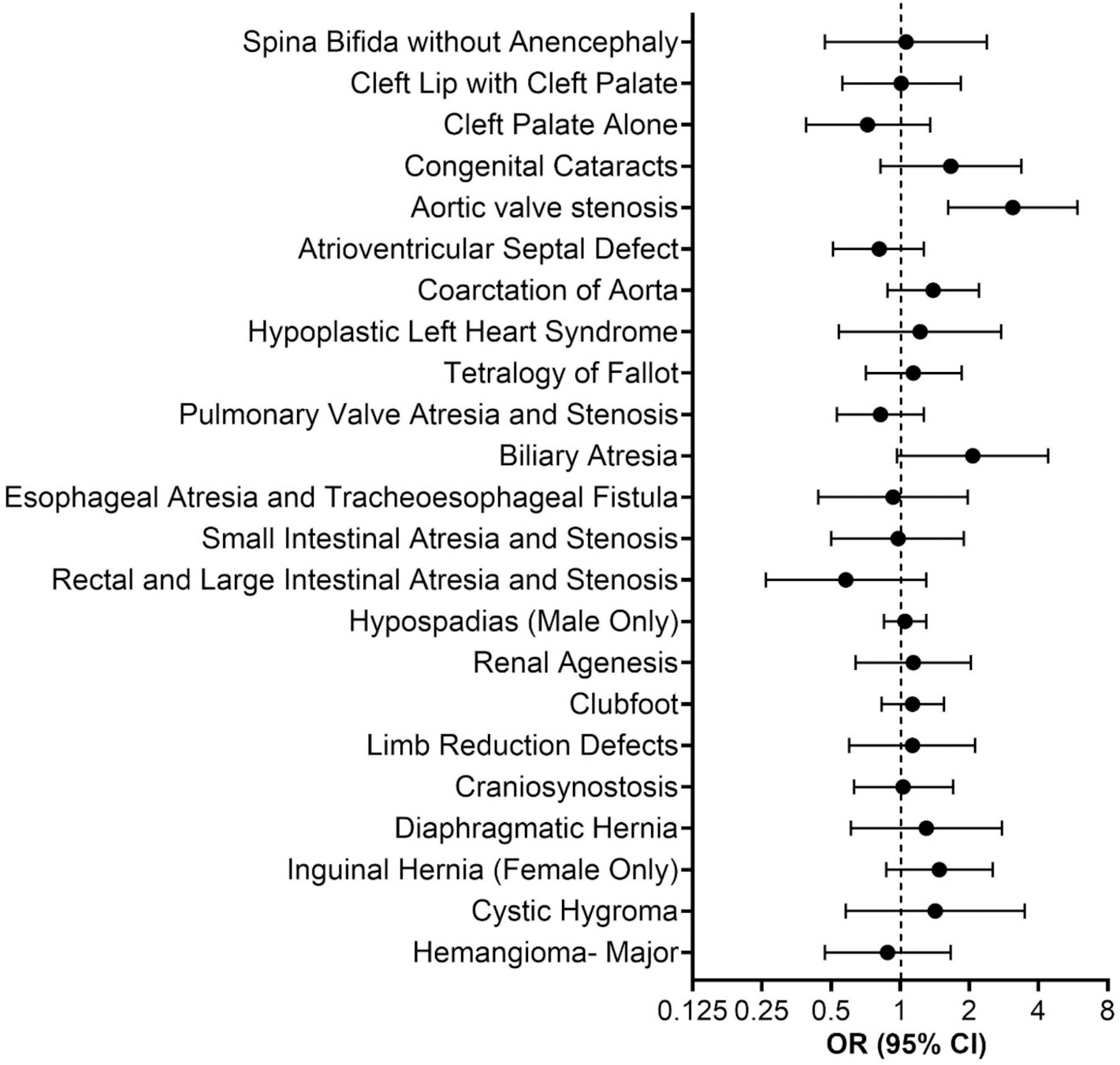
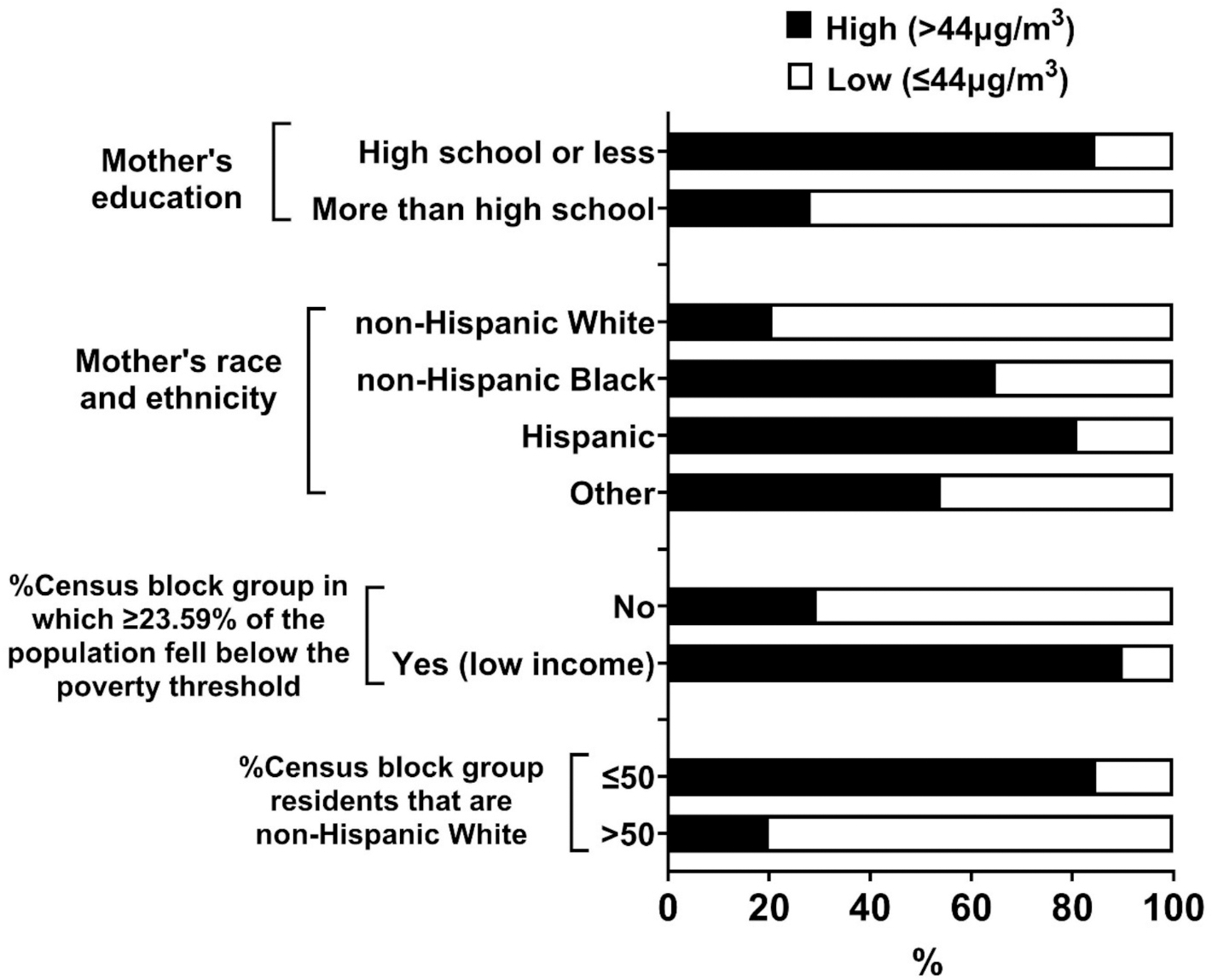
Findings: Living in a building with a CL-DC at birth was associated with aortic valve stenosis (AVS; OR = 3.1, 95 % CI = 1.6, 5.9), with an exposure-response effect for predicted tetrachloroethylene concentration (≤44 μg/m3: OR = 2.7, 95 % CI = 1.0, 7.4; >44 μg/m3: OR = 3.9, 95 % CI = 1.6, 9.5) and stronger associations for children whose mother was non-White, less than college-educated, or lived at birth in majority non-White or poorer neighborhoods. We observed null findings for other endpoints.
Conclusions: In this first-ever case-control study, early-life tetrachloroethylene exposure from CL-DCs in residential buildings was associated with increased AVS risk. These findings warrant further investigation.
Keywords: Aortic valve stenosis; Birth defects; Childhood cancer; Dry-cleaning facility; Tetrachloroethylene.
Published by Elsevier Ltd.
Conflict of interest statement
Declaration of competing interest The authors declare that they have no known competing financial interests or personal relationships that could have appeared to influence the work reported in this paper.
Figures
References
-
- US Environmental Protection Agency. Risk Evaluation for Perchloroethylene. 2020.
-
- US Environmental Protection Agency. Scope of the Risk Evaluation for Perchloroethylene. 2017.
-
- Blair A, Petralia SA, Stewart PA, 2003. Extended mortality follow-up of a cohort of dry cleaners. Ann. Epidemiol. 13 (1), 50–56. - PubMed
MeSH terms
Substances
Grants and funding
LinkOut - more resources
Full Text Sources
Medical
