


FTO (fat-mass and obesity-associated protein) deficiency aggravates age-dependent depression-like behaviors and cognitive impairment
- PMID: 40518522
- PMCID: PMC12167586
- DOI: 10.1186/s12993-025-00280-3
FTO (fat-mass and obesity-associated protein) deficiency aggravates age-dependent depression-like behaviors and cognitive impairment
Abstract
Background: The demethylase fat mass and obesity-related associated protein (FTO) is strongly associated with depression. Aging is a risk factor for synaptic plasticity damage in the brain and leads to neurocognitive dysfunctions. FTO-dependent m6A modification plays an important role in neurodevelopment and cognitive function. However, whether FTO is associated with susceptibility to depression in different age groups remains unknown.
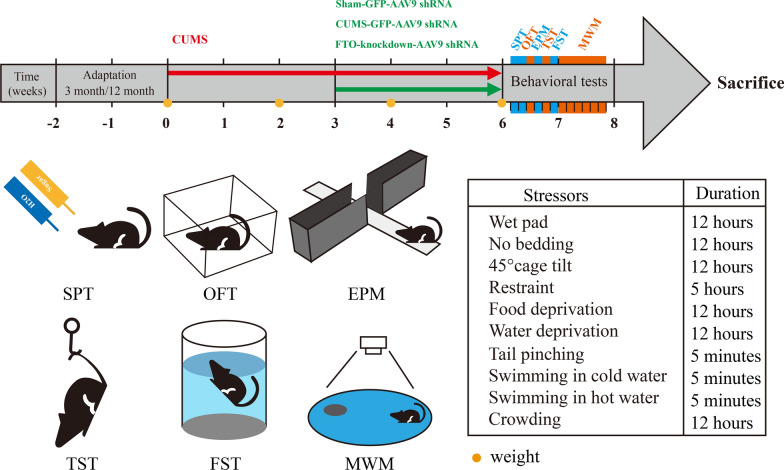
Methods: We subjected 3-and 12-month-old C57BL/6J male mice to chronic unpredictable mild stress (CUMS) for 6 weeks, of which 3 weeks were used for hippocampal injection of FTO knockdown adeno-associated virus 9 shRNA (FTO-KD AAV9). Finally, 36 male mice in each 3-month-old and 12-month-old groups were divided into three groups (n = 12): Sham, CUMS, and FTO-KD. After 6 weeks, we assessed behavioral deficits (depressive and anxiety-like behaviors and cognitive impairment) by behavioral tests and hippocampal neuronal damage (dendritic spine density, neuronal atrophy, and expression of proteins associated with synaptic plasticity) by molecular biochemical experiments.
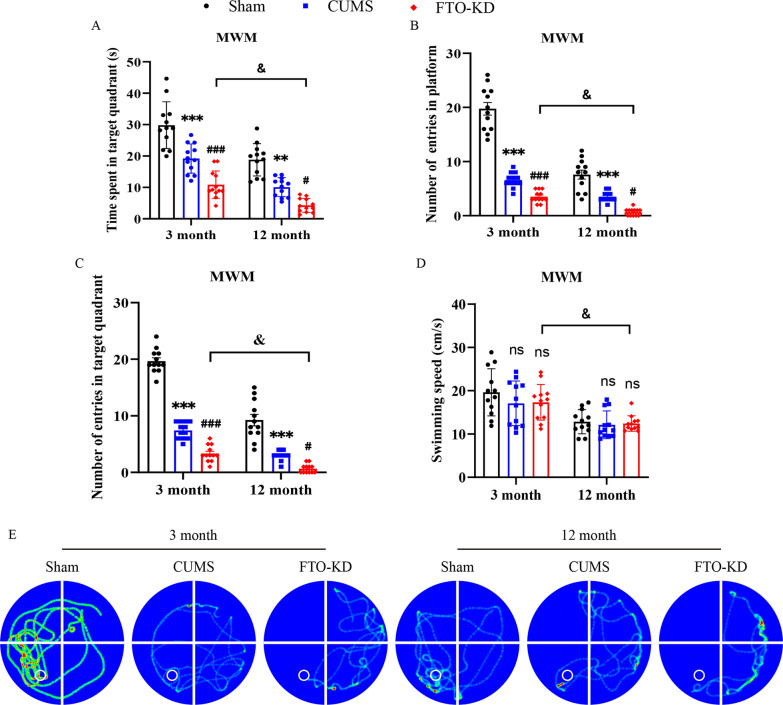
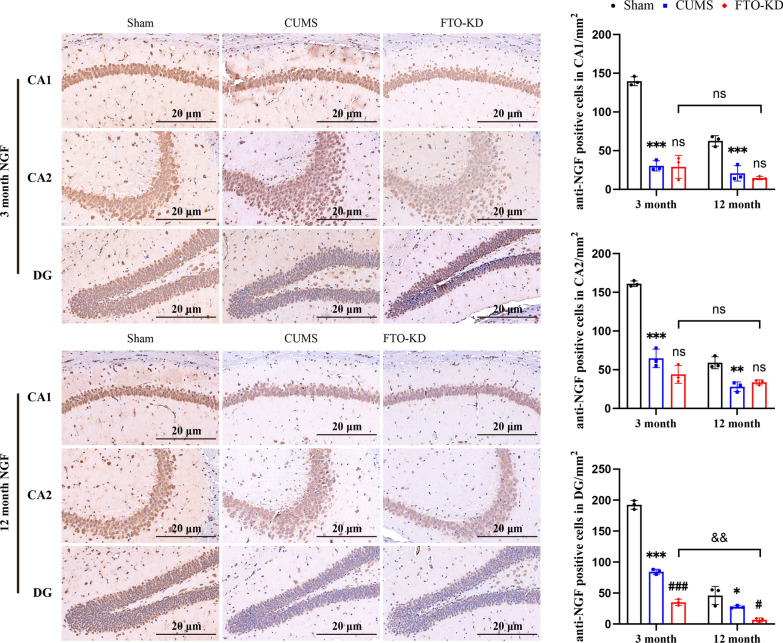
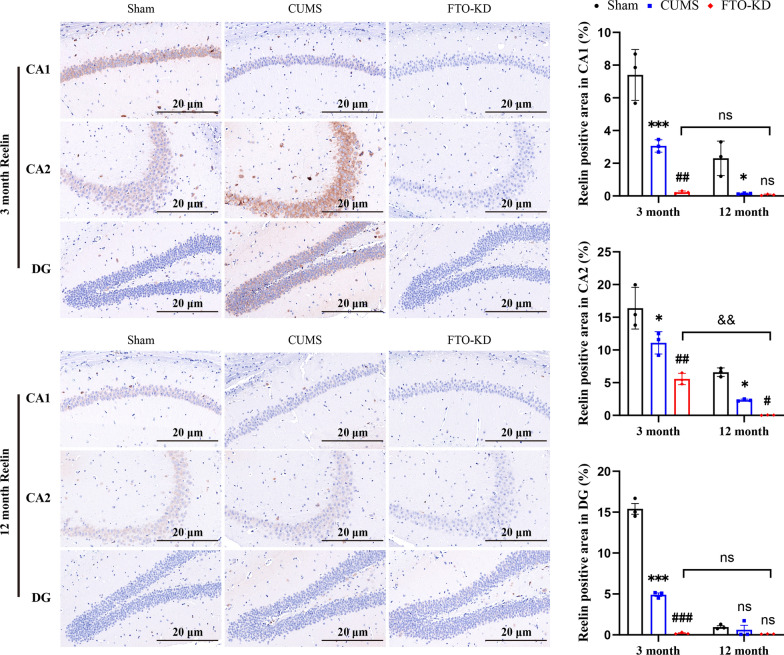
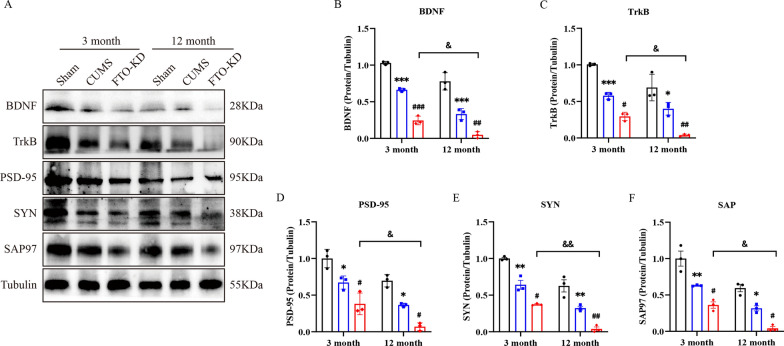
Results: The results showed that 12-month-old C57BL/6J mice were more likely to develop depression-like behavior and spatial learning and memory impairment induced by CUMS than 3-month-old mice. Chronic stress-induced depression-like behavior and cognitive impairment worsened after the FTO-KD intervention. In the hippocampus of 3- and 12-month-old mice, CUMS induced the downregulation of FTO, nerve growth factor (NGF), reelin, and synaptic plasticity-related proteins. It also caused abnormal brain-derived neurotrophic factor (BDNF)- the tropomyosin-related kinase B (TrkB) signaling, reduced density of dendritic spines, and an increased number of neuronal pyknotic nuclei, leading to neuronal disarray, which was more significant in 12-month-old animals. FTO deficiency accelerated neuronal damage in the hippocampus of 12-month-old CUMS mice.
Conclusions: This study provides rodent evidence that FTO deficiency may increase the susceptibility to depression in older adults by impairing hippocampal neuronal function and neuronal synaptic plasticity in an age-dependent manner. This suggests that the development of FTO activators may be an effective treatment for depression in older adults.
Keywords: BDNF-TrkB signaling pathway; Chronic unpredictable mild stress (CUMS); Cognitive impairment; FTO; Synaptic plasticity.
© 2025. The Author(s).
Conflict of interest statement
Declarations. Ethics approval and consent to participate: The Ethics Committee of Chaohu Hospital affiliated to Anhui University of Medical Science approved all animal experiments (KYXM-202112-010). Consent for publication: Not applicable. Competing interests: The authors declare no competing interests.
Figures




References
-
- Afridi MI, Hina M, Qureshi IS, Hussain M. Cognitive disturbance comparison among drug-naive depressed cases and healthy controls. J Coll Physicians Surg Pak. 2011;21(6):351–5. - PubMed
MeSH terms
Substances
Grants and funding
LinkOut - more resources
Full Text Sources
Medical
