


The hidden causes of pregnancy loss: a closer look
- PMID: 40518536
- PMCID: PMC12168345
- DOI: 10.1186/s12967-025-06678-x
The hidden causes of pregnancy loss: a closer look
Erratum in
-
Correction: The hidden causes of pregnancy loss: a closer look.J Transl Med. 2025 Jul 3;23(1):735. doi: 10.1186/s12967-025-06780-0. J Transl Med. 2025. PMID: 40611151 Free PMC article. No abstract available.
Abstract
Background: Unexpected pregnancy loss can be a traumatic experience for fertile couples. The aim of the study was to assess the nature and type of chromosomal variants involved in early and late pregnancy loss and provide couples an explanation on the cause of their pregnancy loss.
Methods: Investigations were conducted on 2928 pregnancy loss cases where products of conception (POC) samples could be retrieved for genetic analysis. Chromosomal variants were detected by low pass copy number variation sequencing (CNV-seq).
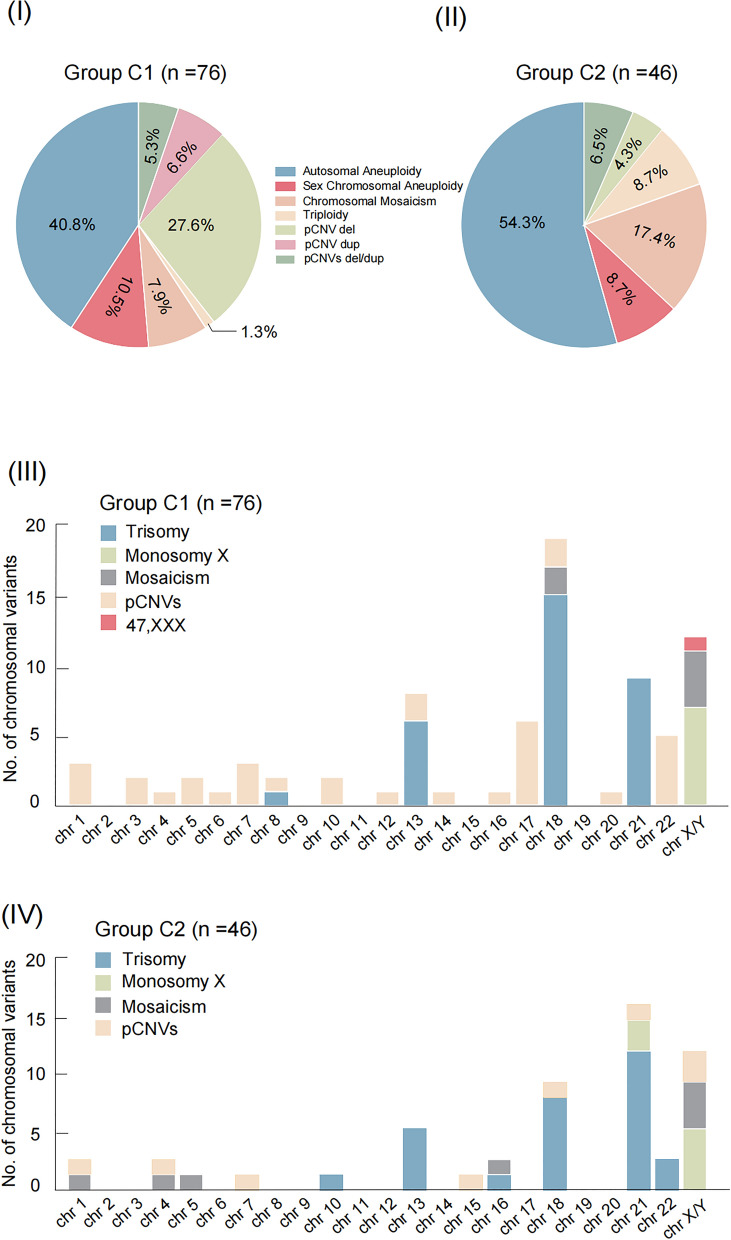
Results: In first-trimester miscarriages, 1272 of POC (60.4%) samples had a chromosome abnormality. Autosomal aneuploidy and monosomy X were the predominate variants (73.2%), followed by autosomal and sex chromosome mosaicism (10.7%), triploidy (9.6%), pathogenic CNVs (6.2%) and haploidy (0.3%). The chromosomal variants were similar in type and frequency regardless of whether the fetus had normal or abnormal ultrasound findings. In second trimester pregnancy loss where there was either a structural or non-structural ultrasound anomaly, only 15.3% of POC samples had a chromosome abnormality, involving mainly the smaller autosomes and monosomy X (55.7%), autosomal and sex chromosomal mosaicism (11.5%), triploidy (4.1%) and pathogenic CNVs (28.7%).
Conclusion: Chromosomal variants contribute to fetal demise in almost two thirds of pregnancy losses.
Keywords: Copy number sequencing; Fetal demise; Genetic variants; Pregnancy loss; Whole exome sequencing.
© 2025. The Author(s).
Conflict of interest statement
Declarations. Ethics approval and consent to participate: The study was conducted in accordance with the Declaration of Helsinki, and approved by the Zhengzhou University Ethics Committee (Protocol code: 2019-KY-418 and date of approval: December 28th, 2019). Informed consent was obtained from all subjects involved in the study. Consent for publication: Not applicable. Competing interests: The authors have no relevant financial or non-financial interests to disclose.
Figures



References
-
- Prine LW, MacNaughton H. Office management of early pregnancy loss. Am Fam Physician. 2011;84:75–82. - PubMed
MeSH terms
Grants and funding
LinkOut - more resources
Full Text Sources
Medical
