A refined comparative mouse model of acute and chronic atopic dermatitis
- PMID: 40519610
- PMCID: PMC12159699
- DOI: 10.5187/jast.2024.e93
A refined comparative mouse model of acute and chronic atopic dermatitis
Abstract
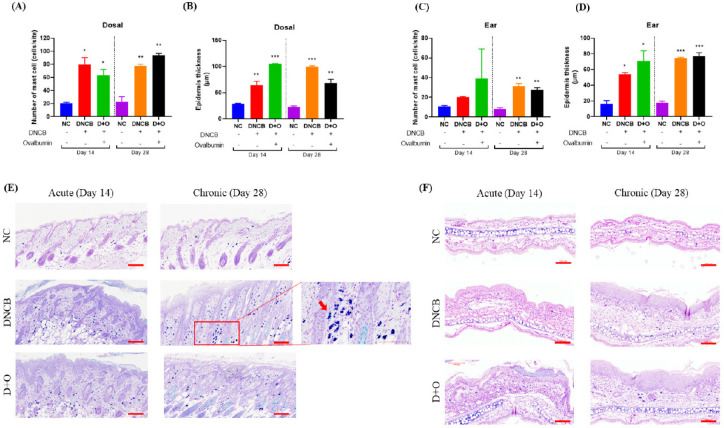
Canine and human atopic dermatitis (AD) is a complex inflammatory skin disorder with an increasing incidence, characterized by distinct acute and chronic phases with unique histological and immunological profiles. Although research into effective treatment methods has been insufficient, there has been a surge in the exploration of probiotics as a therapeutic strategy for AD. Such probiotics are often originated from the animals, and these are being developed to modulate the immune system and enhance skin barrier function, offering promising new treatment options for AD. To better understand the pathogenesis of both canine and human AD and develop treatments, animal models that accurately replicate the symptoms of both species are indispensable. This study aimed to establish a standardized and cost-effective BALB/c mouse model to more accurately simulate canine and human AD using dinitrochlorobenzene (DNCB) alone and in combination with ovalbumin (OVA). We evaluated histological and immunological changes from acute to chronic stages of AD in the mouse model induced by treatment of DNCB alone and DNCB combined with OVA to determine their similarity to both canine and human AD symptoms. The results showed that the pathological changes observed in the mouse AD model demonstrated significant parallels with both species, including increased mast cell infiltration, epidermal thickening, and elevated cytokine levels such as interleukin-4 and interferon-γ. Acute phase observations highlighted pronounced epidermal defects such as dryness and skin erosion, while chronic phase findings indicated persistent skin thickening, inflammation, and notable edema. Although both mouse models showed comparable symptoms and immunological responses, the model induced by the combination of DNCB and OVA more accurately represented canine and human AD compared to the model induced by DNCB alone. This combined DNCB and OVA mouse model provides valuable insights into AD pathogenesis and potential therapeutic targets, underscoring its significance in AD research.
Keywords: Animals; Atopic dermatitis; Mouse model; Probiotics.
© Copyright 2025 Korean Society of Animal Science and Technology.
Conflict of interest statement
No potential conflict of interest relevant to this article was reported.
Figures


References
-
- Carretero M, Guerrero-Aspizua S, Illera N, Galvez V, Navarro M, García-García F, et al. Differential features between chronic skin inflammatory diseases revealed in skin-humanized psoriasis and atopic dermatitis mouse models. J Invest Dermatol. 2016;136:136–45. doi: 10.1038/JID.2015.362. - DOI - PubMed
LinkOut - more resources
Full Text Sources