


Decrease in opioid use and spinal interventions after basivertebral nerve ablation
- PMID: 40519794
- PMCID: PMC12166696
- DOI: 10.1016/j.inpm.2025.100594
Decrease in opioid use and spinal interventions after basivertebral nerve ablation
Abstract
Background: Basivertebral nerve radiofrequency ablations (BVNRFA) have shown efficacy in improving chronic back pain for indicated patients.
Objective: The purpose of this study was to evaluate health care utilization outcomes after BVNRFA in a large cohort utilizing a global database.
Methods: TriNetX, a global health research network, was queried from 2022 to 2025 for patients who underwent BVNRFA utilizing CPT codes and 1 year pre-procedure and post-procedure opioid use and spine interventions were recorded. Pre-procedure and post-procedure outcomes were compared using a chi-square test with significance set at p < 0.05. The rate of spine surgery within 1 year after BVNRFA was also reported.
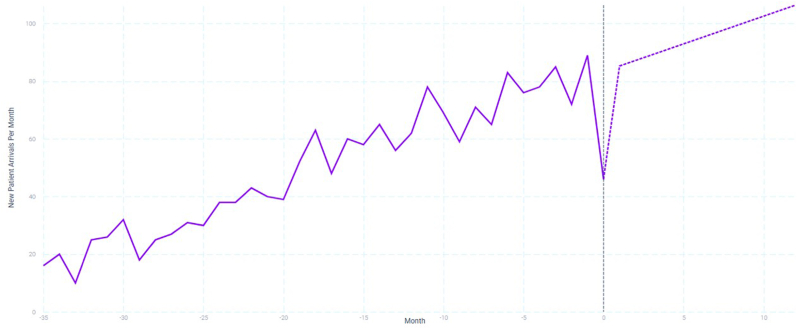
Results: A total of 1,118 patients underwent BVNRFA during this time frame at contributing health care systems with appropriate follow-up. Post-procedure opioid use was less than pre-procedure opioid use (57 % vs 51 %, p = 0.006). The number of patients who received spine interventions after BVNRFA were significantly lower compared to patients who received spine interventions prior with lumbar transforaminal epidural steroid injections decreasing from 21 % to 12 % (p < 0.001), lumbar interlaminar steroid injections decreasing from 18 % to 11 % (p < 0.001), and radiofrequency ablations decreasing from 25 % to 13 % (p < 0.001). Only 47 patients had CPT codes related to post-procedure vertebral column spine surgery. Specifically, there were 11 patients who had CPT codes for posterior lumbar fusion (CPT 22630), 10 had lateral lumbar fusion (CPT 22533), and 10 had anterior codes (CPT 22558). There were 0 patients who underwent total disc replacement (CPT 22857).
Conclusions: This administrative database study demonstrated significantly less opioid use and spine interventions within 1 year after BVNRFA compared to 1 year prior. This study also demonstrated low rates of spine surgery within 1 year after BVNRFA.
Keywords: Basivertebral nerve ablation; Low back pain; Lumbar spine surgery; Opioids; Vertebrogenic pain.
© 2025 The Authors.
Conflict of interest statement
The authors declare that they have no known competing financial interests or personal relationships that could have appeared to influence the work reported in this paper.
Figures
References
-
- Hoy D., March L., Brooks P., Blyth F., Woolf A., Bain C., Williams G., Smith E., Vos T., Barendregt J., Murray C., Burstein R., Buchbinder R. The global burden of low back pain: estimates from the Global Burden of Disease 2010 study. Ann Rheum Dis. 2014 Jun;73(6):968–974. - PubMed
-
- Kirsch E.P., Yang L.Z., Lee H.J., Parente B., Lad S.P. Healthcare resource utilization for chronic low back pain among high-utilizers. Spine J. 2024 Apr;24(4):601–616. - PubMed
-
- Martin B.I., Deyo R.A., Mirza S.K., Turner J.A., Comstock B.A., Hollingworth W., Sullivan S.D. Expenditures and health status among adults with back and neck problems. JAMA. 2008 Feb 13;299(6):656–664. - PubMed
LinkOut - more resources
Full Text Sources
