


Translational studies on pancreatic cancer and gastric cancer: a methodology in PhD thesis
- PMID: 40520180
- PMCID: PMC12162273
- DOI: 10.3389/fphar.2025.1604017
Translational studies on pancreatic cancer and gastric cancer: a methodology in PhD thesis
Abstract
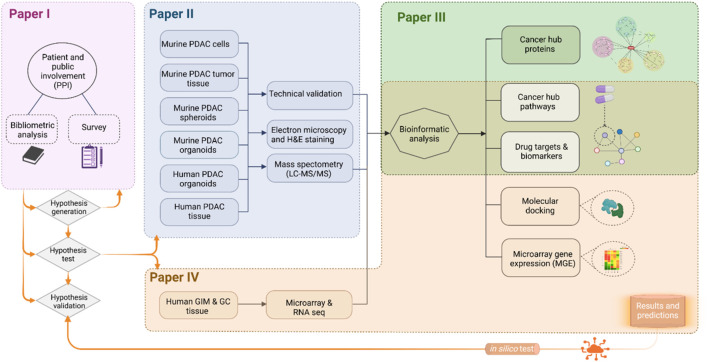
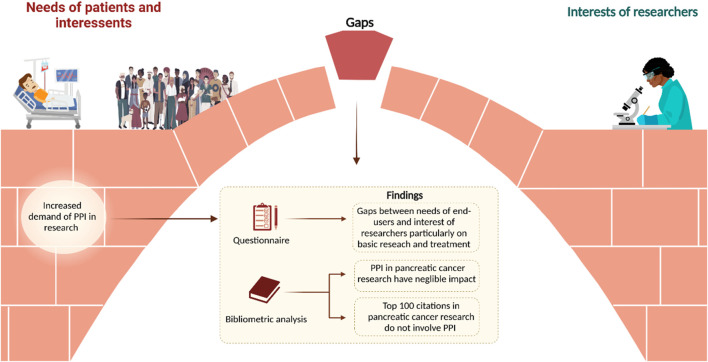
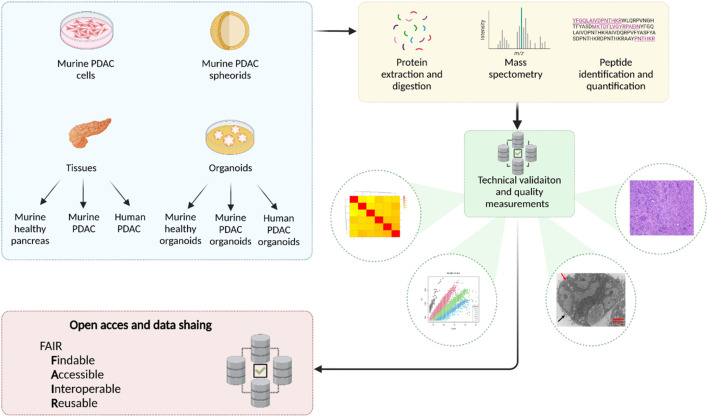
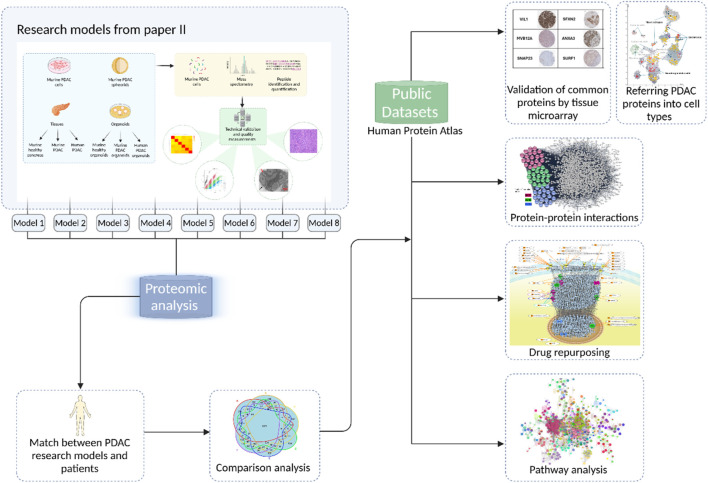
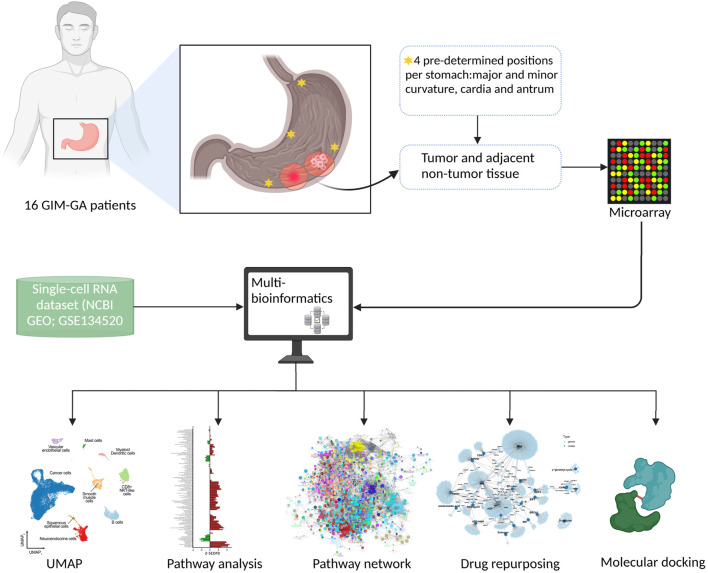
Pancreatic ductal adenocarcinoma (PDAC) and gastric adenocarcinoma (GA) are aggressive cancers with poor prognoses, demanding innovative approaches to advance treatment strategies and prevention efforts. This article presents a methodology in connection with PhD thesis on PDAC and GA, including motivation and knowledge in literature (Paper I), various research models (Paper II), knowledge discovery (Papers III and IV), and thesis assessment and evaluation (dissertation). The four studies aimed to address the gaps between patients and researchers and between basic and clinical research. Patient and Public Involvement (PPI) was explored to align research priorities with patients' needs. While PPI emphasized the importance of treatment-focused research, researchers and scientific journals prioritized basic science. Research guidance of "Findable, Accessible, Interoperable, and Reusable" (FAIR) was implanted in the studies, particularly proteomics datasets of different research models on PDAC. An analytic workflow for knowledge discovery with systems modeling was developed, leading to identification of translational targets of proteins and signaling networks on PDAC. Gastric intestinal metaplasia (GIM) is associated with GA. Multi-bioinformatics identified potential biomarkers for GA-related GIM, including genes and signaling networks. Potential repurposed drugs were also identified for both PDAC and GIM. In conclusion, the methodology was instructive in completing PhD thesis, whereas the findings in the original papers added new knowledge in translational research on PDAC and GA.
Keywords: PhD research methodology; cancer; knowledge discovery; patient and public involvement; proteomics.
Copyright © 2025 Resell, Qvigstad, Wang, Quante, González-Fernández, Waldum, Chen and Zhao.
Conflict of interest statement
The authors declare that the research was conducted in the absence of any commercial or financial relationships that could be construed as a potential conflict of interest.
Figures
References
-
- Aguayo G. A., Goetzinger C., Scibilia R., Fischer A., Seuring T., Tran V. T., et al. (2021). Methods to generate innovative research ideas and improve patient and public involvement in modern epidemiological research: review, patient viewpoint, and guidelines for implementation of a digital cohort study. J. Med. Internet Res. 23, e25743. 10.2196/25743 - DOI - PMC - PubMed
-
- Andersen G. T., Ianevski A., Resell M., Pojskic N., Rabben H. L., Geithus S., et al. (2024). Multi-bioinformatics revealed potential biomarkers and repurposed drugs for gastric adenocarcinoma-related gastric intestinal metaplasia. npj Syst. Biol. Appl. 10, 127. 10.1038/s41540-024-00455-0 - DOI - PMC - PubMed
LinkOut - more resources
Full Text Sources
