


Triglyceride-glucose indices predict all-cause mortality after stroke in NHANES 1999-2018
- PMID: 40520537
- PMCID: PMC12162973
- DOI: 10.3389/fnagi.2025.1617419
Triglyceride-glucose indices predict all-cause mortality after stroke in NHANES 1999-2018
Abstract
Objective: The present study explores the prognostic relevance of triglyceride-glucose-based indices in assessing post-stroke survival among affected individuals.
Methods: This study utilized a multifaceted analytical approach to assess how triglyceride-glucose-based indicators relate to death risk in stroke patients. This study was analyzed using a multivariate Cox proportional risk regression model incorporating sampling weights, while a restricted cubic spline function was introduced to assess trends in non-linear associations between exposure variables and outcomes. In addition, interaction terms were set and stratified analyses were conducted to verify the robustness and heterogeneity of the model results.
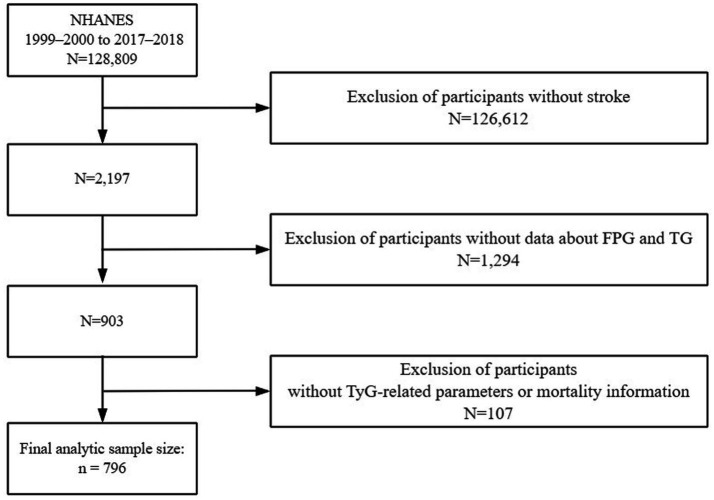
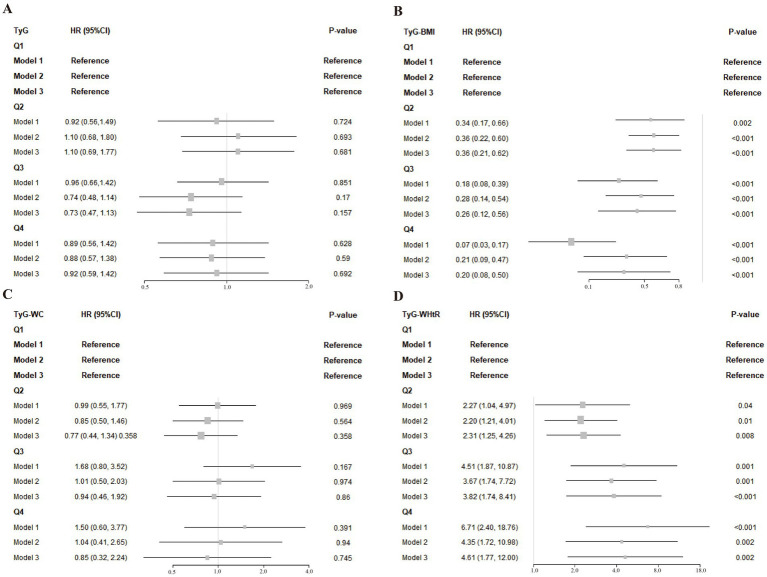
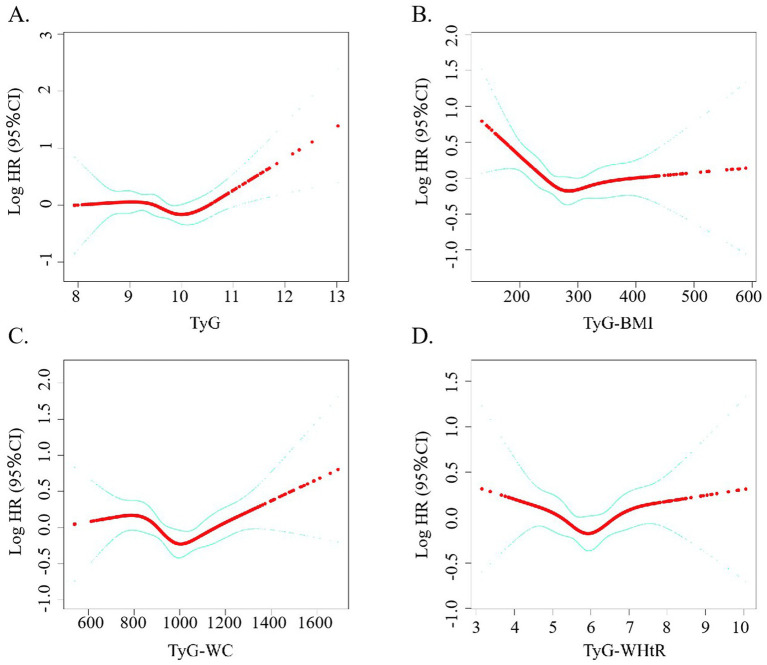
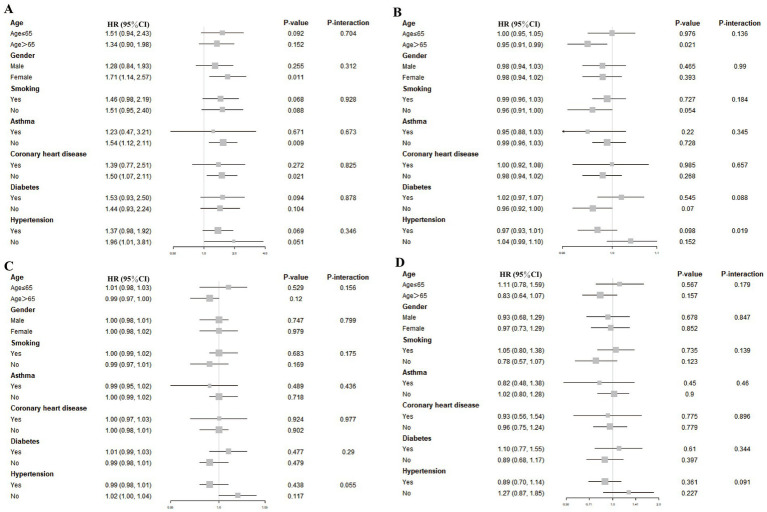
Results: This research ultimately included 796 individuals diagnosed with stroke. When adjusting for a wide range of potential confounders, those in the top TyG-BMI quartile exhibited the most pronounced reduction in mortality risk compared to individuals in the lowest category, with a hazard ratio of 0.20 (95% CI: 0.08-0.50), highlighting its protective potential across TyG-BMI. In contrast, individuals falling within the fourth quartile of the TyG-WHtR index demonstrated the strongest positive correlation with the risk of all-cause mortality (Hazard Ratio = 4.61, 95% CI: 1.77-12.00). Moreover, analysis using restricted cubic splines indicated a significant non-linear association between TyG-BMI levels and mortality outcomes (p < 0.05). No statistical interactions were observed between mortality outcomes and demographic or clinical variables including age, sex, smoking, asthma, coronary artery disease, diabetes, or hypertension across any TyG-related indices (p > 0.05).
Conclusion: The study outcomes suggest that stroke patients with reduced TyG-BMI and elevated TyG-WHtR levels tend to face increased mortality risks. Nonetheless, addressing obesity may be crucial in exploring potential causal pathways.
Keywords: NHANES; TyG-related index; mortality; retrospective cohort analysis; stroke.
Copyright © 2025 Zheng, Mao, Sang, Pan, Xie and Xie.
Conflict of interest statement
The authors declare that the research was conducted in the absence of any commercial or financial relationships that could be construed as a potential conflict of interest.
Figures
References
LinkOut - more resources
Full Text Sources
