


The relationship between dietary flavonoid intake and hypertension: a cross-sectional study from NHANES
- PMID: 40520936
- PMCID: PMC12162475
- DOI: 10.3389/fcvm.2025.1518549
The relationship between dietary flavonoid intake and hypertension: a cross-sectional study from NHANES
Abstract
Objective: To evaluate the association between dietary flavonoid intake and hypertension using nationally representative data, considering increasing global hypertension prevalence and inconsistent evidence on flavonoids' protective effects.
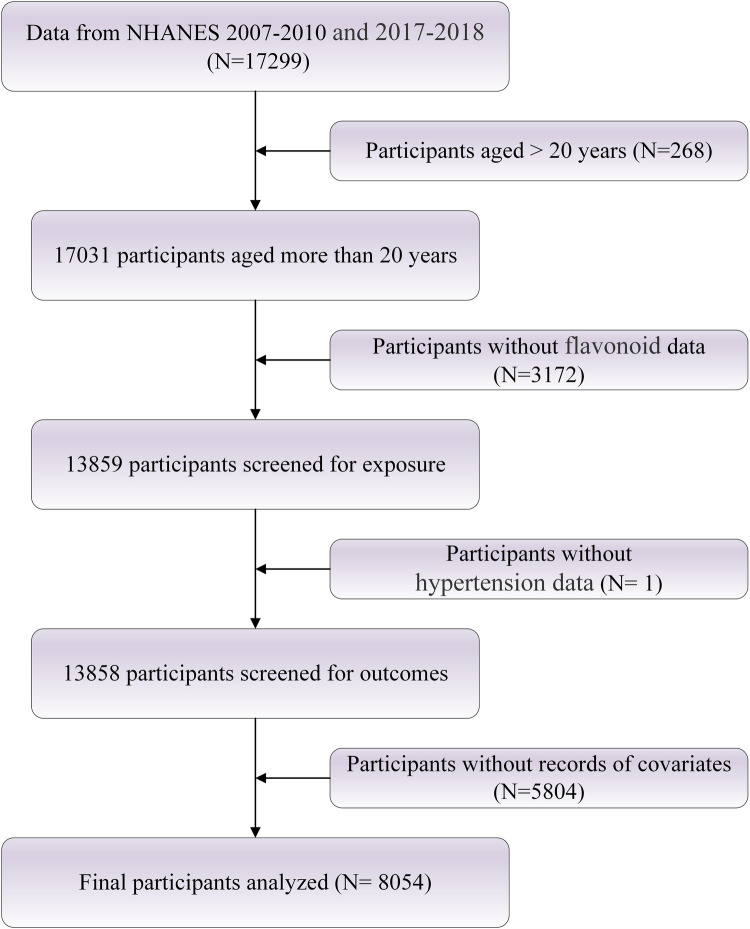
Methods: This cross-sectional study analyzed 8,054 adults aged ≥20 years from NHANES 2007-2010 and 2017-2018. Flavonoid intake was assessed through two 24-hour dietary recalls and categorized into quartiles. Hypertension was defined by blood pressure ≥130/80 mmHg or self-reported diagnosis/medication use. Logistic regression models with progressive adjustment, restricted cubic spline regression for dose-response relationships, and subgroup analyses were conducted, accounting for complex sampling design.
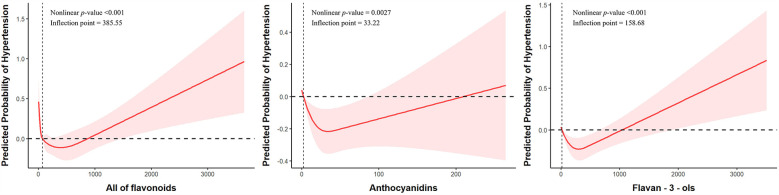
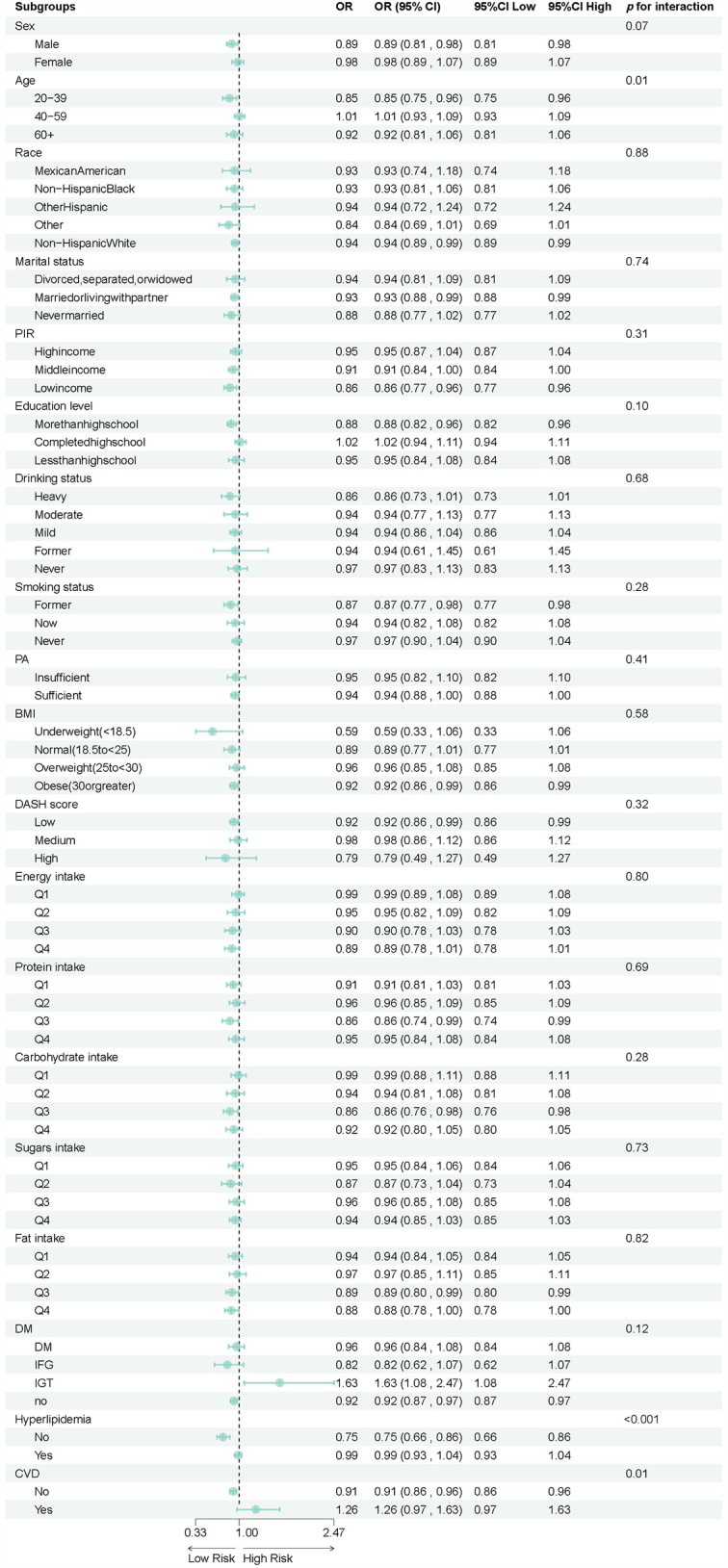
Results: After full adjustment, participants in the highest quartile of total flavonoid intake showed 25% lower odds of hypertension compared to the lowest quartile (OR = 0.75, 95% CI: 0.60-0.93, p = 0.01). Among flavonoid subclasses, anthocyanidins (OR = 0.74, 95% CI: 0.58-0.93) and flavan-3-ols (OR = 0.76, 95% CI: 0.62-0.93) demonstrated the strongest protective associations. Significant effect modifications were observed for age (p for interaction = 0.01), hyperlipidemia (p for interaction <0.0001), and cardiovascular disease status (p for interaction =0.01), with stronger protective effects in younger adults and those without metabolic disorders.
Conclusion: Moderate dietary flavonoid intake, particularly anthocyanidins and flavan-3-ols, is inversely associated with hypertension risk. These associations vary significantly by age and metabolic status, suggesting potential for individualized dietary recommendations for hypertension prevention.
Keywords: NHANES; cross-sectional study; dietary intake; flavonoids; hypertension.
© 2025 Niu, Chen, Xiao, Li, Feng and Aierken.
Conflict of interest statement
The authors declare that the research was conducted in the absence of any commercial or financial relationships that could be construed as a potential conflict of interest.
Figures
References
-
- NCD Risk Factor Collaboration (NCD-RisC). Worldwide trends in hypertension prevalence and progress in treatment and control from 1990 to 2019: a pooled analysis of 1201 population-representative studies with 104 million participants. Lancet (London, England). (2021) 398(10304):957–80. 10.1016/S0140-6736(21)01330-1 - DOI - PMC - PubMed
LinkOut - more resources
Full Text Sources
