


Artificial Intelligence in Obsessive-Compulsive Disorder: A Systematic Review
- PMID: 40524733
- PMCID: PMC12167270
- DOI: 10.1007/s40501-025-00359-8
Artificial Intelligence in Obsessive-Compulsive Disorder: A Systematic Review
Abstract
Purpose of review: Obsessive-compulsive disorder (OCD) is a chronic and disabling condition, often leading to significant functional impairments. Despite its early onset, there is an average delay of 17 years from symptom onset to diagnosis and treatment, resulting in poorer outcomes. This systematic review aims to synthesize current findings on the application of AI in OCD, highlighting opportunities for early symptom detection, scalable therapy training, clinical decision support, novel therapeutics, computer vision-based approaches, and multimodal biomarker discovery.
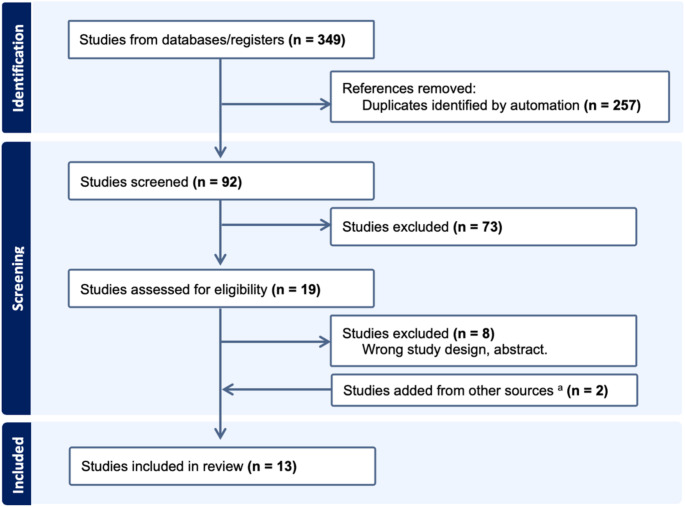
Recent findings: While previous reviews focused on biomarker-based OCD detection and treatment using machine learning (ML), the findings of the current review add information about novel applications of deep learning technology, specifically generative artificial intelligence (GenAI) and natural language processing (NLP). Among the included 13 articles, most studies (84.6%) utilized secondary data analyses, primarily through GenAI/NLP. Nearly 77% of these studies were published in the past two years, with high quality of evidence. The primary focus areas were enhancing treatment and management, and timely OCD detection (both 38.5%); followed by AI tool development for broader mental health applications.
Summary: AI technologies offer transformative potential for improvements related to OCD if diagnosis occurs earlier after onset; thereby lessening the consequential economic burden. Prioritizing investment in ethically sound AI research could significantly improve OCD outcomes in mental health care.
Supplementary information: The online version contains supplementary material available at 10.1007/s40501-025-00359-8.
Keywords: AI; Diagnosis; Mental health; OCD; Obsessive-compulsive disorder; Treatment.
© This is a U.S. Government work and not under copyright protection in the US; foreign copyright protection may apply 2025.
Conflict of interest statement
Competing InterestsJ.K is supported by NIH Grant (K01MH137386). In the last 3 years, C.I.R. has served as a consultant for Biohaven Pharmaceuticals, Osmind, and Biogen; and receives research grant support from Biohaven Pharmaceuticals, a stipend from American Psychiatric Association Publishing for her role as Deputy Editor at The American Journal of Psychiatry, a stipend from Springer Nature for her role as Deputy Editor for Neuropsychopharmacology, and book royalties from American Psychiatric Association Publishing. C.I.R. is supported in part by NIMH grant (R01MH133553). A.G. currently provides professional services to Wayhaven and Augmend Health, holds equity in Storymine Inc., Woebot Health, and Lark Health, and previously served as a consultant to ChatOwl. E.A. is an advisor to Limbix Health and board member of MediKarma. K.S is supported by NIH Grant (LM014597, AG072114). The remaining authors declare no competing financial or non-financial interests or other relationships relevant to the subject of this manuscript.
Figures
References
-
- DSM. https://www.psychiatry.org:443/psychiatrists/practice/dsm. Accessed 31 Mar 2025.
-
- Koran LM, Hanna GL, Hollander E, Nestadt G, Simpson HB, American Psychiatric Association. Practice guideline for the treatment of patients with obsessive-compulsive disorder. Am J Psychiatry. 2007;164:5–53. - PubMed
Publication types
LinkOut - more resources
Full Text Sources
Research Materials
Miscellaneous