


Ventilator-Associated Pneumonia: An Update on the Role of Lung Ultrasound in Adult, Pediatric, and Neonatal ICU Practice
- PMID: 40528864
- PMCID: PMC12171069
- DOI: 10.1177/29768675251349632
Ventilator-Associated Pneumonia: An Update on the Role of Lung Ultrasound in Adult, Pediatric, and Neonatal ICU Practice
Abstract
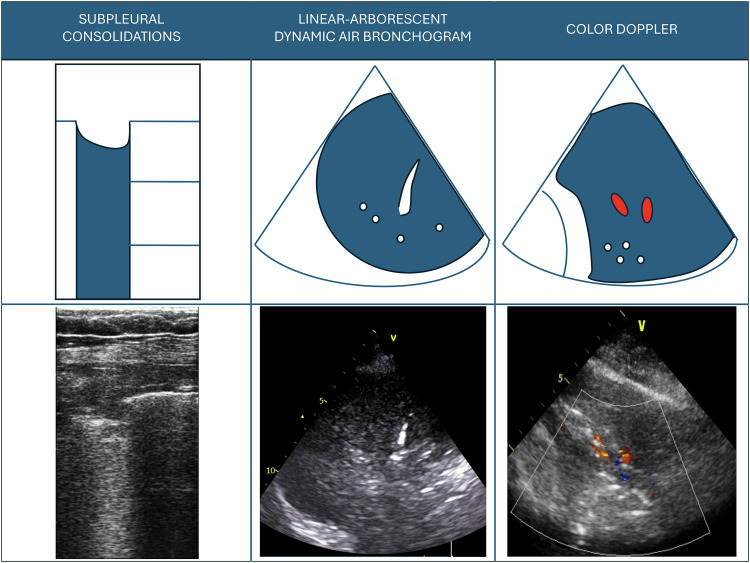
Ventilator-associated pneumonia (VAP) remains one of the most common and challenging intensive care unit (ICU)-acquired infections, significantly contributing to mortality, morbidity, and healthcare costs. The diagnosis relies on quantitative analysis of a deep microbiological sample; a combination of clinical and radiological signs is commonly used to raise VAP suspicion in clinical practice. Traditional imaging methods such as chest radiography and computed tomography have limitations in critically ill patients under mechanical ventilation. Lung ultrasound (LUS) has emerged in the last years as a valuable tool in the assessment and monitoring of critically ill patients, including for diagnosis and management of VAP, due to its noninvasive bedside applicability and absence of radiation exposure. This last quality is of particular interest in the specific population of children and newborns, where radiation exposure should be further avoided. LUS allows for daily monitoring of lung aeration and provides a quantitative assessment through the LUS aeration score; an unexpected increase of LUS aeration score may raise the suspicion of superinfection. Key ultrasonographic findings, such as subpleural consolidations and consolidations with dynamic linear-arborescent air bronchogram, improve diagnostic specificity for VAP. Similarly to what happens with traditional radiology, the Ventilator-associated Pneumonia Lung Ultrasound Score (VPLUS) combines ultrasound signs with clinical parameters like purulent secretions to enhance diagnostic accuracy. Furthermore, LUS aeration score plays a crucial role in monitoring the response to treatment, enabling assessment of lung reaeration over time. It helps differentiate between treatment responders and nonresponders, guiding therapy adjustments and identifying complications. This review highlights the evolving role of LUS in the early diagnosis, monitoring, and treatment of VAP across various ICU settings, including its application in adult, pediatric, and neonatal care.
Keywords: lung aeration; lung monitoring; lung ultrasound; lung ultrasound aeration score; pneumonia; quantitative lung ultrasound; ventilator-associated pneumonia.
© The Author(s) 2025.
Conflict of interest statement
FM received fees for lectures from Hamilton Medical, outside the present work. A research agreement is active between University of Pavia and Hamilton Medical, outside the present work. RGH received fees for lectures from Chiesi, outside the present work. DDL has received research assistance and speaker fees from GE Healthcare, Medtronic, Vyaire, Getinge, Astra Zeneca and Chiesi Farmaceutici, unrelated to the present work. SM received fees for lectures from GE Healthcare, outside the present work. The other authors declare no potential conflicts of interest with respect to the research, authorship and/or publication of this article.
Figures
References
-
- Melsen WG, Rovers MM, Groenwold RH, et al. Attributable mortality of ventilator-associated pneumonia: a meta-analysis of individual patient data from randomised prevention studies. Lancet Infect Dis 2013; 13(8): 665–671. - PubMed
-
- Torres A, Niederman MS, Chastre J, et al. International ERS/ESICM/ESCMID/ALAT guidelines for the management of hospital-acquired pneumonia and ventilator-associated pneumonia. Eur Respir J 2017; 50(3): 1700582. - PubMed
-
- Kollef MH, Hamilton CW, Ernst FR. Economic impact of ventilator-associated pneumonia in a large matched cohort. Infect Control Hosp Epidemiol 2012; 33(3): 250–256. - PubMed
Publication types
LinkOut - more resources
Full Text Sources